The 4th Biennial Conference of the Association of Critical Heritage Studies kicks off at Zhejiang University
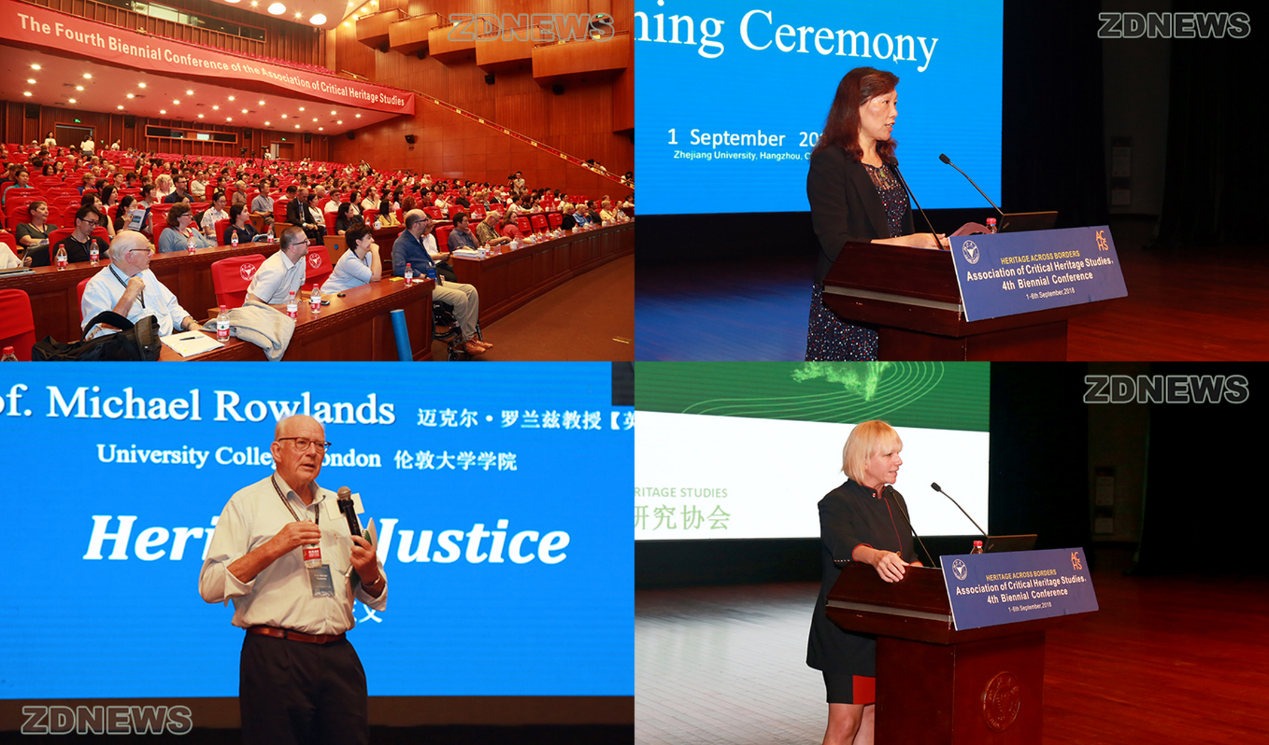
The 4th Biennial Conference of the Association of Critical Heritage Studies kicked off at Zhejiang University on the afternoon of September 1. The conference was co-organized by Zhejiang University and the Association of Critical Heritage Studies (ACHS) with the support of the Administration Office of Liangzhu Relic Site. More than 400 scholars from 40-plus countries and regions participated in this grand academic feast in the field of heritage.
HE Lianzhen, vice president of Zhejiang University, Dr. Lucie Morisset, president of the ACHS, and CHEN Shoutian, deputy director of the Administration Office of Liangzhu Relic Site, delivered speeches at the opening ceremony.
HE Lianzhen offered her congratulations on the opening of the conference and extended her warm welcome to every participant. “The global rise of heritage studies and the heritage industry in recent decades has been a story of crossing frontiers and transcending boundaries,” HE said, “Heritage stands for the cultural tradition of a country, unfolds the historical soul of a city and fuels the humanistic exploration of a university.”
Lucie Morisset presented an overview of the ACHS. The first ACHS conference was held at the University of Gothenburg in Sweden, with the aim of bringing together people from the world over who are interested in contributing to a critical analysis of the situation, construction, and role of heritage. At present, over 3,000 scholars from 85 countries all over the world have registered for the ACHS. Lucie Morisset believed that the conference in Hangzhou will act as a driving force behind the transnational scientific and professional cross fertilization and a catalyst for connection and knowledge.
“During the conference, participants will visit Liangzhu Museum, participate in Liangzhu International Symposium, and explore the preservation and utilization of cultural heritage. This is the prime opportunity for us to present ancient and modern China and promote cultural communication,” said CHEN Shoutian.
At the opening ceremony, Michael Rowlands, Emeritus Professor of Anthropology and Material Culture at University College London, gave a keynote speech entitled “Heritage Justice”. He is currently a co-researcher for a Leverhulme funded Heritage project Conflicts in Cultural Value: Localities and Heritage in Southwestern China and a Principal Investigator for JPI Cultural Heritage project Digitising Dogon Heritage. He asserted that heritage is egalitarian where a populist zeal for its protection counters the top down interventionism of state protection. He put forward those initiatives from the theorising new forms of governance, encouraging the diversification of the Responsibility to Protect (R2P) doctrine. He took the view that without starting with a more basic understanding of what people wish to protect in given circumstances of maintaining a human way of life, challenging the inhumane, such interventions are guided more by the goals of global collaboration and creating universal norms.
The theme of the 2018 conference is Heritage Across Borders. This theme embraces a better understanding on how heritage is valued, preserved, politicised, mobilised, financed, planned and destroyed. Thinking across borders raises questions about theories of heritage, its methodologies of research, and where its boundaries lie with tourism, urban development, post-disaster recovery, collective identities, climate change, memory or violent conflict.
The conference also includes following sub-themes: Internationalism and Heritage Across Borders, Heritage: Between Theory and Practice, Tangible and Intangible, Communication Across Boundaries, Religion, Governance, Law, Management, Heritage and Social Justice, Cities and Landscapes, Heritage as Movement, etc.