5G connected ambulance debut in Zhejiang
“Please report the status of the patient.”MD LI Qiang in the Second Affiliated Hospital of Zhejiang University School of Medicine (SAHZU) talked to the remote paramedics in the 5G connected ambulance through real-time audio-video system. “The patient is in stable condition and there is no sign of increased abdominal bleeding,” the paramedic responded. Meanwhile the patient's data (blood pressure, heart rate and blood oxygen level) were transmitted to the hospital control center and displayed on a big screen. Wearing a pair of virtual reality glasses, LI was able to check on the patient as if he was in the ambulance.
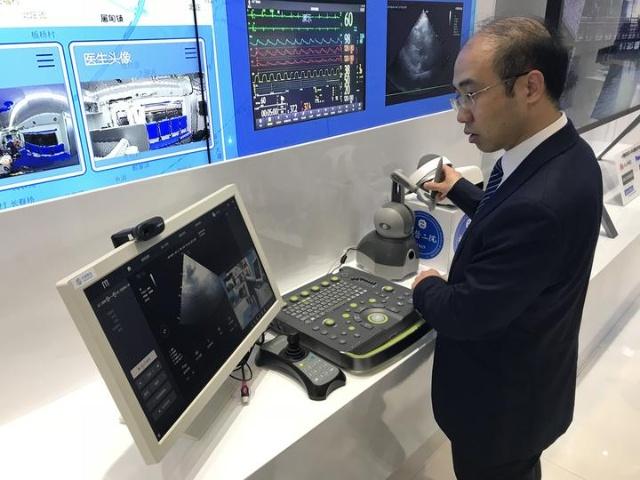
This is an emergency rescue drill powered by 5G technology. The patient, a 30-year-old man who was hurt in a traffic accident, was found with the spleenic rupture in a community healthcare center via remote 5G abdominal ultrasound examination conducted by MD LI in SAHZU.
Later, a 5G connected ambulance was deployed to transfer the patient to the SAHZU for further treatment. The 5G ambulance, larger than a regular ambulance, was able to carry many advanced technologies to enable the delivery of better life enhancing outcomes for patients.
Because of the large amount of bleeding, the hospital emergency team determined that the patient would need special hemostatics and blood when arriving at the hospital. A 5G unmanned aerial vehicle (UAV) then delivered supplies from a blood center 3 kilometers away in just five minutes.

source:Zhejiang Daily
Zhang Mao, director of the Department of Emergency Medicine, SAHZU, introduced that 5G is 10 times faster than 4G, and can offer lower latency for communications and sending data.
“The technology will narrow the gap between pre-hospital care and in-hospital treatment, thus winning more time for the patients,” Zhang said.