ZJU team clinches gold at 2019 iGEM Competition
On November 5, ZJU-China, a multi-disciplinary undergraduate team from Zhejiang University, brought home a gold medal from the 2019 International Genetically Engineered Machine (iGEM) Competition held in Boston. This is the seventh time that the team has clinched gold at iGEM.
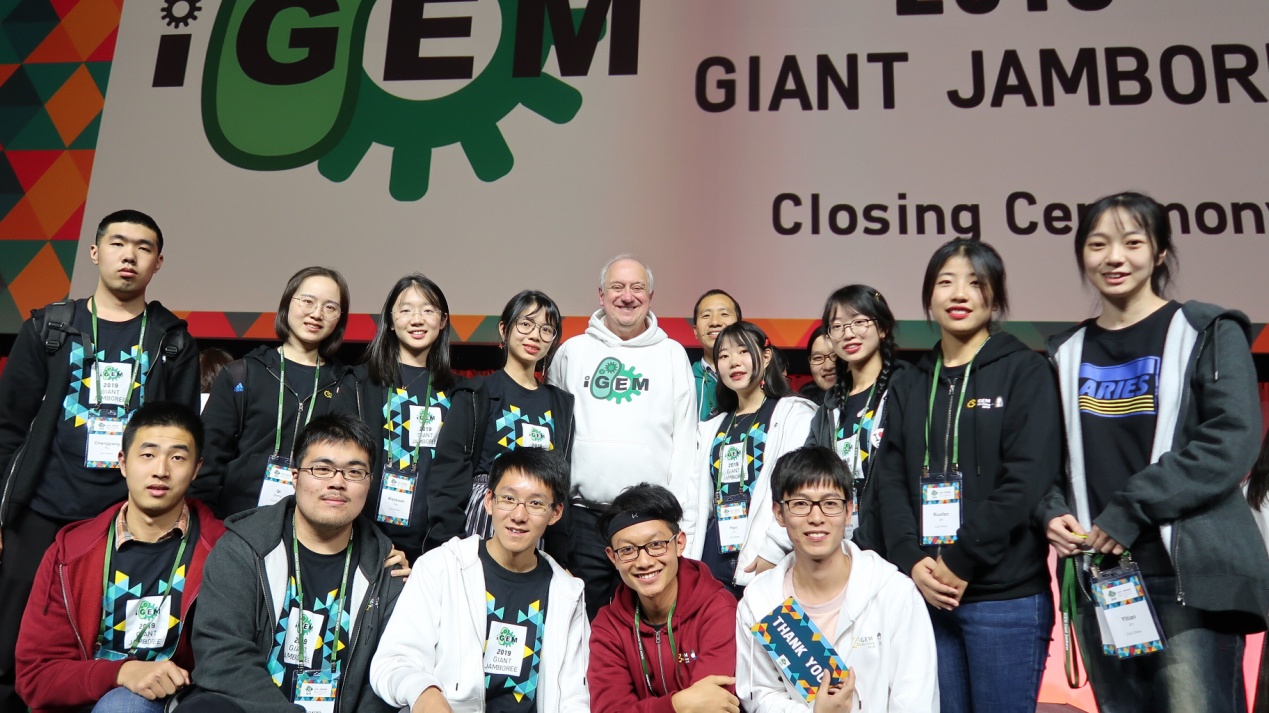
Supervised by Professor CHEN Ming from the College of Life Sciences, the team comprises 12 undergraduate students from 6 different colleges: the College of Life Sciences, the Chu Kochen Honors College, the School of Medicine, the College of Agriculture and Biotechnology, the College of Computer Science and Technology, and the College of Control Science and Engineering.
At the 2019 iGEM Competition, ZJU-China developed a household device for HPV preliminary screening called PaDetector given the fact that the incidence and mortality of cervical cancer has been rising steadily in the past two decades. The team used female menstrual blood as samples and contrived two detection methods at normal temperatures. The first method is based on the CRISPR/Cas12a system. After rupturing cervical epithelial cells in menstrual blood, ZJU-China obtained the HPV genome by amplifying the target with RPA and then identified the target with Cas12a protein. This method is highly idiosyncratic and responsive and it can thus be applied to HPV typing. However, in HPV screening, the key is to detect HPV subtypes simultaneously. Therefore, to achieve multi-channel detection, the team employed ExoIII to assist signal amplification and used the hybridization chain reaction for further amplification effects. The team also designed three versions of PaDetector to cater for the needs of consumers and producers.

PaDetector received immense praise from the panel of judges, acclaiming that ZJU-China proposed a feasible solution to a practical problem from the perspective of synthetic biology. Furthermore, the two HPV detection methods, marked by their salient applicability and upgradability, can be applied to detect viruses, cancers and genetic mutations.
Initially launched by the Massachusetts Institute of Technology in 2005, iGEM is the premiere undergraduate Synthetic Biology competition on an annual basis. Student teams are given a kit of biological parts at the beginning of the summer from the Registry of Standard Biological Parts. Working at their own schools over the summer, they use these parts and new parts of their own design to build biological systems and operate them in living cells. This project design and competition format is an exceptionally motivating and effective teaching method.iGEM 2019 hosted about 400 international, multidisciplinary teams who are eager to share and celebrate their work from over 70 countries and regions.