World’s first cloned yak born in Xizang: Major breakthrough by Zhejiang University scientists
On July 10, a cloned yak — the first of its kind in the world — was successfully delivered via cesarean section at a yak breeding base in Damxung County, Southwest China’s Xizang Autonomous Region. This milestone marks a significant breakthrough by a research team led by Prof. FANG Shengguo from the College of Life Sciences at Zhejiang University, the Damxung County Government, and the Institute of Plateau Biology of Xizang Autonomous Region. Both the mother and the calf are healthy.
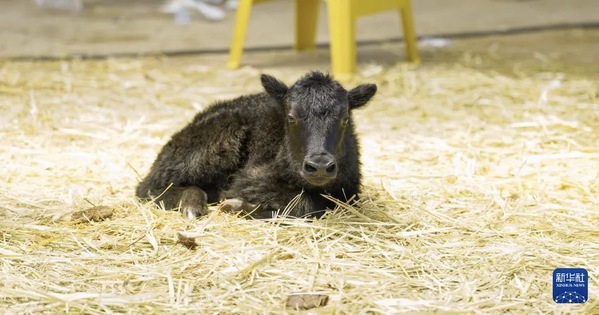
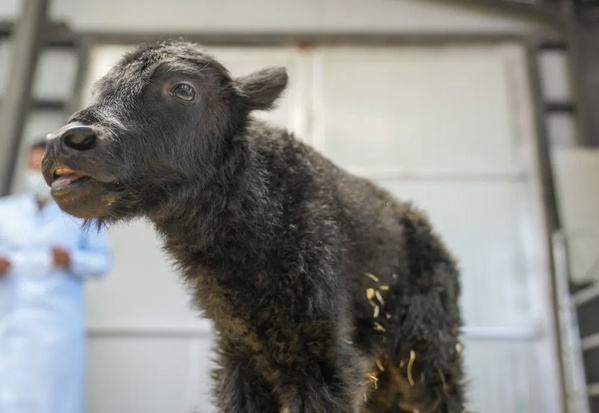
The cloned calf weighed 33.5 kg at birth, heavier than most yak newborns, with a completely black coat. It was able to walk and in good health. What sets this calf apart is not only its robustness but also the cutting-edge science behind its creation: it is the world’s first yak produced through the integration of whole-genome selection and somatic cell cloning technologies.
Yaks are a vital means of transport and food source on the Qinghai-Xizang Plateau, capable of carrying heavy loads across complex terrain. They serve as a crucial supply channel for local herders and border outposts. Their muscle tissue, rich in unique amino acids, enables them to thrive in the cold, low-oxygen environment of the plateau.
However, this iconic species is under growing threat.
“Human activity and ecological changes have led to a severe degradation crisis for the yak population,” explained Prof. FANG. “Over the past decade, we’ve seen an average 8% decline in yak body weight growth rates. Natural reproduction and fertilization success now stand at just over 20%. Nearly two-thirds of the yaks consumed in Xizang must be imported from provinces like Qinghai and Gansu.”
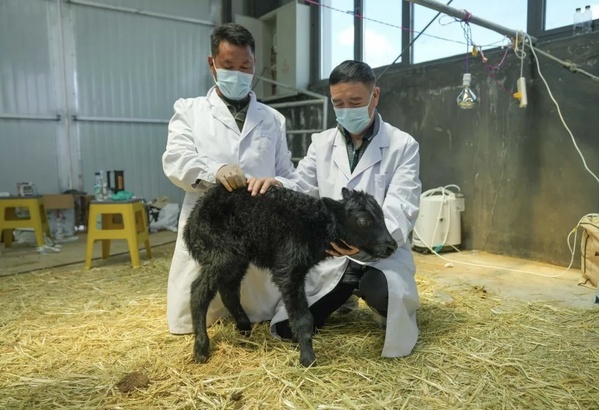
To address this crisis, Fang’s team has spent the past several years developing innovative methods to safeguard and enhance yak germplasm resources. Their work aims to ensure food security, improve pastoral livelihoods, and contribute to the sustainable development of the region.
Since 2020, FANG’s team has been refining somatic cell cloning techniques through research on domestic cats, sika deer, and other species. developing a comprehensive and specialized system. Leveraging their previous success in the conservation breeding of endangered animals such as giant pandas and crested ibises, they developed a novel approach: identify elite breeding stock via whole-genome screening, apply somatic cell cloning, and then use crossbreeding strategies to enhance genetic diversity and reproductive capacity.
This three-step method offers remarkable benefits: the potential to reduce traditional yak breeding cycles from 20 years to just 5 years, while producing stronger, faster-growing, and more disease-resistant animals with no risk of genetic degradation. The approach not only enhances biological traits but also holds immense promise for economic development and industrial transformation in the region.
“The birth of the cloned yak is a ‘zero-to-one’ moment in our efforts to revitalize yak breeding,” FANG remarked proudly. He noted that the achievement required the team’s full commitment, as well as their ability to navigate cultural gaps, equipment limitations, and the scientific challenges of working at high altitudes. Their success included overcoming major technical barriers such as embryo freezing and thawing, and in vitro maturation of yak oocytes, both considered global challenges in animal cloning.
Looking ahead, the team is shifting its attention to the conservation of endangered wild yaks, particularly the golden wild yak, whose population has fallen below 300 due to predation and habitat loss. Cell samples from deceased individuals are being preserved, and the first cloned embryos of wild yaks have already been transplanted, laying the foundation for future efforts in species restoration and habitat rehabilitation.
This scientific achievement is not only a testament to Zhejiang University’s leadership in frontier biotechnology, but also an example of how innovation can serve regional development and national priorities. The research team has actively engaged local youth, fostering homegrown scientific talent and encouraging young scholars to contribute to the plateau’s future.
“As researchers, our mission is not only to bring cloned yaks out of the laboratory,” FANG emphasized, “but also to ensure this technology takes root on the snowy plateau, growing into a world-class industry with local characteristics, serving both sustainable development and national strategic goals.”
Adapted and translated from the article by ZHOU Tianyu and ZHA Meng
Translator: FANG Fumin
Photos by Xinhua News Agency
Editor: HE Jiawen, ZHU Ziyu