Advancing sustainable higher education together: 2025 International Forum on Higher Education held in Hangzhou
On November 9, the 2025 International Forum on Higher Education (IFHE) was held at the Hangzhou International Expo Center under the theme “Building an Education Power and Advancing the Sustainable Development of Higher Education.”
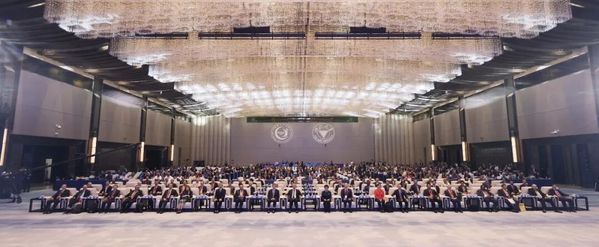
Co-hosted by China Association of Higher Education (CAHE) and Zhejiang University (ZJU), the forum brought together nearly 170 overseas guests, as well as more than 200 university leaders from China, over 100 renowned experts and scholars in higher education, and nearly 1,000 representatives from domestic universities, research institutes, and enterprises.
Ren Youqun, Member of the Party Leadership Group of the Ministry of Education (MoE) of the People's Republic of China, Vice Minister of Education and Lin Huiqing, President of CAHE attended the forum. Ma Yanming, President of Zhejiang University and Member of the Chinese Academy of Sciences and Anasse Bouhlal, Higher Education and TVET Programme Specialist, UNESCO Regional Office for Gulf States and Yemen, attended the opening ceremony and delivered speeches. The ceremony was chaired by Li Jiajun, Vice President of CAHE.
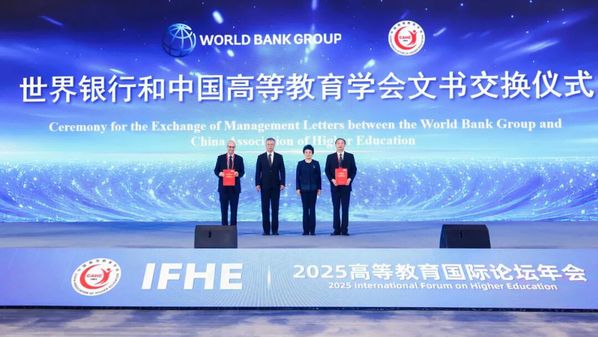
At the opening ceremony, Ren Youqun and Lin Huiqing witnessed the exchange of management letters between the World Bank Group and CAHE.
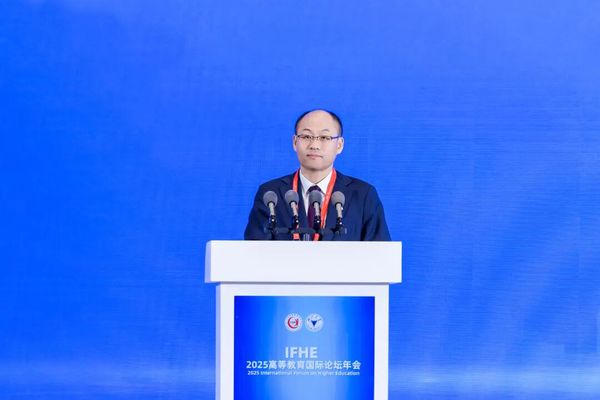
On behalf of Zhejiang University, Ma Yanming extended a warm welcome to all participants. He noted that Zhejiang University has developed into a comprehensive, research-intensive, and innovative university, and is accelerating its efforts to build a world-class university with world-class disciplines. In the face of a new wave of scientific and technological revolution and industrial transformation, higher education, he said, should play a vital role. He expressed confidence that the forum would inspire the collision of ideas and practical innovations for higher education reform and development, contributing to the sustainable development of global higher education.
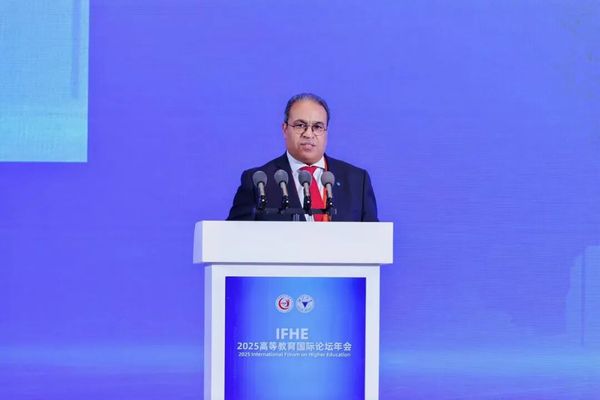
Anasse Bouhlal noted that higher education cooperation between China and the Gulf Cooperation Council (GCC) is facing significant opportunities for development. He called on both sides to jointly promote educational innovation and digital transformation, enhance mobility and academic exchange, and continuously improve the quality of talent cultivation and students’ global competence. He emphasized that the forum is “a timely and vital platform for dialogue, innovation, and collaboration”, which charts new paths toward sustainable development and peace.
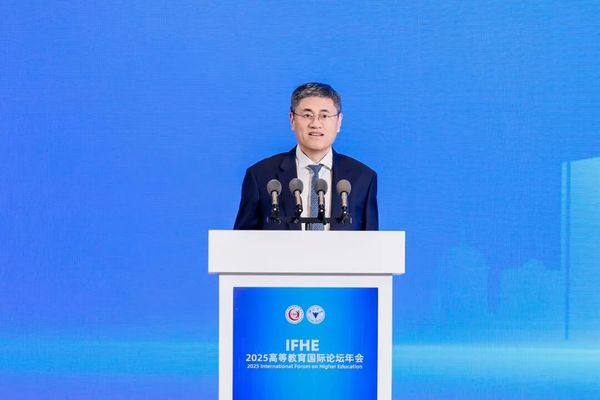
In his keynote address, Ren Shaobo, Chairman of the Zhejiang University Council, highlighted that leading universities are evolving new forms in the integrated development of education, science, and talent. Through interaction with national and regional development, they are forming new ecosystems that connect China and the world, integrate industry and education, and foster synergistic coexistence. He noted that “universities are generating new functions that stimulate innovation and entrepreneurship, establishing new structures for open innovation clusters and source networks, gathering new elements centered on creative talent, and nurturing a new cultural ecosystem of innovation and entrepreneurship.”
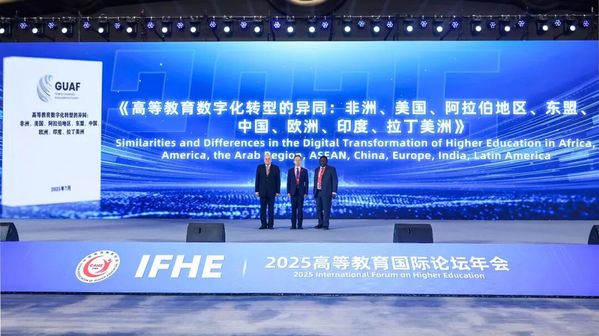
The joint research report “Similarities and Differences in the Digital Transformation of Higher Education in Africa, America, the Arab region, ASEAN, China, Europe, India and Latin America”, co-authored by CAHE and eight major international education organizations, including the European University Association and the American Council on Education, was presented at the forum.
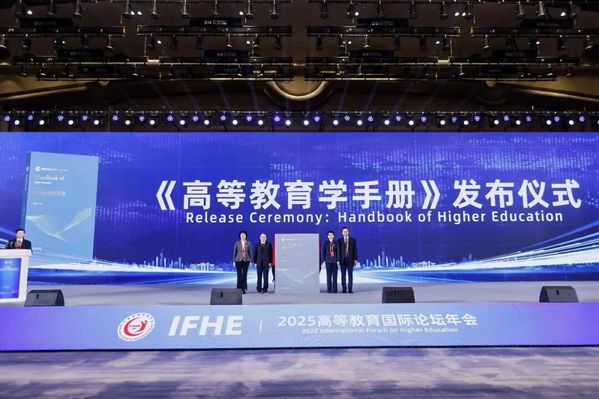
The Handbook of Higher Education, part of the “Books of Independent Knowledge System·Handbook Series” compiled by ZJU, was also released. The handbook aims to construct an independent knowledge system for higher education studies in China, offering theoretical interpretations of China’s higher education reform and development in the new era and promoting the international visibility of China’s theoretical and knowledge systems in higher education.
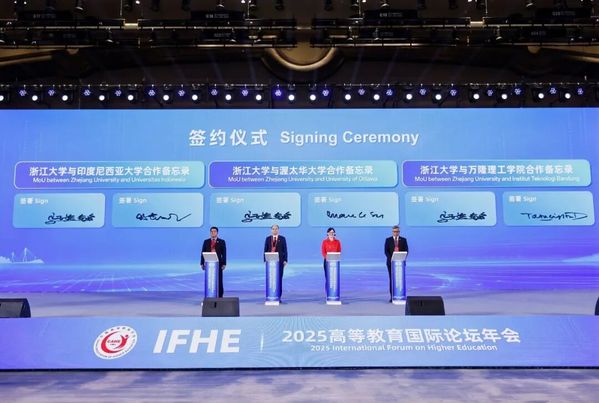
ZJU signed memoranda of understanding with the University of Ottawa, Universitas Indonesia, and the Bandung Institute of Technology. More than 50 Chinese and international universities reached cooperation intentions during the event.
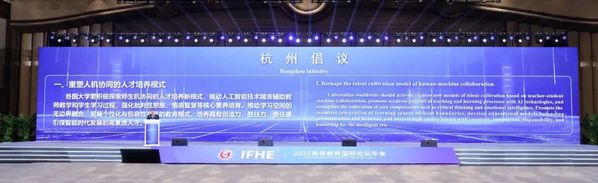
The forum also witnessed the release of the Hangzhou Initiative, which calls for reshaping talent cultivation models that integrate human–machine collaboration, exploring new research paradigms supported by intelligent technologies, improving education governance mechanisms empowered by AI, strengthening ethical norms for AI application, and building a global community for innovation in intelligent education to jointly advance the sustainable development of global higher education.