When plants become light: turning Pandora’s glow into reality
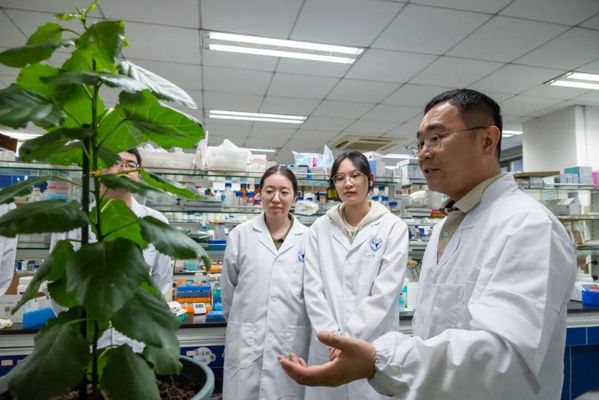
Imagine this: at night, the potted plant on your desk softly illuminates the room; trees along the street glow like living lampposts; a park’s flowerbeds shimmer like a sea of stars. Scenes that once belonged to the science fiction realm are now edging toward reality thanks to a research team led by DU Hao at the College of Agriculture and Biotechnology at Zhejiang University.
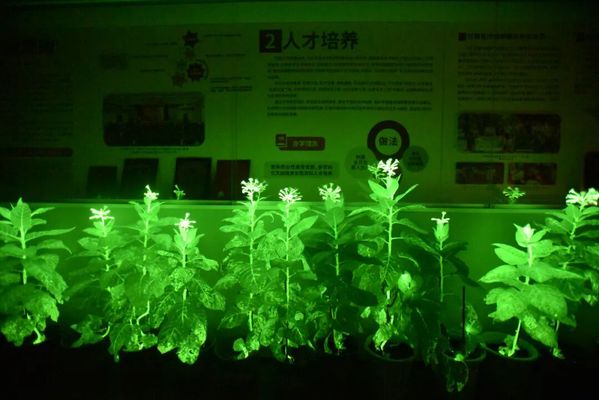
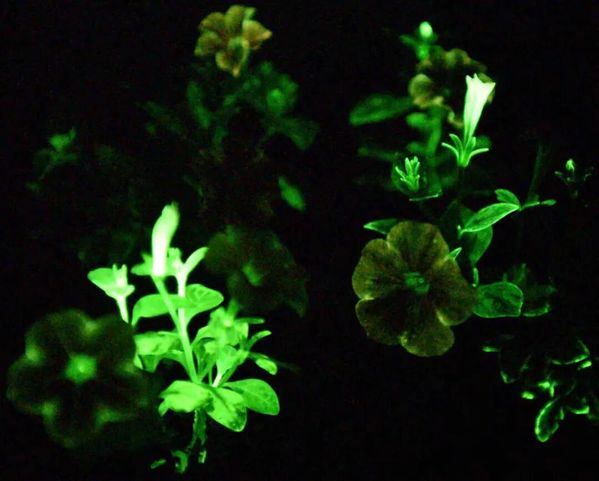
Step into DU Hao’s laboratory after the lights are turned off, and the space falls into an almost dreamlike serenity. Then, quietly, the plants begin to glow, leaf by leaf, vein by vein. The sight is strikingly reminiscent of the bioluminescent forests of Pandora in Avatar, where branches drip with light and the night air sparkles like drifting fireflies.
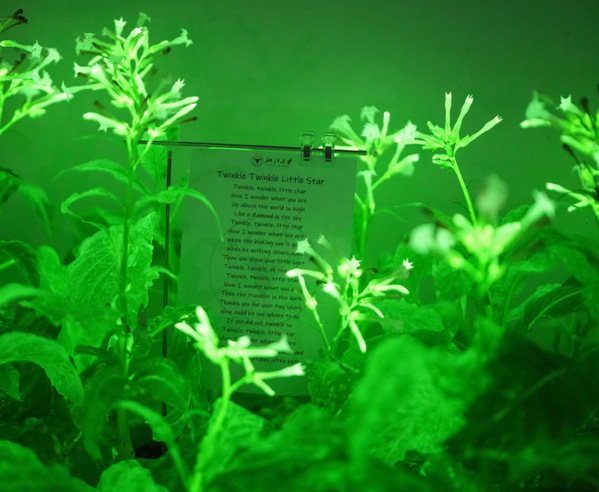
Yet this is no cinematic illusion. These glowing plants represent a genuine scientific breakthrough.
The story began with a deceptively simple question: why shouldn’t plants glow?
“Earth’s ecosystems include animals, plants, and microorganisms,” DU Hao explains. “We’ve seen animals and microbes that emit light, so why not plants?” Driven by curiosity, his team set out to explore whether plants could be engineered to produce light on their own.
Previous attempts had fallen short. Firefly luciferase genes required constant addition of expensive external substrates and produced only weak light. Bacterial luminescence systems, meanwhile, worked in limited species and often disrupted plant growth.
The challenge was clear: plants needed a self-sustaining, efficient, and growth-friendly luminescence system.
Surprisingly, the solution came from an unlikely source: a glowing mushroom.
“The key ingredient,” DU Hao says with a smile, “is the ‘mushroom’ in chicken stewed with mushrooms.” His team discovered that the bioluminescent mechanism used by glowing fungi could be transferred to plants and seamlessly integrated into their metabolism.
At the heart of the system is a closed biochemical loop built from four fungal enzyme genes. The raw material for light production is caffeic acid, a compound naturally present in literally all plants. Using codon optimization and Agrobacterium-mediated transformation, the researchers inserted the four genes into the plant genome.
Inside the plant, caffeic acid undergoes a multi-step enzymatic reaction that releases green light. Crucially, the final product is recycled back into caffeic acid, allowing the plant to glow continuously without external inputs. The process does not interfere with normal growth and is clean, sustainable, and energy-efficient.
Early versions of the glowing plants worked, but they weren’t bright enough.
To address this challenge, the team adopted a dual strategy they term “increase supply and reduce loss.” First, they built a new synthetic pathway that converts the plant’s abundant tyrosine directly into caffeic acid, effectively doubling the supply of light-emitting material. Second, they turned to artificial intelligence.
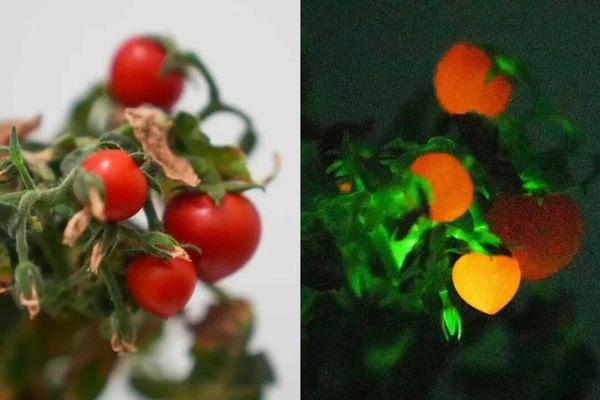
By analyzing large transcriptomic datasets and applying machine-learning techniques, the team identified and suppressed genes that diverted caffeic acid toward lignin and flavonoid production. With fewer metabolic “leaks,” more substrate flowed into the luminescence pathway.
The results were dramatic. The second-generation plants reached a brightness of 1.2 × 10¹² photons per minute per square centimeter, over 20 times brighter than the original version. Detached leaves continued glowing for three days, achieving a level of stability and visibility that marks a true practical breakthrough.
The implications are striking. Glowing plants require no electricity and can convert solar energy, biological energy, and light energy within a single system. By using just 0.3% of the energy stored through daytime photosynthesis, they can provide low-level illumination, potentially replacing artificial lighting such as streetlamps.
Beyond energy savings, their natural beauty opens new possibilities for urban landscaping, road design, theme parks, and cultural tourism, blending technology with living ecosystems.
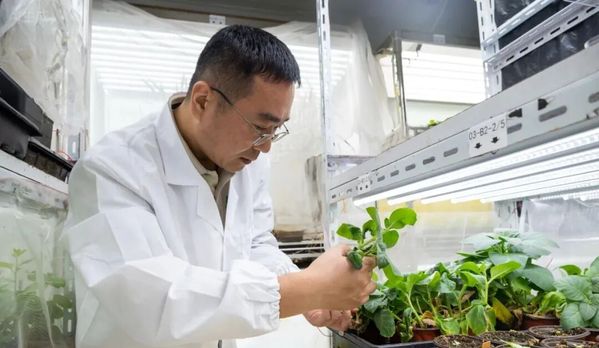
DU Hao’s vision goes even further. He hopes that glowing plants can evolve from decorative landscapes into functional energy contributors. At night, they could reduce reliance on conventional lighting; during the day, they would continue capturing carbon dioxide and converting it into high-value biomass, supporting both environmental protection and economic development.
The same luminescence principles may also find applications in biomedical research, where glowing signals can help trace disease processes and advance basic medical science.
Such breakthroughs thrive on collaboration. As a comprehensive university, Zhejiang University provides fertile ground for interdisciplinary research. DU Hao frequently brings students to consult experts in chemistry, computer science, and other fields. Strong institutional support from research to education has helped build a seamless chain linking science, talent development, and real-world application.

In DU Hao’s view, scientific innovation depends on two essential qualities: the ability to learn autonomously and an insatiable curiosity for exploration. Guided by these values, his team continues to push the boundaries of what plants can do, transforming learners into creators, and turning imagination into living light.
Translator:FANG Fumin
Editor: HAN Xiao