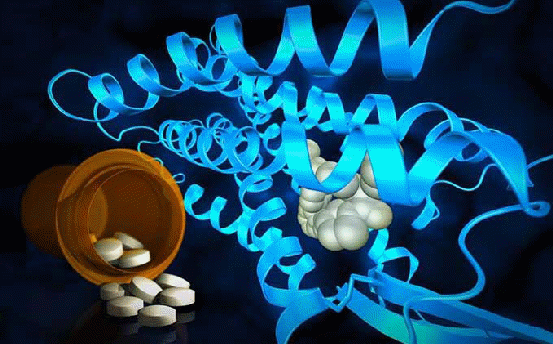
International Team Determines the First Atomic Image of Human Angiotensin II Receptor for New Therapies


In a discovery that advances the understanding of how Angiotensin II works in the human body, an international group of scientists including Professor Haitao Zhang from the College of Pharmaceutical Sciences have for the first time acquired a three-dimensional atomic image of the human angiotensin II type 2 receptor (AT2R) using an X-ray free electron laser technique.
The crystal structures reveal surprising features of this enigmatic hormone receptor,giving scientists new insights into drug design for the treatment of cardiovascular diseases and neuropathic pains. Additionally, a novel mechanism of self-blocking action of G protein-coupled receptor (GPCR) is proposed based on its unique positioning of carboxyl terminus helix VIII in the structure.
This study, published by the journal Nature (doi:10.1038/nature22035), was led by a trio of scientists: ZJU’s Haitao Zhang and the University of Southern California’s Vadim Cherezov and Vsevolod Katritch. The same group has also determined the other subtype of human angiotensin II receptor AT1R on Cell in 2015 (doi: 10.1016/j.cell.2015.04.011.).