F1000Prime recommends ZJU paper as being of special significance in its field


Congratulations to the research team led by Prof. FAN Longjiang from the Zhejiang University College of Agriculture and Biotechnology, whose paper “Genomic evidence of human selection on Vavilovian mimicry” published in Nature Ecology & Evolutionhas been recommended in F1000Prime as being of special significance in its field by F1000 Faculty Member LONG Manyuan, Edna K Papazian Distinguished Service Professor at the University of Chicago. He recommended the paper as “having expanded the concept of mimicry from previous studies in animals, e.g. butterflies and frogs, to weed plants associated with crop plants that were shaped by human selection. ... further generalizing the concept of mimicry.”
F1000Prime identifies and recommends important articles in biology and medical research publications. Articles are selected by a peer-nominated global ‘Faculty’ of the world’s leading scientists and clinicians who then rate them and explain their importance. The Faculty now numbers more than 8,000 leading experts in Biology and Medicine.
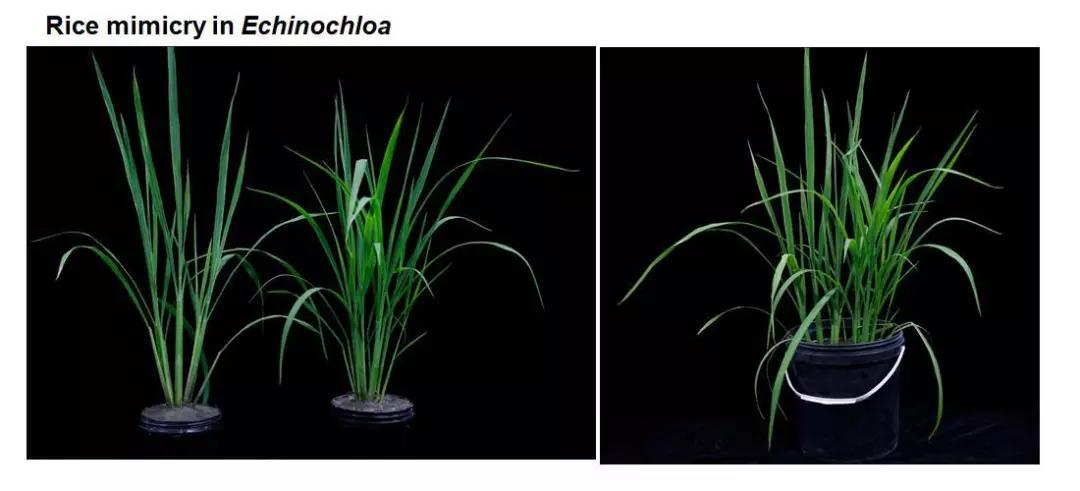
Vavilovian mimicry is an evolutionary process by which weeds evolve to resemble domesticated crop plants and it is thought to be the outcome of inadvertent selection by humans. To gain a perspicacious understanding of its molecular mechanisms, the research team led by FAN Longjiang compared mimetic and non-mimetic populations of Echinochloa crus-galli from the Yangtze River basin phenotypically and by genome resequencing. They discovered that this weed in rice paddies evolved a small tiller angle, allowing it to phenocopy cultivated rice at the seedling stage. Research findings demonstrate that the evolution of mimetic lines from the non-mimetic population can date back to 1,000 years ago and it was subject to a genetic bottleneck, and that genomic regions containing 87 putative plant architecture-related genes (including LAZY1, a key gene controlling plant tiller angle) were under selection during the mimicry process. Their data provide genome-level evidence for the action of human selection on Vavilovian mimicry.
News+: