Increasing Racial Minorities in Starring Roles Hurt Movie Sequel Ratings, but Less So After the Black Lives Matter Movement


Time: 10:00-11:30
Venue: 723, Building A, School of Management
Speaker:
Category: Talk & Lecture
Speaker: Dr. Yang Shiyu, an Assistant Professor of Management at the Texas A&M International University
Venue: 723, Building A, School of Management
Abstract: Watching movies is among the most popular entertainment and cultural activities. As Hollywood calls for increasing representation of racial minority actors, how do viewers react when a movie sequel adds racial minority actors to the main cast? On the one hand, such sequels may receive better ratings if viewers appreciate racially inclusive casting for its moral appeal (the fairness perspective for diversity) and novel elements (the value-in-diversity perspective). On the other hand, consumer discrimination research suggests that if viewers harbor bias against racial minorities, sequels that increase racial minority actors may receive worse ratings. Analyzing a novel dataset of 435 movies nested in 173 series released from 1998 to 2021, we find that increasing racial minority actors in the main cast hurts movie ratings on Rotten Tomatoes and IMDb. We also rule out two alternative explanations: (a) viewers dislike cast change per se; (b) the added racial minority actors have lower credentials. Text analysis of 312,457 movie reviews shows that the negative effect of racial minority increase on movie ratings is mediated by toxic language in movie reviews. Importantly, the negative effect of racial minority increase is mitigated by the Black Lives Matter movement, and this bias mitigation effect exists for both Black and non-Black minority actors, indicating the power of social movements in fostering equity and inclusion.
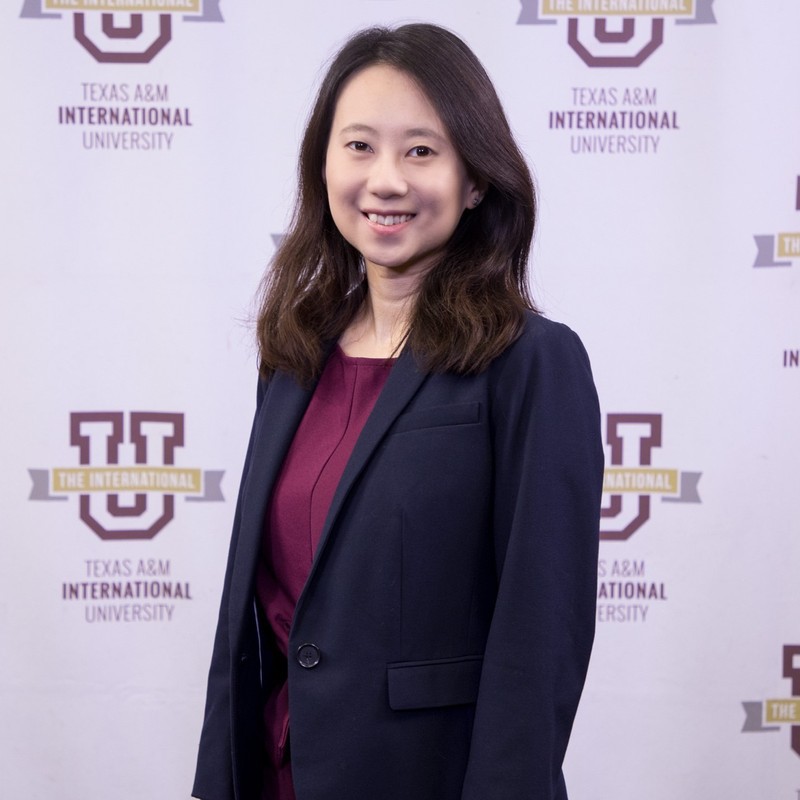
Speaker's profile: Dr. Yang is an Assistant Professor of Management at the Texas A&M International University. She received her Ph.D. in Business Administration from the University of Illinois Urbana-Champaign. She earned a master’s degree in Management, a bachelor’s degree in Economics, and a bachelor’s degree in Psychology from Peking University. Her current research investigates how social movements and social structures can eliminate social disparity and lead to meaningful changes in public responses to inclusion initiatives. Dr. Yang’s works have been published in major social science journals and under review in leading business and psychology journals.