ZJUers’ diary of the giant panda


When you see cute and adorable giant pandas, you will definitely be fascinated by them.
Recently, the summer social practice team from the Zhejiang University School of Life Sciences visited China Conservation and Research Center for the Giant Panda — the world’s largest research and conservation institute for giant pandas. They assumed their identity as “poop scoopers” and “nutritionists” for giant pandas, learning the scientific secrets behind panda breeding and appreciating the special contributions Zhejiang University made in the fields of conservation ecology and reproductive biology.
The Wolong Giant Panda Reserve sits at a high altitude with striking temperature differences between morning and evening. The cool temperature encouraged the “national treasures” to wander out of their enclosure, stretching their bodies and refreshing their spirits.
Wearing custom-made uniforms and special gloves, the students ascended the winding paths, becoming panda poop scoopers and nutritionists – a physically and mentally demanding technical job!
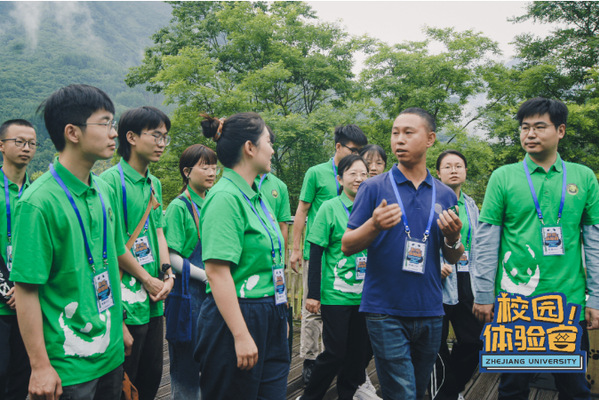
According to TANG Zhujun, a popular science instructor in the Wolong Giant Panda Reserve, pandas are herbivores, and bamboo, their main diet, consists primarily of indigestible fibers. The bamboo they consume is not fermented and is quickly wrapped in mucus and excreted, resulting in less nutrient absorption. Therefore, pandas often increase their food intake to obtain more nutrients, leading to a significant amount of waste. With the detailed and explicit instructions of TANG Zhujun, the students went outside the enclosure to clean up feces and pick up broken bamboo.
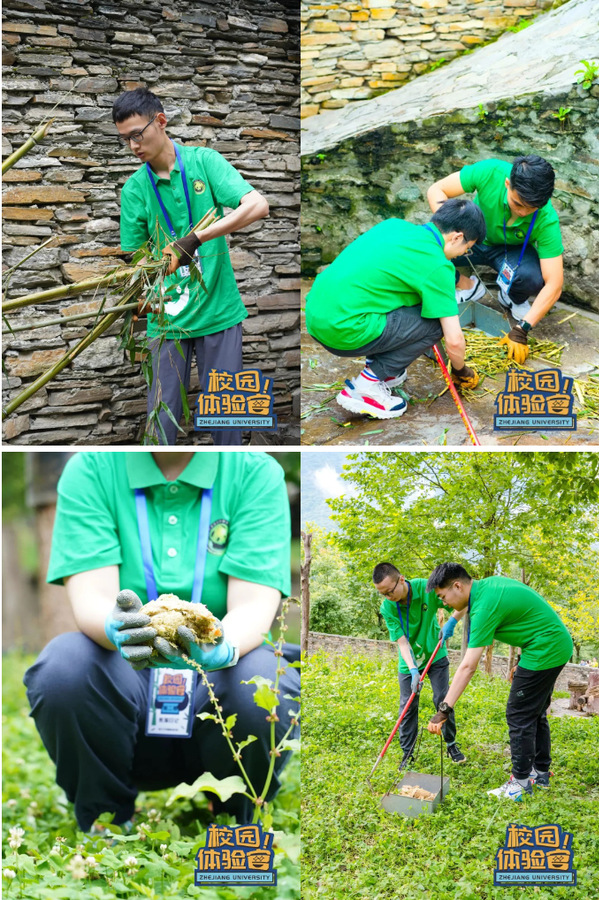
“Panda excrement is not deposited in specific locations, so to clean it thoroughly, we must carefully search inch by inch and maintain hygiene,” said ZHANG Yansong, a freshman from the Biology Science class, “It is not easy to be a panda keeper; it involves a lot of labor behind the scenes.”
A slightly challenging task was bamboo smashing. Selecting bamboo with the proper texture, holding the tender end high and forward – with a “smack,” the bamboo was smashed on the ground, causing it to “blossom,” and the palm felt a tingling vibration. The direction and strength of the action, together with the growth of the bamboo, all added to the difficulty of this task. If not done properly, it’s impossible to achieve the desired effect.
“We do this work to reduce the wear and tear of pandas’ teeth caused by bamboo during feeding, thus extending their lifespan,” explained TANG Zhujun.
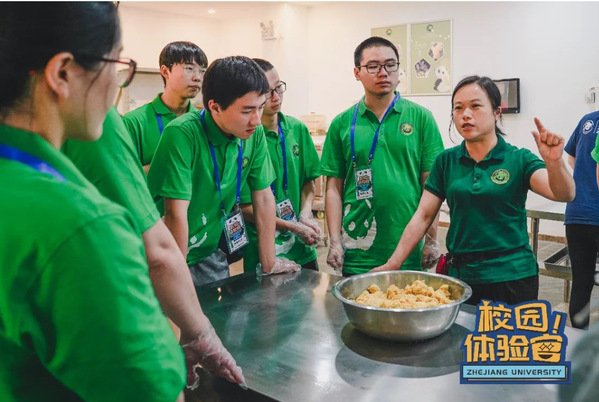
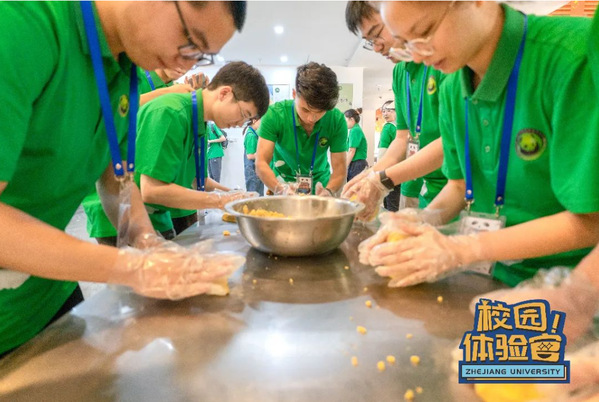
To better supplement their nutrition, apples, carrots, and steamed buns are common “supplementary meals” for giant pandas. “The steamed buns given to pandas are specially made and require four hours of steaming,” introduced TANG Zhujun. On hearing this, the students rolled up their sleeves to start making their favorite steamed buns by kneading, pinching, rubbing, rolling, and pressing the flour.
“The process of making steamed buns was very interesting, and my classmates even created many amusing shapes, including the ‘Qiushi’ eagle, emblematic of Zhejiang University,” said ZHAO Ziming, a freshman from the Qiushi Science class.
The Wolong Giant Panda Reserve was quite familiar to the students. Since 1987, Prof. FANG Shengguo’s team from the Zhejiang University School of Life Sciences has collaborated with the experts at the Wolong Giant Panda Reserve. They have established a research team for giant panda conservation ecology, and their research is at the cutting edge of research in giant panda conservation and ecology worldwide.
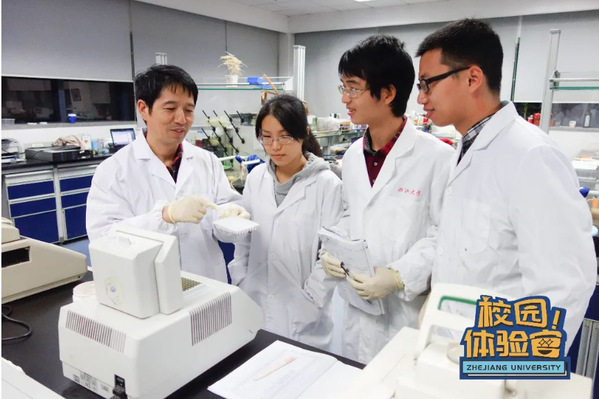
The team was the first in the world to develop a technique to extract a complete DNA genome from giant panda feces, addressing a tough problem with non-invasive sampling of giant pandas, for which they received the Second Prize for the State Technological Invention Award in 1999. They were also the first to elucidate the molecular mechanism of giant panda mate selection and developed a pedigree management system for the captive population using computer software programming.
“This technology has been applied in the management of giant panda breeding pairs, and the big data platform established from this also ensures the security of giant panda information,” said FANG Shengguo.
During this social practice work, the students also had face-to-face communication with Prof. ZHANG Hemin, the former executive vice director of China Conservation and Research Center for the Giant Panda, known as the “Panda Father,” to learn about his stories of living closely with giant pandas.
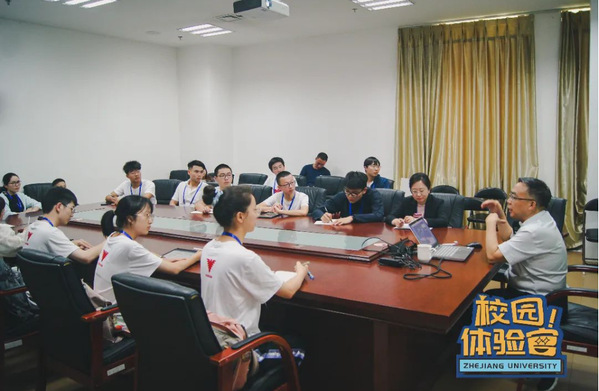
Prof. Zhang Hemin has long been engaged in research on giant pandas and he has led his team to overcome the “three difficulties” in artificial breeding, specifically in mating, conception, and cub survival. They have established the world’s largest, genetically diverse, and most vibrant captive population of giant pandas. They have also built a global important cooperation and exchange platform, pioneering research in captive giant panda domestication, field introduction, and reintroduction.
“Prof. ZHANG and Prof. FANG’s work experiences are made up of their encounter with endangered wildlife. Their scientific narratives tell us the challenges behind giant panda conservation,” said CAO Jiahao, a would-be doctoral student, “We have learned from them the resilience and determination to move forward in scientific research.”
Translated from the article written by HAN Mingzheng, KE Yineng, ZHOU Yiying
Photo credit: ZHOU Yiying, CAO Zhijun, YU Ruoxin, HAN Mingzheng, BAO Zi