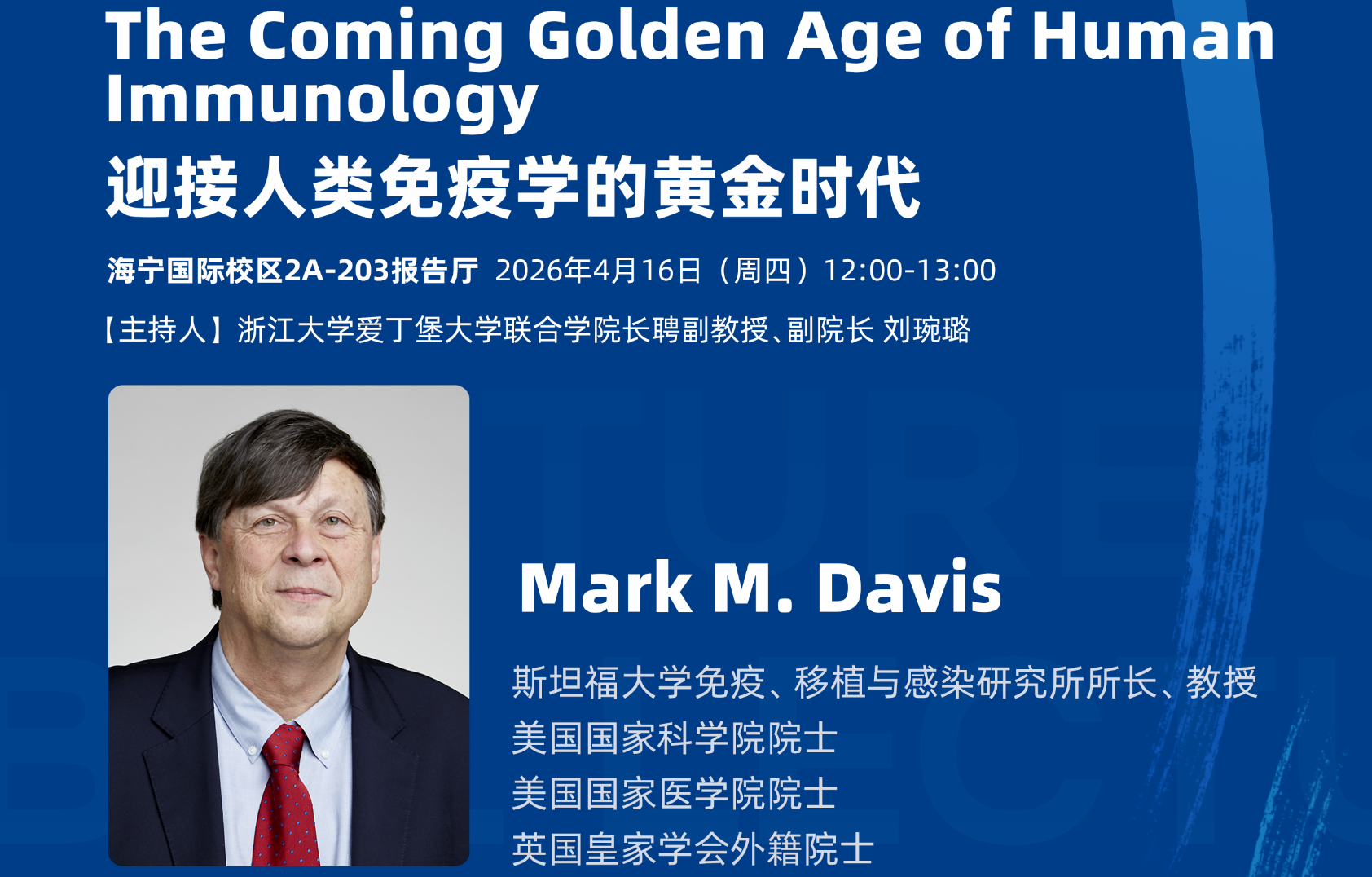
The coming golden age of human immunology


Time: 12:00
Venue: International Campus
Speaker: DAVIS Mark M.
Category: Talk & Lecture
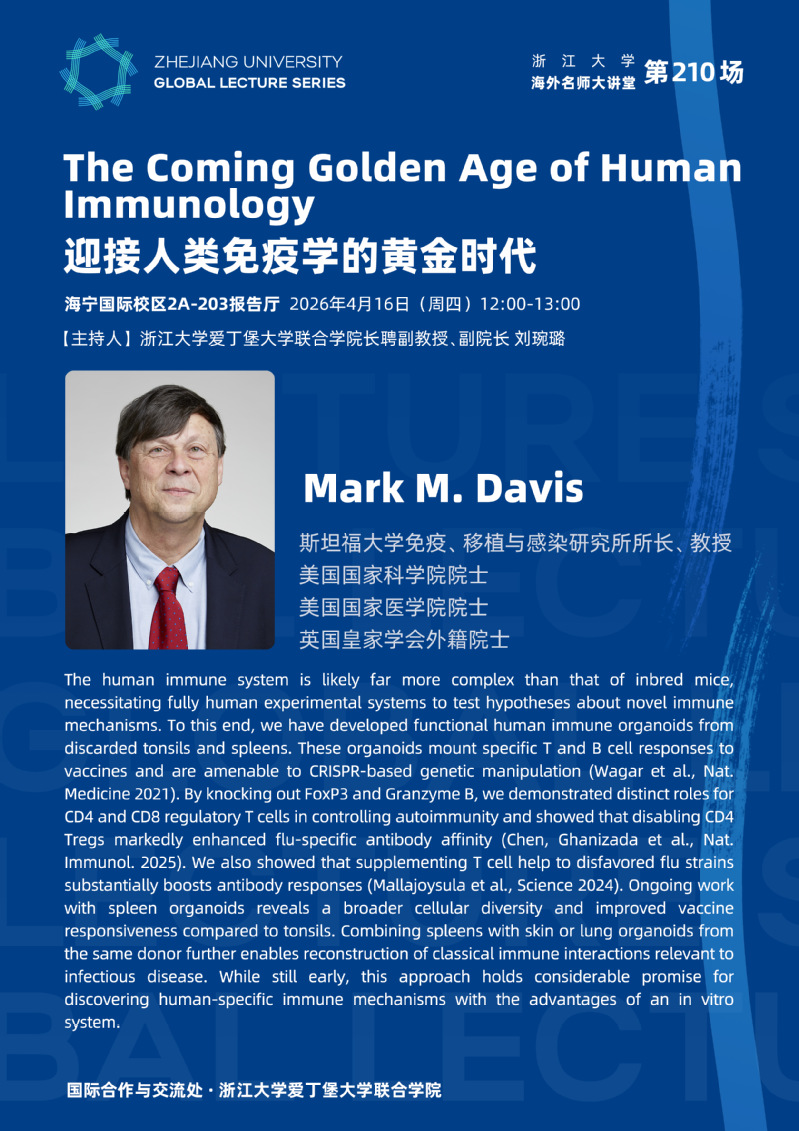
Speaker: Mark M. Davis
Venue: Lecture Hall 2A-203, International Campus
Abstract: The human immune system is likely far more complex than that of inbred mice, necessitating fully human experimental systems to test hypotheses about novel immune mechanisms. To this end, we have developed functional human immune organoids from discarded tonsils and spleens. These organoids mount specific T and B cell responses to vaccines and are amenable to CRISPR-based genetic manipulation (Wagar et al., Nat. Medicine 2021). By knocking out FoxP3 and Granzyme B, we demonstrated distinct roles for CD4 and CD8 regulatory T cells in controlling autoimmunity and showed that disabling CD4 Tregs markedly enhanced flu-specific antibody affinity (Chen, Ghanizada et al., Nat. Immunol. 2025). We also showed that supplementing T cell help to disfavored flu strains substantially boosts antibody responses (Mallajoysula et al., Science 2024). Ongoing work with spleen organoids reveals a broader cellular diversity and improved vaccine responsiveness compared to tonsils. Combining spleens with skin or lung organoids from the same donor further enables reconstruction of classical immune interactions relevant to infectious disease. While still early, this approach holds considerable promise for discovering human-specific immune mechanisms with the advantages of an in vitro system.