China–Arab States Science and Technology Cooperation Center for Public Health Launches Talent Development Action Plan


Marking the 70th anniversary of diplomatic relations between China and Arab states, the initiative aims to cultivate 1,000 healthcare professionals over the next five years.
On June 5, the China–Arab States Science and Technology Cooperation Center for Public Health (China–Arab Center) officially launched its Talent Development Action Plan at The First Affiliated Hospital, Zhejiang University School of Medicine (FAHZU), marking a new milestone in China–Arab collaboration in public health, medical education, and scientific innovation.
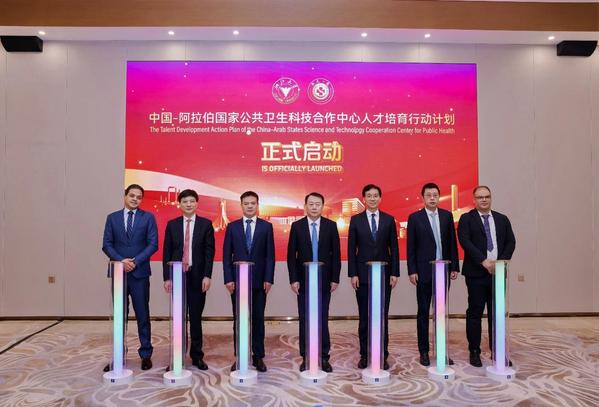
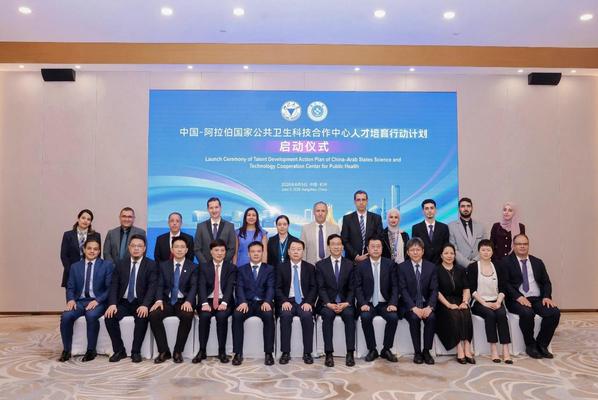
The launch comes as China and Arab states celebrate the 70th anniversary of diplomatic relations in 2026. Government officials, university leaders, healthcare professionals, and trainees from Arab partner institutions attended the ceremony, underscoring a shared commitment to strengthening health cooperation through talent cultivation and knowledge exchange.
In his remarks, CHEN Gang, Vice President of Zhejiang University, noted that the initiative represents a strategic shift in the Center’s development—from institutional establishment to capacity building, and from project-based cooperation to broader ecosystem collaboration. He emphasized the importance of talent development, scientific innovation, and people-to-people exchange in advancing the Center’s mission and contributing to a global community of health for all.
Since its establishment at FAHZU in July 2025, the China–Arab Center has emerged as a unique platform for public health cooperation between China and Arab countries. Supported by Zhejiang University and led by FAHZU, the Center has built a comprehensive framework spanning scientific research, medical education, and clinical practice.
Over the past year, FAHZU has established dialogue and cooperation mechanisms with more than 20 universities and healthcare institutions across the Arab world and has trained over 150 healthcare professionals in specialties including hepatobiliary and pancreatic surgery, infectious diseases, hematology, nephrology, cardiology, and gastroenterology.
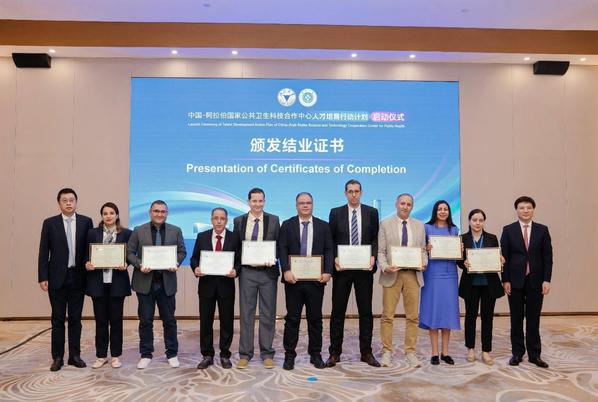
The ceremony also recognized participants who successfully completed previous training programs. Representatives from Algeria and Jordan shared their experiences, highlighting the opportunity to observe advanced clinical procedures, cutting-edge medical technologies, and innovative research practices at FAHZU. They expressed confidence that the knowledge gained would contribute to healthcare development in their home countries while fostering deeper institutional partnerships.
Looking ahead, FAHZU President LIANG Tingbo announced an ambitious goal: to train 1,000 high-caliber healthcare professionals from Arab countries over the next five years. The hospital will leverage its extensive clinical, educational, and research resources to develop innovative training models that enhance healthcare service capacity and public health governance across the region.
In parallel, FAHZU will further strengthen joint scientific research, accelerate the translation of medical innovations, and expand the sharing of advanced clinical technologies. These efforts are expected to inject new momentum into China–Arab health cooperation and support the sustainable development of healthcare systems in participating countries.
As China’s only public health science and technology cooperation center jointly established with Arab states, the China–Arab Center continues to serve as a bridge for scientific collaboration, talent development, and cultural exchange, advancing a shared vision of better health and deeper international partnership.
Source: The First Affiliated Hospital, Zhejiang University School of Medicine
Editor: DING Chenwei