Zhejiang University launches Future Automobile Innovation Class


Zhejiang University (ZJU) has officially launched the Future Automobile Innovation Class, a pioneering undergraduate program hosted by the College of Energy Engineering. Set to welcome its first cohort, the initiative responds to the global automotive industry's rapid transformation, driven by the intersecting trends of green energy, low-carbon development, and artificial intelligence.
Situated within one of China's most dynamic and comprehensive automotive industry clusters, the program offers students unparalleled proximity to the forefront of mobility innovation. Students will benefit from deep integration with leading vehicle manufacturers, autonomous driving tech firms, and top-tier suppliers. This thriving ecosystem ensures that the curriculum directly aligns with real-world technological demands. Through joint projects mentored by both university faculty and industry experts, students will learn to transform theoretical designs into fully functional engineering solutions.
The curriculum breaks down traditional academic barriers to construct an integrated knowledge framework encompassing mechanical, energy, electrical, and information engineering. Building on a rigorous foundation of engineering and computer science, the program empowers students to tailor their academic journey through two advanced modules.
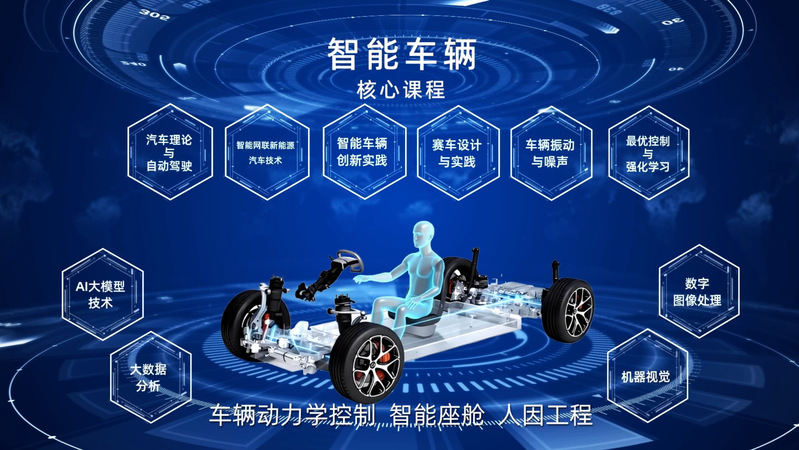
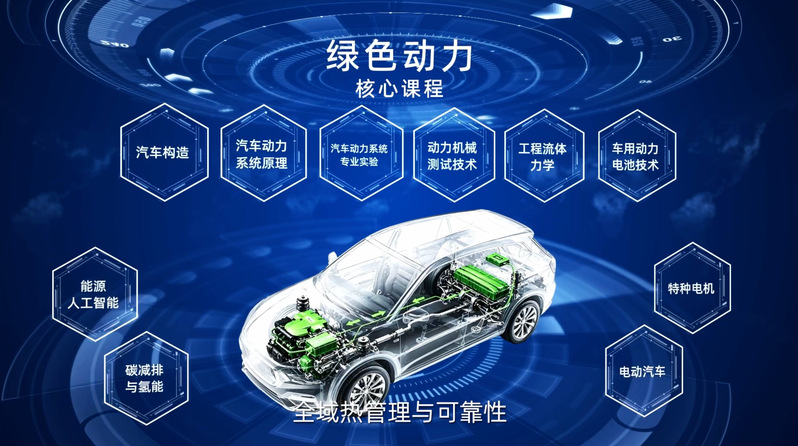
The Smart Vehicles track delves into autonomous driving, intelligent cabin design, algorithmic development, and AI models, equipping students with the capabilities to build artificial intelligence-empowered mobility systems. Alternatively, the Green Power track focuses on sustainable solutions, exploring carbon reduction technologies, hydrogen fuel, biomass energy, and advanced electric vehicle powertrains to shape an eco-friendly future.
Hands-on practice is seamlessly woven throughout the four-year journey. A standout feature of this practical approach is the university's student-led motorsport team, where undergraduates gain comprehensive experience in designing, manufacturing, and testing race cars. Combined with specialized innovation and entrepreneurship courses, these platforms cultivate complex problem-solving skills in high-stakes engineering environments.
Graduates of the program are poised for diverse and impactful careers. Beyond the traditional automotive sector, their interdisciplinary expertise opens doors in emerging fields such as robotics and the low-altitude economy. Whether pursuing advanced academic research at global top-tier institutions, driving technological breakthroughs at leading enterprises, or launching transformative startups, students will be fully equipped to redefine the future boundaries of human mobility.
Source: College of energy engineering, Zhejiang University
Translator: JIANG Chenqi ('27, Structural Engineering)
Editor: JIANG Chenqi, DING Chenwei