ZJU Scientists Invent Ultrafast Multi-dimensional Processing Method


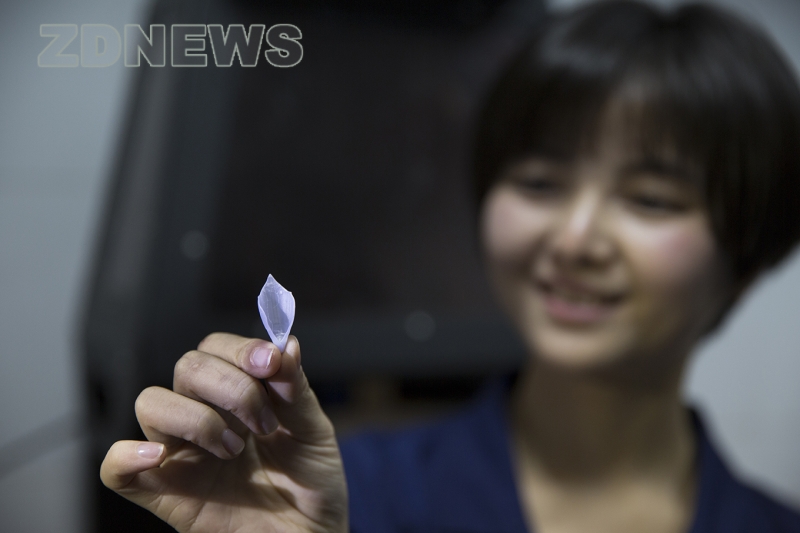
A planar sheet can be “swollen” into a complicate dimensional shape in an ultrafast way. Scientists term it as ultrafast multi-dimensional processing. This method is invented a research team led by Prof. Xie Tao from the College of Chemical and Biological Engineering, Zhejiang University. Relevant findings were published in a paper entitled “Ultrafast Digital Printing toward 4D Shape Changing Materials” in Advanced Materials on December 8. It is believed that this invention will open up a brand-new approach to 3D printing and customized processing.
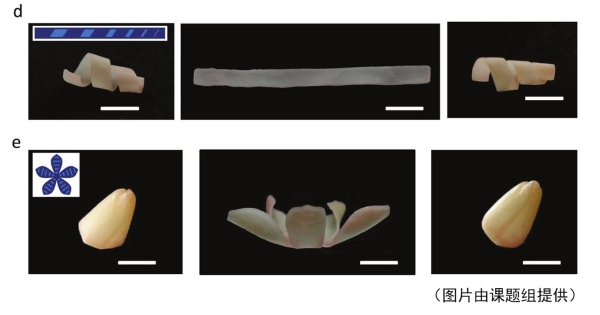
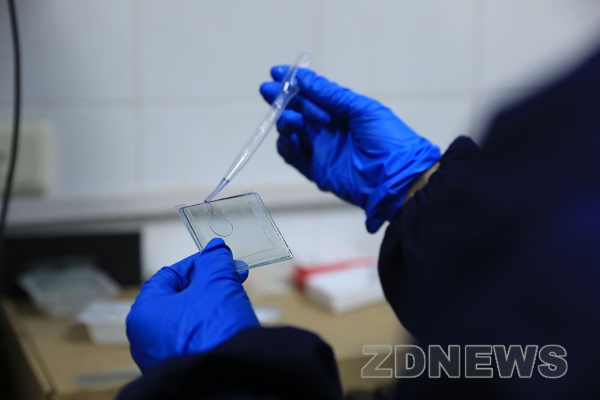
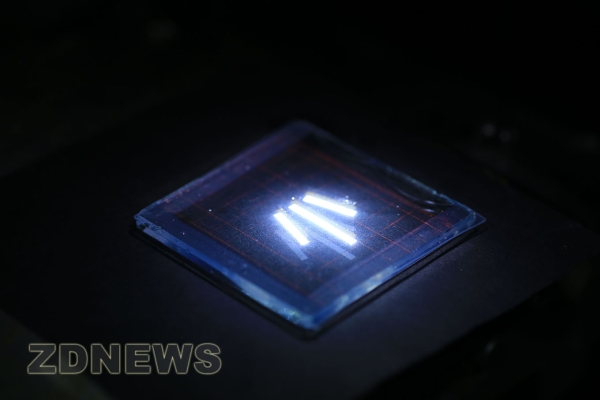
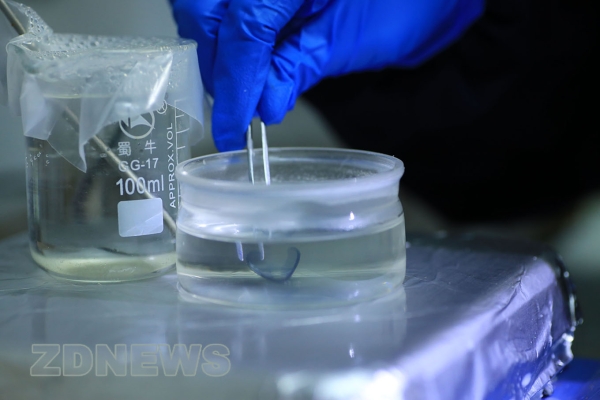
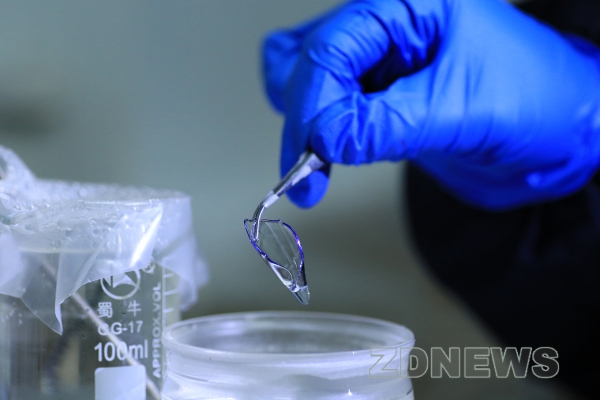
Huang Limei, who is the first author of the paper, “dissected” the whole “magical” process. First, a reaction cell is designed consisting of two surface treated glass slides (1 mm thick) separated with a silicone rubber spacer (0.5 mm thick). Second, a computer-controlled commercial projector is required to allow dynamic spatial control of the light exposure time at each pixel level. The brief light exposure creates different materials at the individual pixel level despite the use of the same starting monomer mixture. Due to the different cross-linking densities, subsequent immersion in water induces differential swelling in the pixelated sample, creating stresses that turn the 2D polymer film into a 3D object. Third, the digitally cured sample is further developed into a 3D shape through water. For a hydrogel, the swelling ratio was defined as the weight ratio of a sample between its fully swollen hydrogel state and its dry state. For better visualization, all photographed hydrogels were dyed by adding crystal violet (<0.01 wt%) in the deionized (DI) water during swelling.
“On the basis of this principle, we can also make a planar sheet visible in melted wax, thus making a 3D wax flower,” said Xie Tao, “The freedom to use a variety of precursors carries many benefits, one of which is to incorporate additional dimensions beyond the three geometric dimensions such as active shape transformability and excellent shape memory properties. Therefore, this technology is termed as ultrafast multi-dimensional processing.” This technology shows considerable application promise in various domains. For example, it will tremendously enhance design production efficiency in jewelry manufacturing.