Connection/ Issue 2/ Spotlight on/ The AI next door


The AI next door
Shareholders and investors, doctors and patients in the cloud, right in Hangzhou.
By Artyom Tsaturyan
In recent months, all foreign students, including me, have come to realize that Hangzhou is the electronic hub, or as we call it, the Silicone City of China. We had heard about or been using Alibaba services long before arriving in the city, but it took us a while to get used to the cashless society.
Up till today, we still keep cash, well, just in case. But we get some troubled looks from the shop assistants while digging into our wallets.
In December, we had an inspiring field trip on the Internet of things. From “intelligent” hospitals to “smart” entrepreneurship……both are envisioned by men, currently semi-independent and reaching the heights of Artificial Intelligence.
Smart hospital
For a smart hospital, it was a little hard to imagine robots instead of doctors, but what we found there was more exciting than any robot. We were greeted by a smiling nurse, a human, who led us to the second floor. It was a clean, modern hospital with nothing out of place. The rooms were ordinary, but, to our delight, the usual hospital smell and scary tools were missing.

A hospital without medicine and tools? Were we in the right place? Yes! We were at one of the clinics of WeDoctor Group. What started as philanthropy has become one of the most exciting developments in the medical sphere. The Group now provides TeleMedicine, virtual care from professional doctors, connectivity, and personalized care.
Hospitals are crowded, sometimes not very hygienic, while doctors are busy and don’t even recognize their patients. Let’s be fair, nobody likes to go to hospital. With the help of WeDoctor, you don’t need to anymore. First, you go to one of the clinics, get a full check-up, get your info saved in a file and a doctor will be assigned to you. For those who live near hospitals or at schools where nurses can be easily contacted, this may not sound like a revelation. But for those in rural areas, and those who need to “trudge” to get to the nearest hospital only to be told to wait in line – this could be a salvation.
This isn’t even the most exciting part. In most cases, you wouldn’t even need to deal with a doctor. Download the app, sign in, tell the AI your symptoms, and you will be told what medicine you need and even be written a prescription. You don’t trust the AI? Too good to be true? It’s totally understandable. Perhaps a trial use would be helpful.
So how can we build trust towards smart hospitals was my question for our guide. We need to start from patient satisfaction. And one way to build it is through referrals and follow-ups.
Smart entrepreneurship
Our second stop was “WeiLian”, an online space for modern investors and entrepreneurs. What WeiLian provides is information, connectivity, and access.
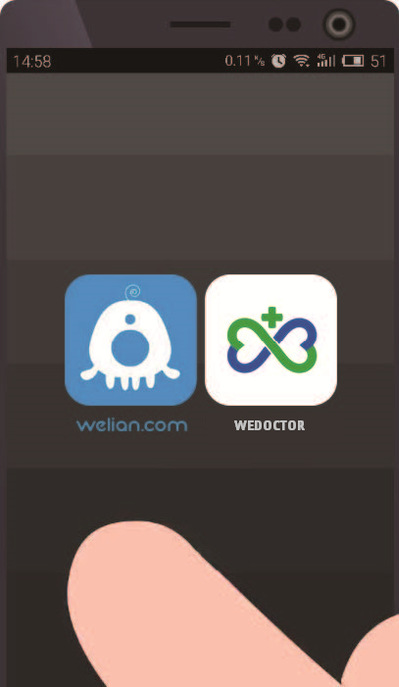
In the age of technology, information means power and money. Potential investors don’t need to go to gatherings or meetings to find the next Google or WeChat. They just need to download the app and go through the database of startups which the AI will categorize according to the investors’ preferences.
WeiLian is also a social platform for investors and startups. A young company created by ZJU alumni, WeiLian already boasts a gigantic pool of investors and startups. E-commerce is the leading category. WeiLian has surpassed traditional investment methods in Shanghai and Hangzhou. Beijing is the third on the list but other cities are catching up.
The smart AI tracks all the activities of investors. Just with a click of your finger, you can see how interested a certain investor is in your project and which investor best fits your aspirations.
Just as an octopus uses its intelligent brain to coordinate numerous tentacles, WeiLian’s AI is able to coordinate numerous startups and investors, contributing to a better business environment.
In recent years, technology has entered all aspects of our life. But still, our mobile phones and computers are not very reliable and it is too early to put all responsibilities on AI. In the case of hospitals, at any moment the network may be interrupted and the computer freeze.
We still have a long way to go to become a fully automated society with AI connectivity in all fields, but the foundation seems solid. We are on the way to building a better future for the next generation and as Mr. Putin, Elon Musk, and many others have mentioned, AI is the next global race. The winners will be the leaders of the future world. How will you be part of that world?

Artyom Tsaturyan
First-year master's student
Future Leaders Program
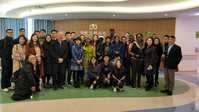
The Future Leaders Program is a two-year master’s program offered by ZJU’s School of Public Affairs. Taught fully in English, the program aims to foster future leaders in public sectors through a combination of specialism courses, leadership training, field trips, etc.