Focus on “Two Sessions”— Concerns and proposals of ZJUers


[Editor’s Note: This is third part of our “two sessions” special. What were ZJUers concerned about? What proposals did they submit?]
More than 2000 political advisors attended the meeting during the “two sessions”. Among them, there were a special group of people who carry the baton of Qiushi Spirit regardless of the fact that they work in different fields in different places. They are labeled as ZJUers.
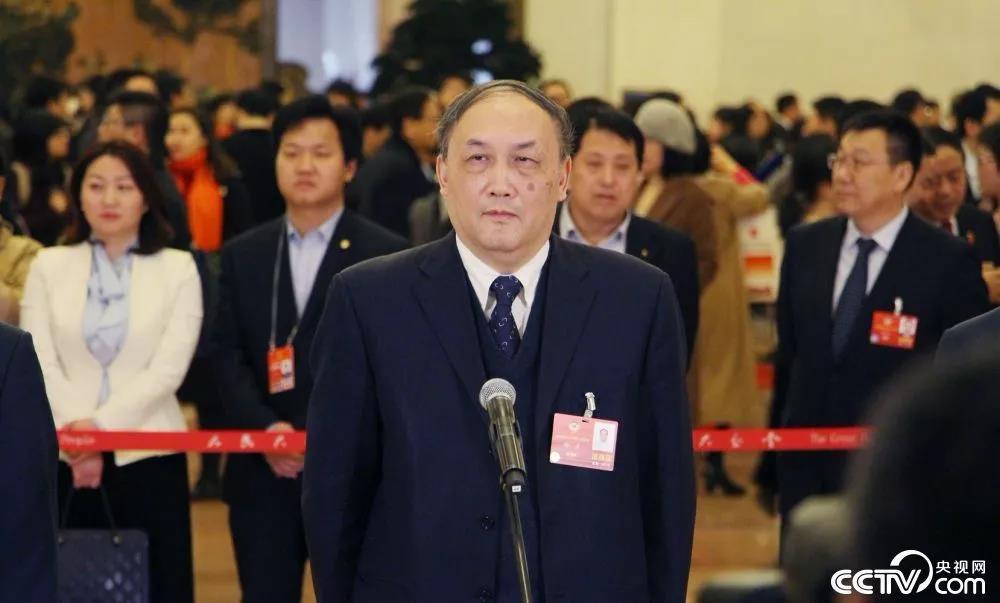
YANG Wei, former president of the National Natural Science Foundation of China and chairman of the Development Committee of Zhejiang University, asserted that the “Overall Rationing System” might entitle researchers to more autonomy.
“In the past, every researcher should fill in a budget form comprised of different items, with a certain proportion of money allocated to each item, while applying for a research project. If the “Overall Rationing System” is adopted, researchers will simply draw up their budget in accordance with specific needs and thus be granted more autonomy,” said YANG Wei.
It is said that some institutions have implemented the “Overall Rationing System” on a trial basis. To ensure the smooth operation of this system, an explicit and assessable objective should be a top priority. “This should be articulately presented. Suppose that a researcher aims to make a 7-nm integrated circuit. If he makes it, then his goal should be perceived as already attained,” said YANG Wei. However, some goals cannot be clearly defined. YANG Wei suggested summarizing experience in pilot institutions first before promoting this practice.
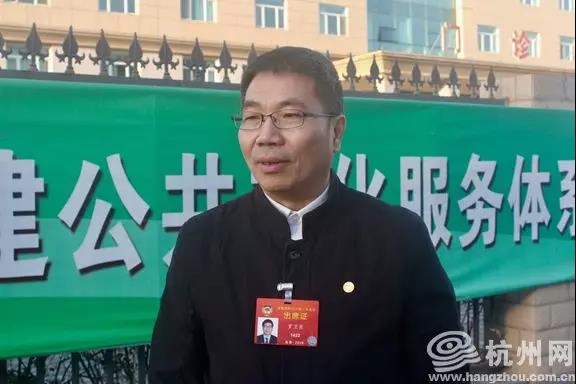
LUO Weidong, Vice President of Zhejiang University, evaluated the Government Work Report 2019 as “passionate” and “pragmatic”.
It is stressed in the Government Work Report that “we developed new ways to improve macro regulation and ensured that major economic indicators were kept within an appropriate range”. “In the macro environment, we pursued a proactive fiscal policy and a prudent monetary policy, such as cutting taxes and fees, to spark off the dynamism of micro-economic entities and resolve the actual difficulties of enterprises in a tangible manner,” said LUO Weidong.
It is also highlighted in the Government Work Report that “we continued to ensure and improve living standards.” “In the process of industrial transformation and upgrading, the most prominent area of weaknesses is technology and talents, and the development of technology should rely on talents,” LUO Weidong observed. “I think it extremely sensible for the government to give priority to talent cultivation and personnel construction,” said LUO Weidong, “Vocational education is essential to the revival of the Chinese nation in the long run. Personnel training programs can play a multiple role in increasing job opportunities, fueling domestic demands and improving quality.”
In recent years, Hangzhou has taken a host of measures to promote the improvement of the business environment by creating an efficient and transparent political environment, an open and competitive market environment, a dynamic and vigorous innovation environment, a generous and inclusive talent environment and a fair and just legal environment. The business environment in Hangzhou turns out to be more favorable on a nationwide basis, but compared with the world-class standard, there is still a long way to go.
LUO Weidong explored potential ways to give entrepreneurs a sense of belonging, particularly from the perspective of private enterprises. “As a city vested with the power to make local laws, Hangzhou may be well-advised to promote the local rule of law in legislative and judicial dimensions, thus providing a more reliable and stable rule of law for businessmen and innovation and entrepreneurial activities. We should create a favorable business environment by legal means, protect the personal safety, financial safety, income safety and operation safety of various economic entities, in particular private businessmen, remove their worries, and dedicate resources and time to economic development. This way, Hangzhou will continue to take the lead in China,” said LUO Weidong.
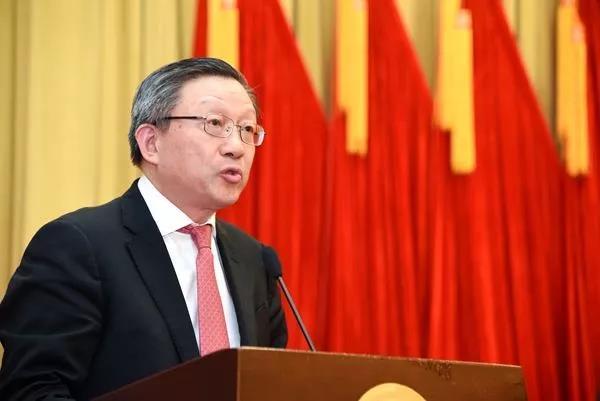
CAI Xiujun, President of Sir Run Run Shaw Hospital affiliated to the Zhejiang University School of Medicine, suggested that we should adopt an optimistic outlook on the future of 5G in medicine and break through the isolated island of information in hospitals.
One of the proposals that CAI Xiujun submitted was related to “Internet Plus Healthcare”. “We should lift medical data barriers and avoid repeated checkups. Moreover, we should be optimistic about the prospects for 5G technology in medical fields, particularly in terms of long-distance medicine,” CAI Xiujun remarked.
CAI Xiujun felt deeply distressed by the scene where patients lined up, registered and rushed back and forth between different hospitals. He expressed his desperate hope that hospitals could be interconnected in terms of information. Only with the connectivity of information between hospitals will patients avoid unnecessary repeated examinations and tests. “If we can accurately grasp how much time the doctor spends on each patient, patients will be treated in a regular and orderly manner, and the waiting time will be appreciably shortened,” said CAI Xiujun.
“We are negotiating with Huawei regarding 5G technology, and we look forward to co-establishing a 5G medical research institute to provide stronger technical support for data sharing and connection,” said CAI Xiujun, “Technology can immensely improve the medical experience of ordinary people and release the pressure of major hospitals.”