ZHANG Weidong: innovator in the next generation of battery


[Editor’s note: ZHANG Weidong, a doctoral candidate from the College of Chemical and Biological Engineering, has been honoured one of the Ten Best ZJU Students. In today’s writeup, we cover his dedication to the research on the next generation of lithium batteries.]

Start by being interested!
Zhang Weidong chose Chemical Science as his undergraduate major out of pure interest 7 years ago. While strengthening his scientific foundations, Zhang took advantage of the numerous resources provided by the University to forge his path and to, step by step, improve himself. As with many things in life, he knew that passion was crucial. Identifying his one true passion was key to unlocking the path to success.
To that effect, Zhang joined multiple research groups during his undergraduate years to expose himself to the various research pathways on offer. Having witnessed the magic of catalytic chemistry and the challenge of organic chemistry, he finally chose to join Prof. LU Yingying's research team. The goal is to design a lithium battery system with high energy density.
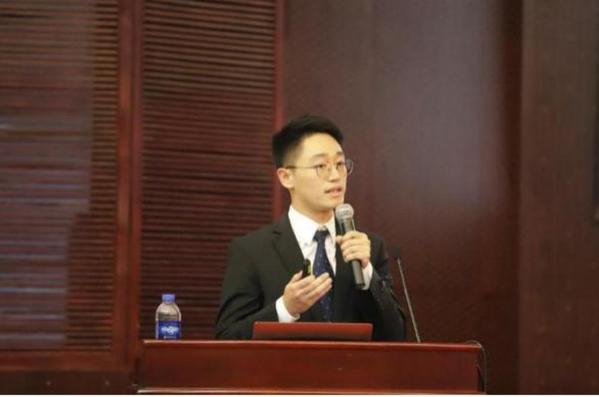
Under the guidance of Prof. Lu, Zhang has published 17 papers on SCI, attained 5 patents, and won the National Scholarship twice.
Innovation is the best solution
The tiny lithium battery has brought great difficulties to scientists. When using the lithium battery, its anode would be covered with many needle-like deposits. This leads to a system short circuit and may, in the worst-case scenario, lead to an explosion. As such, the failure mechanisms of lithium batteries have become an area of great interest to many in the field.
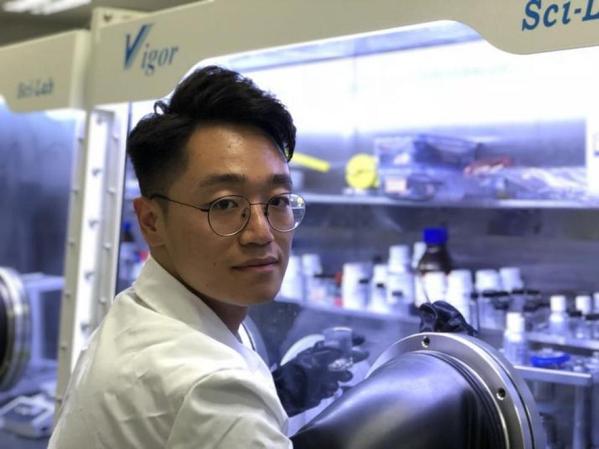
With the guidance from Prof. Lu, help from Cornell University, and support from the School of Mechanical Engineering and the Center of Cryo-Electron Microscopy in Zhejiang University, Zhang's team started looking for the cause of battery fire. They adjusted the ion conduction mechanism of the electrode interfaces and carried out an all-round functional change to the battery system, achieving micron-scaled the deposition sediments and improving battery cycle life by 12 times. The research results have been published in many internationally renowned journals such as Science Advances and Advanced Materials.
From lab experiment to industrial product
Zhang knows that there is still a huge gap dividing bench side experiments and mass industrial production. Whilst the research lab focuses greatly on theoretical and experimental side of lithium batteries, the enterprises are more concerned about product safety and service life. To bridge the gap, Zhang goes to the factory workshops every month to communicate with the workers. In doing so, he gains a first-hand understanding of the real life questions, enabling him to create products that are closely aligned with the industrial needs.
His efforts have paid off. Gradually, more and more his research has moved from the laboratory to the factory. Zhang is confident that future New Energy Vehicles (NEVs) and mobile phones will use lithium batteries which are based on his breakthrough research. And Zhang further believes his research will have transformative effects on traditional production capacity.
Having achieved marvellous results, Zhang said, “there are still many challenges ahead. My next goal is to solve the intrinsic safety issues related to lithium batteries.”
Writer: LU Jingwen
Editors: Ian Chew, TIAN Minjie
Photos provided by: ZHANG Weidong