FU Qiang meets with IAEA’s delegation


On November 9, Peter Fröbel, director of Human Resources at the International Atomic Energy Agency (IAEA), led a delegation to visit Zhejiang University. Prof. FU Qiang, vice chairman of the Zhejiang University Council, graciously welcomed Fröbel and his delegation, offering insights into the university's recent advancements in disciplinary development, talent cultivation, and international collaboration.
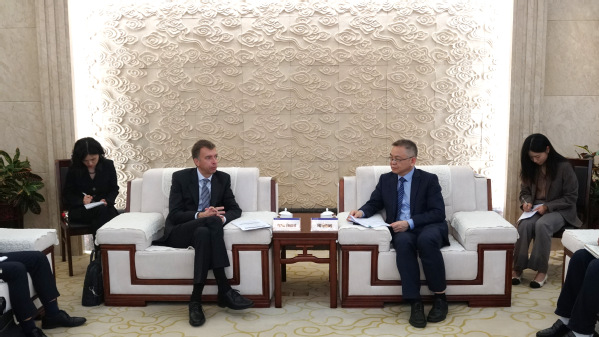
FU Qiang expressed a warm acknowledgment of the IAEA's significance as a key partner for Zhejiang University, emphasizing the longstanding foundation for collaboration. He highlighted Zhejiang University’s commitment to global engagement in an open manner and institutional cooperation with international organizations so as to foster sustainable development. He proposed exploring cooperation in talent cultivation and scientific research. He also underscored the potential for synergy between international organizations and premier university in jointly addressing global challenges.
Fröbel introduced the IAEA’s mission, function, and organizational structure. He commended the expeditious development of China’s nuclear industry and technology over the past few decades, recognizing China’s pivotal role in promoting the development of the IEAE. He expressed eagerness to recruit outstanding Chinese talents into the IEAE and to deepen cooperation in youth talent cultivation across various fields and levels.
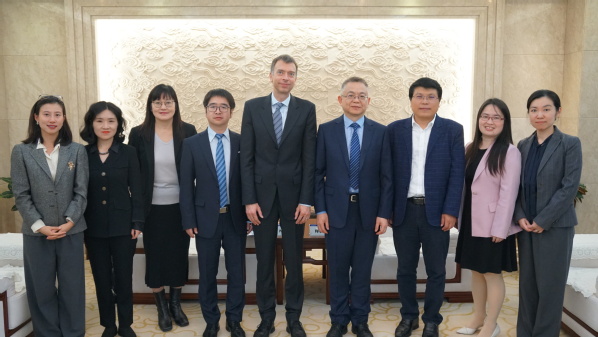
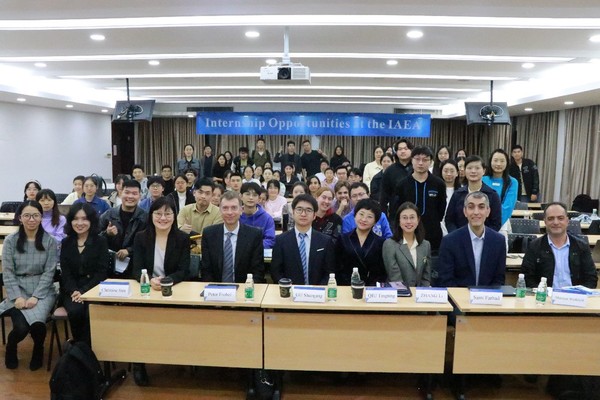
After the meeting, the IEAE delegation engaged in discussions on cooperation agendas and presented internship opportunities to over 100 students at Zhejiang University. They urged the youth to actively participate in international affairs and contribute to the development and peaceful use of nuclear technology.
Established under the United Nations in 1957, the IAEA is an independent science and technology-based organization operating for intergovernmental nuclear cooperation. Headquartered in Vienna, it boasts 175 member states. The IAEA’s mission is to assist its member states in the use of nuclear science and technology for various peaceful purposes in the context of social and economic objectives and facilitate the sustainable transfer of such technology and information to developing member states.