Embark on an inspiring journey from insect fear to pest control with the Chu Kochen Scholar winner!


Meet HE Chun, a 2021 Master's student from the College of Agriculture and Biotechnology at Zhejiang University, and the honored recipient of the 2023 Chu Kochen Scholarship - the highest accolade bestowed upon ZJU students. She has devoted herself to the study of green pest control in agriculture, actively participating in major national projects like the Key Program of the National Natural Science Foundation of China. In just two years, she has published four high-quality papers in international journals amassing an impressive cumulative impact factor of 45.2. Alongside her academic pursuits in entomology, she has also contributed to the development of a series of brand activities related to the field. Immersed in her scientific explorations, Chun dreams big in the realm of research. Now, let's unfold her inspiring journey!

Knocking on the door of the insect world, she is a dream chaser
Parasitic wasps are widespread in ecosystems, but this inconspicuous bug is an important natural enemy resource of agricultural pests: it can parasitize pests to achieve green pest control; the parasitic factors it carries can regulate the physiological processes of the host and is a natural new insecticidal protein resource library. HE Chun is a little expert in studying parasitic wasps.
Unexpectedly, HE Chun used to be a little girl who is afraid of bugs, and has an instinctive resistance to this small creature, “I used to be afraid of bugs, all bugs were afraid. During an undergraduate field practice, HE Chun saw corn in the fields being gnawed by corn borers, with large areas lying down and rows of holes on the leaves. This allowed her to experience the depth of pest damage to crops firsthand. While feeling saddened, she also saw the irreplaceable value of insect research for agriculture and national development, which made her determined to choose entomology as her focus for postgraduate study.
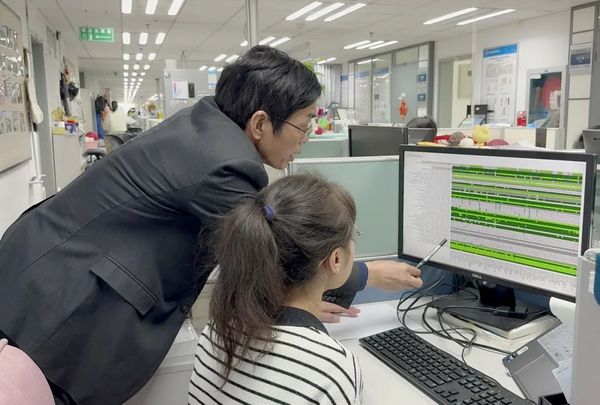
As a first-year graduate student, she spent several months on a small project, but the data results were not satisfactory. She often encountered such situations but did not let her back down, “The truth is sometimes found by continuous digging, continuous trying, and continuous analysis. The insect genomics research HE Chun is conducting requires a certain coding background, and when she first came to ZJU for graduate studies, HE Chun didn't know about coding to having to start learning from scratch. The unfamiliar programming language made HE Chun feels a headache, but her seniors always just encouraged her to stick with it, and gave her guidance along the way. HE Chun never gave up. As a newcomer to her laboratory, she would often be the last one to leave, walking and considering the program's running became a habit for her, That time just after I was admitted was very precious to me, and it greatly influenced my subsequent graduate life, just like a knowledge explosion. Although the process was very tough, I mastered the knowledge and technology, and I like the focused and serious me.
HE Chun most wants to thank her mentors, “The grace of a good teacher is more than heaven and earth, and will never be forgotten. My teachers always keep up with the frontiers of their disciplines, thank them for their continuous support and guidance, and they have provided me with a very wide platform and abundant resources. The meticulous truth-seeking spirit and attitude towards learning of the teachers have always inspired HE Chun to keep moving forward.
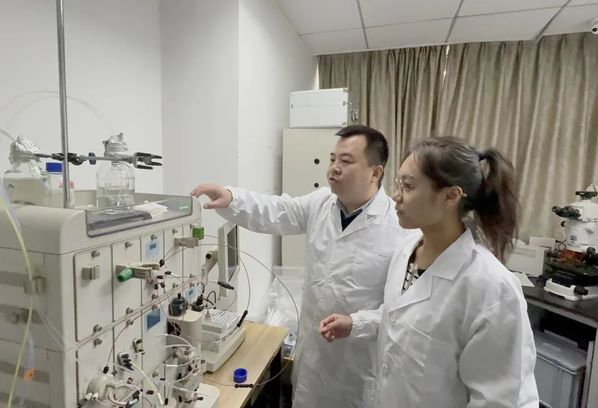
Opening the window of artificial intelligence, she is a pioneer in cross-disciplinary
The pace of exploration never stops. HE Chun has always insisted on cultivating basic research fields, exploring parasitic wasp genomes, and constantly thinking about new research methods.
At present, artificial intelligence technology has become a new trend of the times. HE Chun keenly realized this direction, combined with her own research topic, and tried to find the best solution combining artificial intelligence. She proposed, “According to a report by the United Nations, the world population will reach 9.8 billion in 2050, the total amount of food must increase by 70% to feed so many people, to solve this problem, we need to rely on artificial intelligence and other modern new technologies to achieve precision agriculture and digital agriculture, improve agricultural production efficiency and the quality of agricultural products. Under such guidance of thought, HE Chun actively explores, hoping to use artificial intelligence to discover new resources for biological pest control.
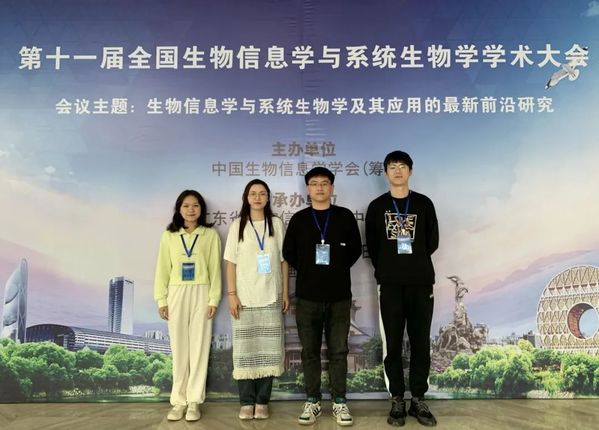
From agriculture to information technology, HE Chun has also encountered a lot of setbacks. As the first graduate student in the whole laboratory to explore the cross-discipline of artificial intelligence, she lacked the guidance of a cross-disciplinary mentor; when understanding models such as deep learning, she, who was a beginner, found it very challenging. But with the help of teachers and classmates, HE Chun forged ahead, “Professor WU Fei from the School of Computer Science gave me a lot of help, he patiently explained the theory of artificial intelligence to us, and his students often answered our questions. Perseverance pays off, and HE Chun successfully used a deep learning model to develop an algorithm tool for identifying allergenic proteins, providing technical support for the safety evaluation of genetically modified food and for ensuring food safety. In the future, she hopes to continue to pursue cross-disciplinary studies in agriculture and artificial intelligence.
Adapted and translated from the article written by GUO Haoyi &FENG Xingcan
Translator: GU Zhaoyu (’2025, Education)
Photo: the interviewees
Editor: TIAN Minjie