Beyond boundaries: YUAN Zeqing's story of badminton, research, and volunteerism


YUAN Zeqing, a 2020 undergraduate student of the College of Computer Science and Technology, is one of the recipients of the Chu Kochen Scholarship (the highest honor bestowed upon ZJU students). From badminton to artificial intelligence, from research dedication to social service, he encounters the warmth of society through scientific research and finds life's allure in competitive sports.
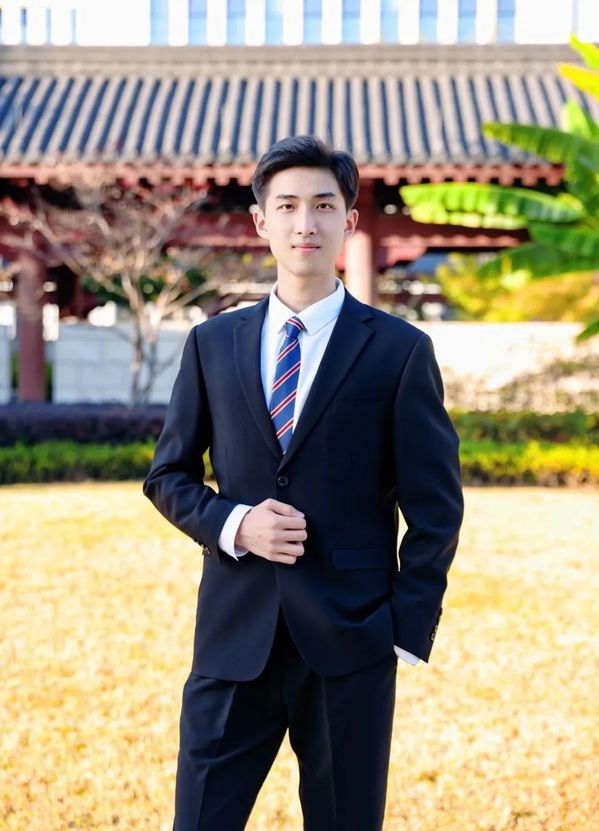
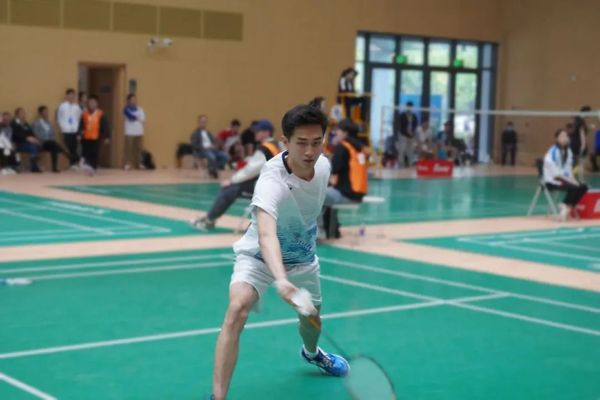
Beginning his badminton odyssey at the tender age of eight, YUAN’s journey has been marked by relentless practice and unwavering determination. Transitioning from local tournaments to national accolades, his passion for the sport remained undiminished even amidst mounting challenges. His exceptional achievements ascribe to his unheralded efforts and hardships. Yet, YUAN's resolve never faltered. He views setbacks as invaluable lessons and embraces the transformative power of perseverance.
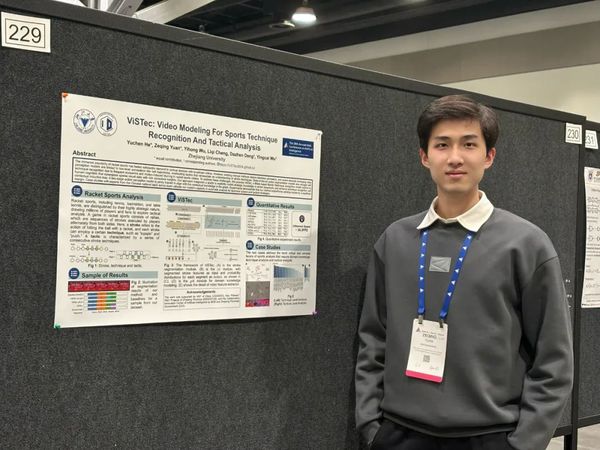
Indeed, badminton acted as the enlightenment of his scholarly pursuits, igniting a fervent curiosity in the intersection of sports and technology. "Every time I discuss tactics with my coach, I always think, how good it would be to have an intelligent system to analyze tactics and understand opponents for me." Thus, in his freshman year, he entered a National Key Laboratory. Under the guidance of Professor WU Yingcai, they cooperatively developed a virtual reality badminton visual analysis system. The system capable of analyzing and presenting data in three-dimensional space, offers athletes immersive insights into tactics. The resultant research papers have been fully included in the top-tier conference and journal in the field of visualization.
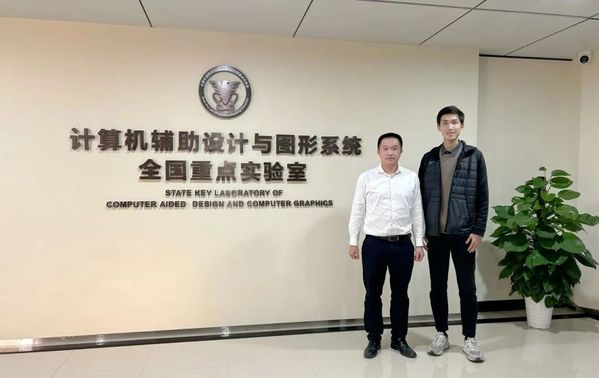
YUAN (right) and Professor WU Yingcai
Inspired by the research experience, YUAN cultivated a keen interest in how artificial intelligence could revolutionize match video analysis. Also, he led a project group to investigate how computer vision technology can help the national table tennis team with intelligent video analysis. Despite the challenges posed by sparse visual data and concealed technical movements, YUAN and his team persevered. Starting from the basics, they developed a multitask perception model, achieving breakthroughs in complex movement recognition. Their achievements were acknowledged by top artificial intelligence conferences, submitted for patent, and selected for the national conference.
Gradually, YUAN clarified his research direction—artificial intelligence field, and then actively joined Professor ZHAO Junbo's research group. Under the guidance, he began to research large models and generative AI, and went to the Stanford University Artificial Intelligence Laboratory to continue exploring the international frontier of disciplines. During the period, he was selected to collaborate with renowned computer vision scholar Professor SHEN Chunhua to continue to research visual generative models.
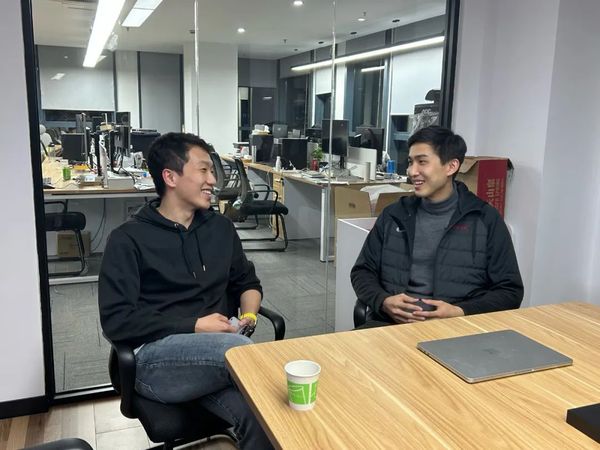
YUAN (right) and Professor ZHAO Junbo
However, YUAN's journey transcends academic pursuits, embodying the ethos of service ingrained in Zhejiang University. Teaching in underserved regions and tutoring at children's hospitals, he dedicated himself to imparting knowledge and providing care. At the same time, he is a bilingual host for academic forums, embodying the responsibility of Chinese youth to engage with the world.
For YUAN, scientific research and service initially seemed disparate endeavors until they converged through a human-computer interaction application. Teaching in rural areas and tutoring in hospitals raised his awareness of the needs of left-behind and sick children, and made him realize the importance of parental companionship and effective learning habits. Guided by Professor ZHAO Junbo, he designed and developed "smart glasses" for children's learning scenarios, integrating human-computer interaction to foster good learning habits and provide companionship. This achievement won the ACM International Conference on Mobile Human-Computer Interaction competition award.
The experience of combining research with social work has left a deep impression on YUAN. He said, "Although our work is still insignificant, utilizing our knowledge to assist individuals is profoundly fulfilling". The rich experience in social service has gradually enabled him to find the intrinsic motivation to persist in scientific research.
In the future, YUAN hopes to continue researching human-centered artificial intelligence, exploring the scientific boundaries of human cognition, serving the practical needs of the country and society, and conveying a youthful attitude through warm technology.
Adapted and translated from the article written by HAN Mingzheng, LIU Jingchun and HUANG Leting
Translator: ZHAO Hanle ('25, Education)
Photo: the interviewee
Editor: HAN Xiao ('25 PhD, Education), TIAN Minjie