ZJU scientists pioneer “miracle rice” for people with diabetes


In the late 20th century, a breakthrough in nutritional science revealed the profound health benefits of resistant starch. Unlike regular starch, resistant starch resists digestion in the small intestine, preventing it from quickly converting into glucose and entering the bloodstream. This unique property makes rice varieties rich in resistant starch particularly beneficial for stabilizing blood sugar and reducing lipid levels, especially for people with diabetes.
However, most of high-quality rice varieties contain less than 0.5% resistant starch, far lower than the contents to produce the desired physiological function.
For Professor WU Dianxing, a leading agricultural scientist from Zhejiang University, the challenge was clear. “Agricultural research must align with national strategies, address consumer market demands, and focus on health concerns,” he said. “That’s why our team began our research on developing rice varieties with higher resistant starch content early on, to meet the health needs of diabetics and beyond.”
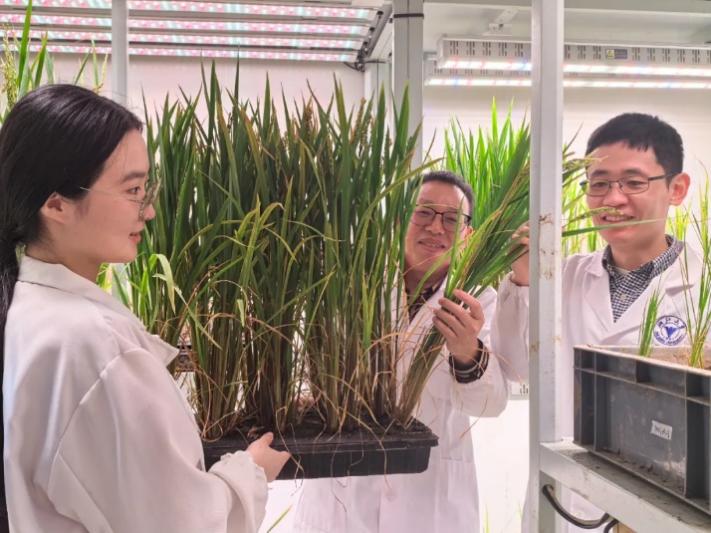
Professor WU Dianxing (second from the right) is showing high-resistant starch rice.
In the late autumn of 1998, Wu made a significant discovery. While analyzing starch structures in over 2,000 rice samples, he identified a special variety in Jinhua, East China’s Zhejiang province. This local rice germplasm contained a resistant starch content of 3%, far exceeding typical levels and offering a rare opportunity for further study.
Although the discovery was serendipitous, Wu insisted that science doesn’t rely on sheer luck. With this promising lead, Wu and his team journeyed over 2,000 kilometers to Hainan to pursue their research.
“In winter, the rice paddies in southern Hainan serve as a natural greenhouse, allowing rice cultivation three times a year for artificial breeding,” Wu recalled. What followed was nearly a decade of relentless experimentation in collaboration with other experts and students.
On the trial fields, Wu and his team meticulously sowed, transplanted, and harvested rice, grain by grain, to refine their experimental varieties. “Agricultural research often involves patience and persistence — it’s a long-time commitment to exploring new things through daily practice,” Wu remarked.
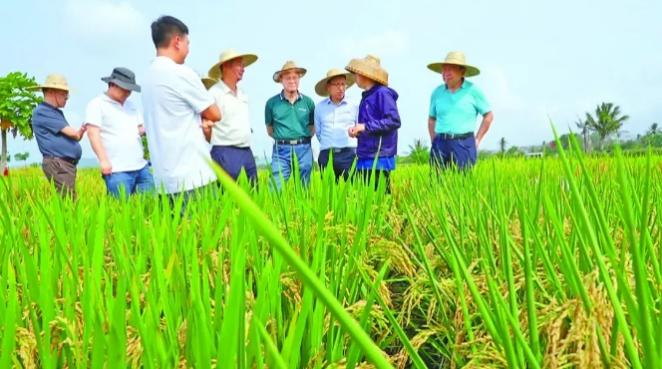
Professor WU Dianxing (second from the right) with several agricultural experts at the breeding base in South China’s Hainan province.
In 2006, their efforts paid off. The team successfully developed the world’s first rice germplasm with resistant starch levels around 10%. “There was no precedent or reference for this globally,” Wu noted.
What does 10% mean?
The diabetes-friendly rice born from this breakthrough acts like a “slow-release capsule”, significantly delaying the digestion and absorption of sugars in rice grains. “For those who dread blood sugar spikes after meals, this rice offers peace of mind,” Wu explained.
Recognized as a National Bio-Breeding High-Tech Industrialization Demonstration Project by the National Development and Reform Commission, the diabetes-friendly rice marked a turning point. Yet, Wu and his team didn’t stop there — they’ve been determined to push their work even further.
“Professor Wu often takes us into the fields, where his vast experience guides our research and helps us apply theory to practice,” said AN Zengxu, a postdoctoral researcher at the College of Agriculture and Biotechnology.
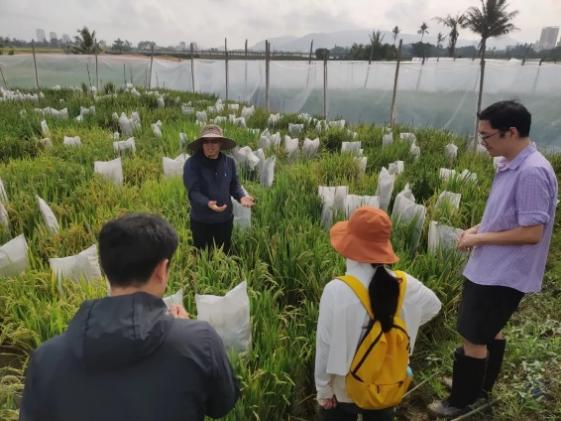
Professor WU Dianxing is giving a lecture in the rice field.
Wu’s team proceeded with their systematic research on the physicochemical, digestive, and nutritional properties of high-resistant-starch rice varieties. By staying connected with farmers, addressing market demands, they translated cutting-edge theory into tangible products.
“Whenever we’re in the fields, Professor Wu is always the first to get his hands dirty, unbothered by mud or fatigue. His passion drives our team,” An added.
This year, Wu’s team achieved another breakthrough: developing 12 ultra-high-resistant-starch rice germplasms and three varieties of baked rice flour with resistant starch content exceeding 30%, with the highest reaching an astounding 43.6%. To meet diverse consumer demands, the diabetes-friendly rice has evolved into Japonica rice, Indica-Japonica hybrids, and premium-quality varieties. The latest fifth-generation products even feature significantly improved taste.
“A functional rice variety must strike a balance — it needs to be high-yielding, nutritious, and delicious,” Wu emphasized. “By building technology-based farms, we’ve created an interactive space where textbook knowledge is melded with market needs. Through interdisciplinary research, our team has been endeavoring to make rice more delectable and nutritious.”
According to Wu, their innovation has extended beyond rice. His team has applied their efficient techniques to other staple crops like wheat, maize, potato, and sweet potato, paving the way for a broader range of low-GI foods.
Over 10,000 years ago, early settlers in Zhejiang province domesticated wild rice, sowing the seeds of human civilization. Today, scientists like Wu inherit this legacy with state-of-the-art tools and an unyielding spirit of innovation. By making rice more nutritious, delicious, and productive, they translate groundbreaking research into tangible benefits for the public, unlocking the boundless potential of agriculture while embodying Zhejiang University’s commitment to societal progress.
Adapted and translated from the article by ZHANG Shufan
Translator: FANG Fumin
The partial content and photos are sourced from the Tide News and the interviewee.
Editor: TIAN Minjie