Where innovation meets imagination: The rise of robotics at Zhejiang University


In a world where robots can cultivate strawberries, launch darts with pinpoint accuracy, and navigate automated supermarkets, the boundaries of technology are being redefined. From the depths of the ocean to the vastness of space, robots are no longer confined to science fiction — they are shaping the future. At the heart of this revolution is the Zhejiang University Innovation Practice Base of Robotics and Intelligent Equipment, a vibrant hub where students from diverse disciplines are turning their boldest ideas into reality. Here, the seeds of innovation are sown, nurtured by the fusion of hardware, code, and creativity.
A playground for robotics dreams
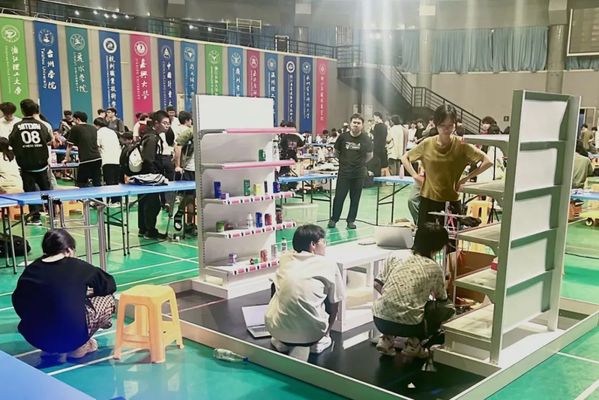
Picture this: four-wheeled robot glides to a halt in front of a five-tier shelf. Its gripper arm rises with precision, carefully picks up a bottle of soda from a list of 20 items, and places it gently into a basket. Then, with a soft hum, it speeds off to retrieve the next item. This isn’t a scene from a futuristic movie — it’s the Zhejiang Provincial Robotics Competition for College Students, where the Chenglang team’s shopping robot is making waves.
What seems like a simple task is, in fact, a symphony of advanced technologies: motion control, visual recognition, stable gripping, and seamless system coordination. Months of preparation and countless hours of debugging paid off, earning the team first place. But the Chenglang team is just one star in a constellation of innovators at the base. From waste-sorting robots to agricultural management systems and even armored combat machines, the base is a breeding ground for robotic excellence.
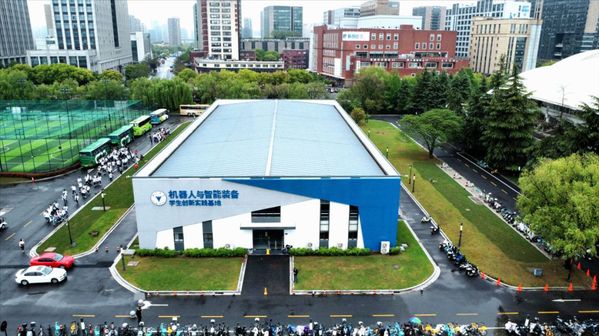
Spanning 2,600 square meters, the base is home to five competition studios, five student studios, and four guidance studios. It’s a space where creativity knows no bounds, open 24/7 to students who are as passionate about robotics as they are about pushing the limits of what’s possible.
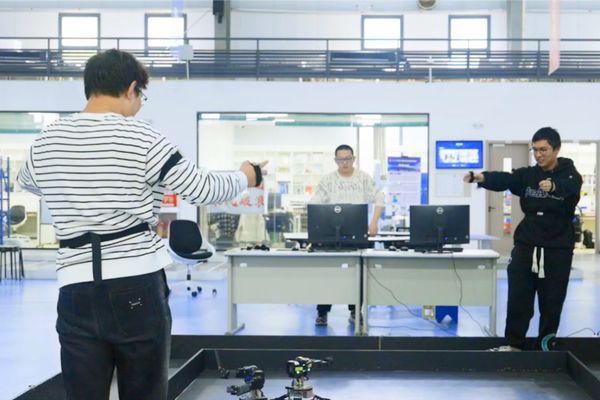
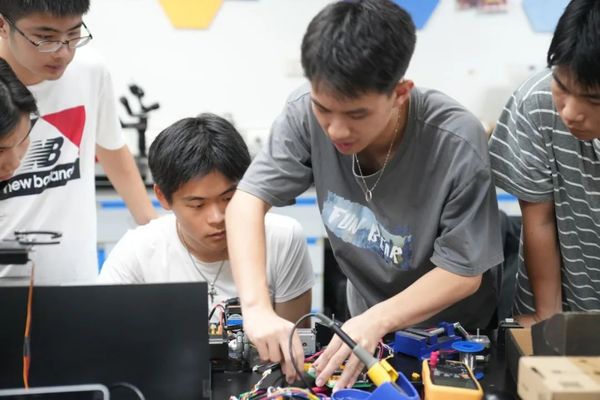
For LIU Chengge, a member of the Hello World team from the School of Mechanical Engineering, the base is a launchpad for innovation. “The equipment library on the second floor is our second home,” he says. “The 3D printer and milling machine on the first floor allow us to bring our robot designs to life. Without these resources, we couldn’t have achieved what we have.”
The base is also a training ground for RoboMaster, one of China’s most prestigious robotics competitions. “In recent years, the competition venue has grown larger, and we’ve conducted countless field tests here to prepare,” LIU explains. Their efforts paid off with a fourth-place finish in the 2024 RoboMaster University Series.
But the base is more than just a place to build and test robots. It’s a melting pot of ideas, where students from different backgrounds come together to learn, collaborate, and grow. “We’ve held internal workshops on 3D printing, facial recognition, and artificial intelligence,” says WANG Yizuan, leader of the Chenglang team. “These sessions bridge the gap between textbook learning and real-world application, helping students see how cutting-edge technologies can be integrated into their projects.”
A platform for building connections
“We have our own robotics competition team at the College of Biosystems Engineering and Food Science, but we decided to join the base because we saw how this platform could bring together robotics clubs from across disciplines,” says SHENG Zenan, a member of the ASABE Robotics Student Design Competition Studio. “It’s a chance to communicate more, to learn from others, and to share our own knowledge.”
Though all the teams at the base are united by their love of robotics, their paths diverge widely. Some focus on designing the mechanical structures of agricultural robots, while others fine-tune drone flight controllers or ensure the reliability of underwater robots. Each field demands its own unique set of skills and expertise, yet at the base, these differences become strengths rather than barriers.
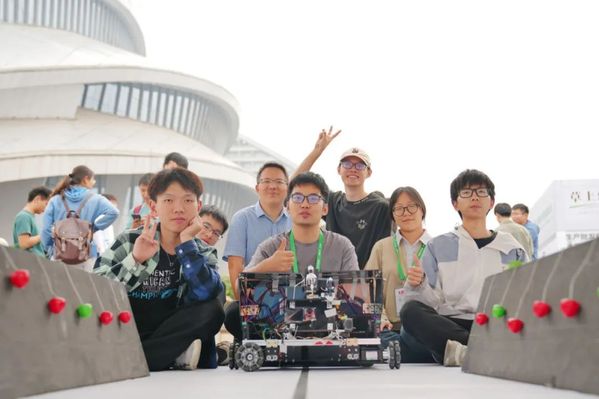
Unlike traditional competition systems, the base fosters a collaborative environment where ideas flow freely. “At the base, I can gain a deeper understanding of robots in other fields,” SHENG explains. “I get to see what other teams are working on, what technologies they use, and how these insights can help us solve problems in our own projects.”
For instance, the RoboMaster Studio next door specializes in visual algorithms, embedded processors, and compact, high-power-density motors. While SHENG’s team focuses on agricultural robotics, they’ve found inspiration in their neighbors’ work. “Our projects are more straightforward, but we’re learning a lot from their expertise,” he says.
The base is more than just a workspace — it’s a vibrant ecosystem where curiosity drives innovation. In the bustling atmosphere of hands-on experiments and casual discussions, the line between disciplines blurs. Students with a shared passion for robotics come together, exchanging knowledge and sparking new ideas.
This cross-pollination is supported by the base’s state-of-the-art facilities. In addition to cutting-edge equipment, the base’s guidance studio offers a course on robotics and intelligent equipment innovation practice. Over the past year, experts and renowned professors have delivered lectures on topics ranging from industrial robot applications to human-machine interaction and 3D scanner usage. These sessions have been praised for their practical relevance, bridging the gap between theory and real-world application.
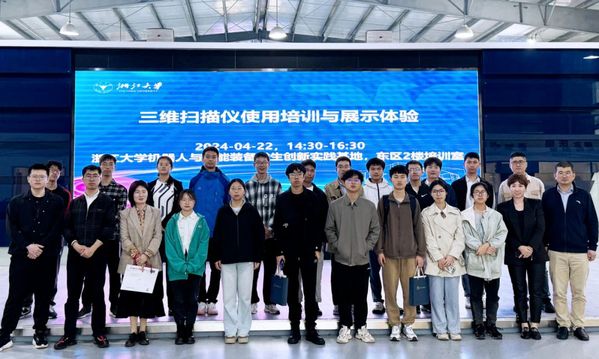
For QIU Boyu, a sophomore from the College of Biosystems Engineering and Food Science and a new member of the ASABE Robotics Student Design Competition Studio, the base is a gateway to advanced technologies. “During demonstrations and research discussions, we get to try out quadruped robots made by external companies,” he says. “Hands-on experience gives us a real feel for their unique features. It’s fascinating to learn about things we don’t usually encounter in our own team. It’s a great way to broaden our horizons.”
ZHU Xinjie, Director of the Zhejiang University Innovation Practice Base of Robotics and Intelligent Equipment, envisions a future where interdisciplinary collaboration is the norm. “We will continue to integrate science, academia, and industry,” he says. “We plan to offer more specialized courses focused on frontier technologies in robotics and intelligent equipment. These courses will be both broad and deep, reflecting the latest developments in the field and catering to students’ growing interests.”
The base is also strengthening its ties with industry, inviting leading companies to deliver lectures and showcase their latest innovations. In the near future, students will have the opportunity to step outside the classroom and engage with industry professionals at the forefront of technological progress. This ensures that their learning is not just theoretical but grounded in real-world applications.
A launchpad for personal growth
Completing a robotics project or competing on a professional stage is about more than just winning accolades. It’s about the quiet moments of discovery, the late-night debugging sessions, and the thrill of seeing an idea come to life. For SHENG Zenan, a master’s student in agricultural electrification and automation, robotics training has been transformative. “It’s a bit like developing soft skills,” he reflects. “I’ve learned to set up equipment, source materials, and manage entire processes independently. These skills have become invaluable in my research.”
SHENG’s journey is a testament to the power of hands-on learning. What began as a curiosity has blossomed into a deep understanding of how to navigate complex projects from start to finish. For him, robotics is not just a technical pursuit; it’s a training ground for life.
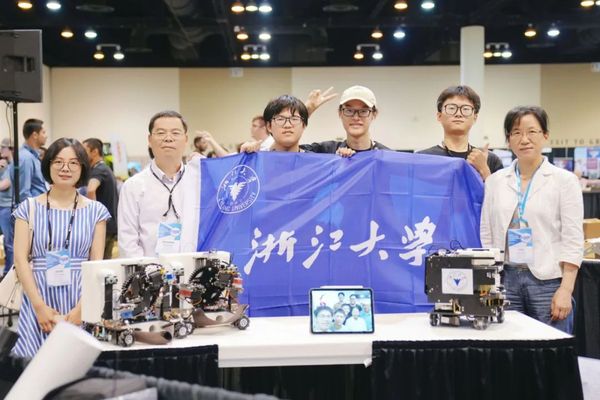
The DeepX team, led by Professor LI Tiefeng from the School of Aeronautics and Astronautics, embodies this spirit of growth. Known for its groundbreaking research, the team provides undergraduates with a rare opportunity to dive into cutting-edge projects. HUANG Yuchong, an undergraduate member, explains, “We usually work on a small part of a larger research project, like designing models or verifying experiments. Right now, we’re developing an underwater flexible arm that will be part of a bigger robot.”
For HUANG and his peers, the experience extends beyond technical skills. Regular exchanges with professors and senior students offer a window into the world of research, helping them transform academic curiosity into hands-on expertise. “The guidance we receive is invaluable,” HUANG says. “It’s not only about learning how to do research, but it’s also about understanding why it matters.”
For some, robotics is a calling—a way to explore a lifelong passion. CHEN Ruibin, a graduate student from the College of Electrical Engineering, joined the Zhejiang University Student Ocean Robotics Association to reconnect with his love for robotics. “My major is power grid scheduling, which is quite different from robotics,” he admits. “But coming here is about fulfilling a spiritual need. It allows me to pursue my curiosity and develop my hobby. For me, that’s enough.”
Building a robotics team is also about leadership, coordination, and vision. For HUANG Yuchong, managing the DeepX team has been a crash course in responsibility. “Starting our team from the ground up required me to take on many roles,” he says. “From coordinating with professors to recruiting new members and conducting training, it’s been a huge personal growth experience.”
SHENG Zenan echoes this sentiment. “Managing a team teaches me how to balance technical challenges with interpersonal dynamics,” he says. “It’s about creating an environment where everyone can thrive.”
At the core of the Zhejiang University Innovation Practice Base of Robotics and Intelligent Equipment is a culture of learning through guidance, expertise, progress, enjoyment, and support. Here, students don’t just build robots; they build each other up. The base is a place where innovative ideas are born, intrinsic motivation is unleashed, and new challenges are embraced with open arms.
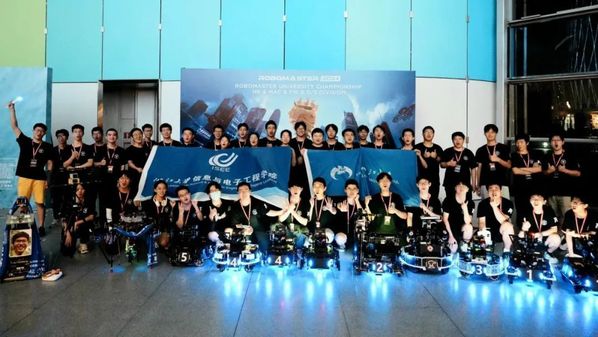
The journey of innovation is long, but every step brings us closer to excellence. Whether they’re designing underwater robots, refining agricultural systems, or exploring the frontiers of aerospace engineering, students at Zhejiang University are driven by a shared spirit of “seeking truth and pursuing innovation.” And in this journey, every robot built, every challenge overcome, and every lesson learned is a step toward a brighter, more innovative tomorrow.
Adapted and translated from the article by YANG Zheqing
Translator: FANG Fumin
Photo: ZJUI and Zhejiang University Innovation Practice Base of Robotics and Intelligent Equipment
Editor: ZHU Ziyu, HE Jiawen