Unraveling the history of sands: Professor YANG Xiaoping’s quest in China’s vast deserts


Each year, Professor YANG Xiaoping and his Quaternary geology research team from Zhejiang University’s School of Earth Sciences set out extraordinary journeys. With their footsteps as their measurement tools and the vast land of the motherland as their laboratory, they traverse China’s rugged terrain, collecting invaluable geological samples. For over a month each year, they dedicate themselves to their fieldwork, deciphering secrets buried beneath the land surface for hundreds of thousands of years. Their aim is ambitious and vital — via unraveling the past to forecast the future, providing scientific support to realize sustainable environmental development and the vision of a more beautiful China.
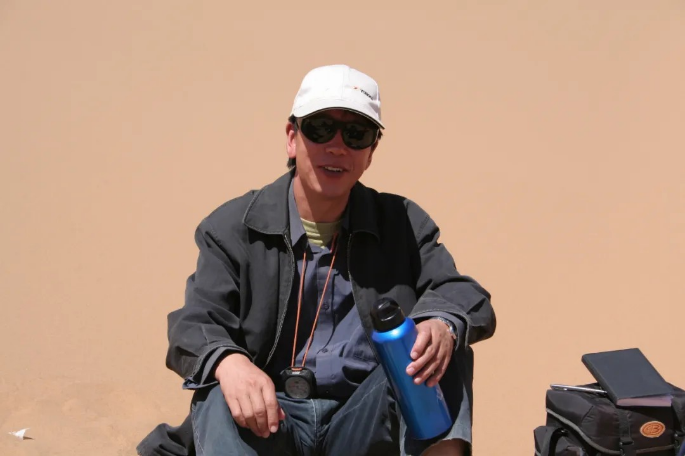
Decoding desert mysteries: A 40-year scientific odyssey
Deserts, often seen as barren wastelands, are in fact crucial to our planet’s ecological balance. In China’s far west, the Taklamakan Desert — the country’s largest and driest — lies within the embrace of the towering mountains surrounding the Tarim Basin. Here, oceanic moisture seldom arrives, causing occurrence of a huge sand sea. Yet, this seemingly inhospitable landscape could provide significant keys to understanding the delicate interplay between atmosphere, lithosphere and biosphere.
The environment of northwestern China is characterized with the interconnections of its diverse landscapes —mountains, rivers, forests, farmlands, lakes, grasslands and deserts. Among these, sand is a critical element. Understanding the formation and evolution of aeolian sand is not just an academic pursuit, but it is also essential for protecting the ecosystems that sustain life and civilizations.
This time, YANG Xiaoping, together with four graduate students, ventured deep into Xinjiang, investigating the environmental changes of the Tarim River catchment over the past 30,000 years. In their pursuit of the changing histories of winds and sand grains, they sought hidden clues about ancient climates.
Once thought to be an endless sea of sand, the heart of the Taklamakan Desert holds a hidden past — one shaped not only by wind, but also by water. Using research methods commonly used in Quaternary geology, geomorphology and related disciplines, Professor YANG Xiaoping and his colleagues made a groundbreaking discovery: ancient rivers once carved their way through the desert’s core, and vast lakes submerged the dunes for extended periods. For the first time, their research systematically demonstrated the existence of these long-lost waterways, clarifying the environmental history of China’s largest desert.
Understanding the evolution of the Taklamakan Desert is also a window into the rise and fall of ancient desert civilizations, including the fabled “36 kingdoms in the western region.” More importantly, it sheds light on the fundamental mechanism of desert formation, which is crucial for developing scientific strategies to combat desert encroachment and rehabilitate fragile ecosystems.
YANG Xiaoping’s endeavor to study deserts began immediately after graduating from university, when he immersed himself in the research of aeolian landforms and desertification. Over time, his work expanded from active dunes to a broader exploration of environmental evolution and climate change.
His discoveries span some of the most enigmatic landscapes in the world. In the Taklamakan Desert, he found evidence that under more humid climatic conditions, sprawling wetlands once flourished where barren sands now stretch. In the Hunshandake Sandy Land, he was the first to point out that desertification may have played a pivotal role in the decline of the Hongshan culture, an early Neolithic civilization in the West Liao River catchment. Meanwhile, in the Badain Jaran Desert, he employed gravity exploration and other methods to probe the formation of the tallest sand dunes on Earth and proposed that despite the harsh arid climate, the annual evaporation rate of the desert’s lakes is only about 1,000 mm. This finding helps explain the seemingly paradoxical coexistence of colossal sand mountains and permanent lakes.
Over the past 40 years, YANG Xiaoping and his team have committed themselves to decoding the ancient whispers of the desert, revealing its ever-changing story — one written in grains of sand, flowing water, and the shifting winds of time.
For his research achievements, YANG Xiaoping became a Humboldt Research Awardee in 2016. Earlier he received the El-Baz Award for Desert Research from the Geological Society of America. In the recent years, YANG Xiaoping and his team have gained recognition for their groundbreaking research also. Their studies were honored as one of the “Top Ten Research Advances in Chinese Geosciences” in 2021 by the Geographical Society of China and selected as one of the “Top Ten Important Advances in Geological Science and Technology” in 2023 by the Geological Society of China. Their latest monograph, Chinese Deserts and Environmental Changes published in Chinese by Science Press in Beijing in 2024, takes a deep dive into China’s sandy landscapes, using them as a lens to examine the dramatic variations in Earth’s climate and environment.
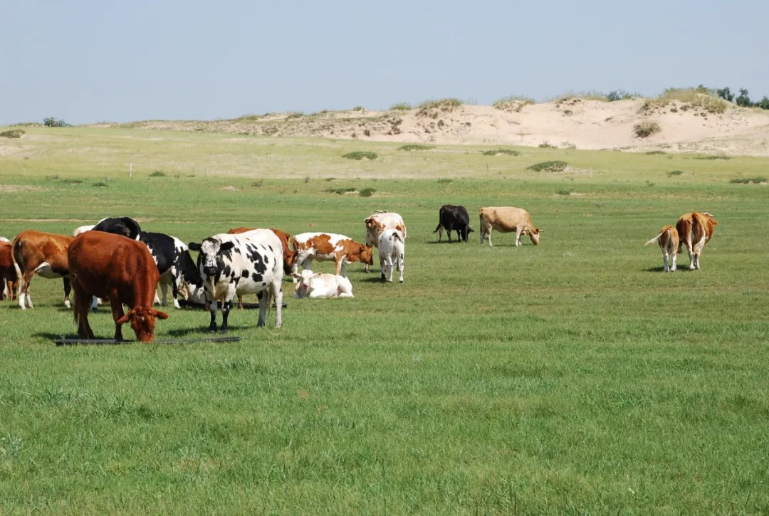
Connecting deserts and glaciers: Unlocking Earth’s past environment
At the heart of their research lies a fundamental truth: the natural world is an interconnected whole, where the fate of deserts is inextricably tied to the water that flows from distant mountains.
"In the environmental evolution of deserts in western China, meltwater from glaciers in the headwater regions plays a significant role. That's why, in studying deserts, I also do research on ancient and modern glaciers,” YANG Xiaoping explains. Over the past seven years, his research has expanded from the deserts to glacier regions in the headwater areas of desert rivers.
In September, on the southern slope of the Tianshan Mountains, winter has already begun its quiet descent. Snow blankets the rugged landscape in a pristine white sheet, while in the distance, modern glaciers glisten beneath the sun. Underfoot, scattered moraines — gravel deposits left behind by retreating glaciers — serve as silent witnesses to the passage of time.
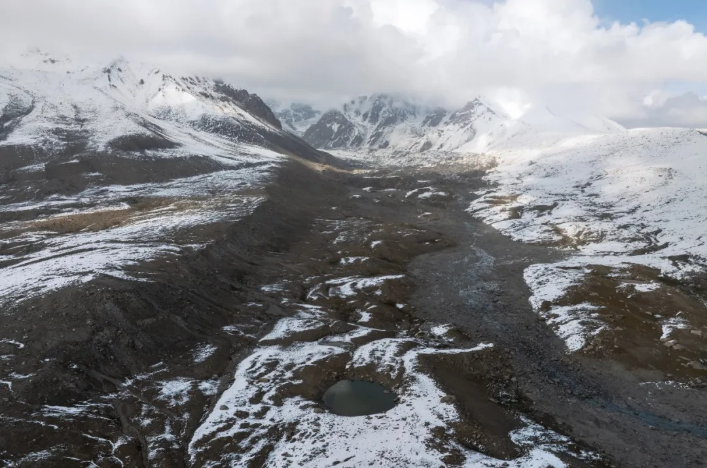
For the study of palaeoenvironmental evolution, geological evidence is a key aspect.
In the field, YANG Xiaoping and his collaborators record the distribution and accumulation of moraines and collect sediment samples that hold the fingerprints of past climates. Back in the lab, they analyze these samples through advanced dating techniques, reconstructing the fluctuations of ancient glaciers. Their findings offer crucial insights into how glacial meltwater once shaped the deserts in western China and how it may continue to do so in the face of a changing world.
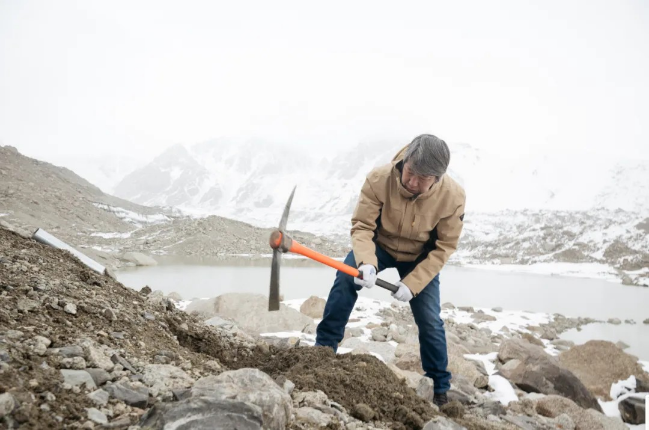
Nature is the best classroom. “Professor Yang is, so to speak, a walking encyclopedia; he can answer almost any question,” says WU Jiwei, a doctoral student at the School of Earth Sciences. During glacier expeditions, YANG Xiaoping doesn’t simply lecture; instead, he lets the field do the teaching. Standing amidst ice and rock, he challenges his students with questions rather than giving them direct answers.
What kind of samples should we collect? Where is the best place to take them? Rather than offering immediate solutions, YANG Xiaoping provides guiding principles, encouraging students to think critically and sharpen their professional skills through hands-on exploration.
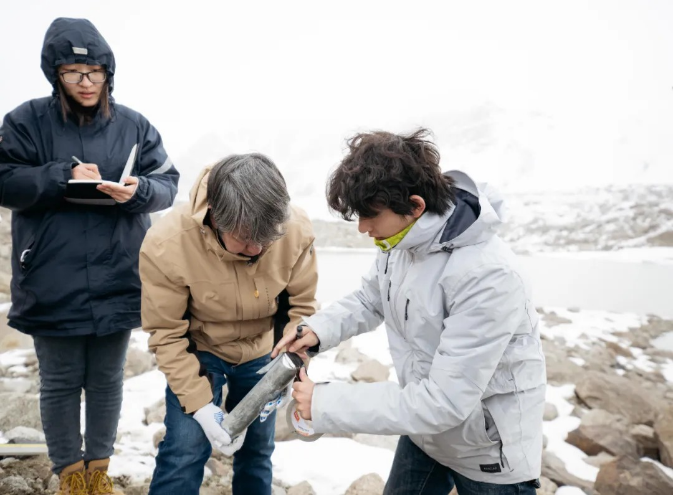
For WU Zihan, a master's student at the School of Earth Sciences on her first expedition, the experience has been transformative. “Professor Yang tailored his guidance to my research interests, constantly leading me deeper into the mysteries of the earth,” she remarks.
“As teachers at Zhejiang University, we have the responsibility to carry out in-depth studies about China’s natural environment and pass on the knowledge to cultivate a new generation of scientists who love our country and the geosciences,” YANG Xiaoping says.
Mentorship in the wild: The adventure of discovery and resilience
Two vehicles and three tents are often the main equipment YANG Xiaoping’s team has as they make expeditions into China’s remote desert and glacier regions. In these sparsely populated wildernesses, time is precious. To maximize the research hours, the team camps overnight, making tents an indispensable component of their field work.
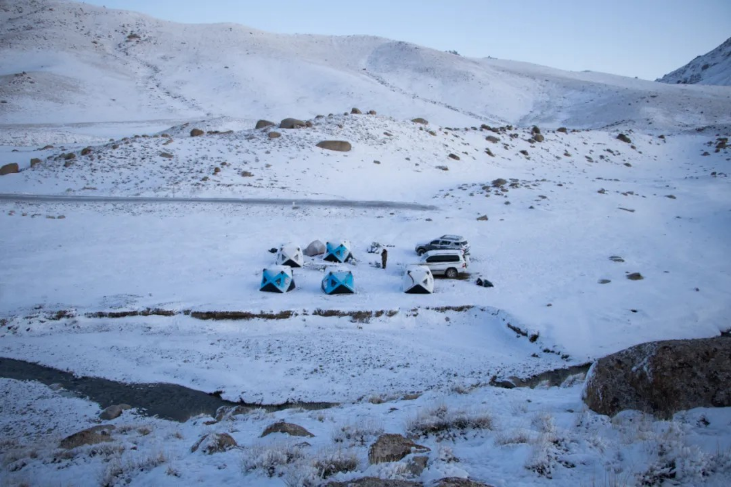
Fieldwork blurs the line between mentors and students. Unlike in the well-designed environment of a university, researchers here must rely on themselves, not just for scientific tasks but also for daily survival. Cooking, setting up camp, and ensuring everyone’s well-being become the shared responsibilities.
“Did you sleep well? Have you eaten enough? Are you still OK?” These are questions YANG Xiaoping frequently asks, always mindful of his team’s condition. Out in the field, they look after each other like in a family.
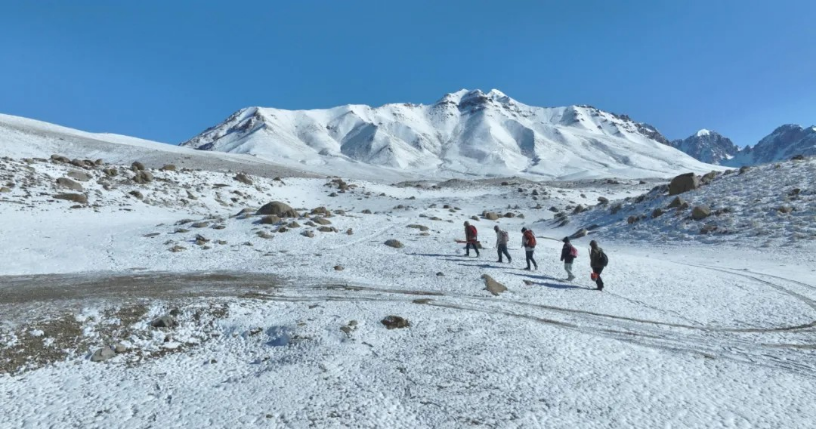
Glacier climbs and desert crossings rarely come with roads. When vehicles can no longer traverse the harsh terrain, the team must continue on foot. This time, during an expedition in Akqi County, they trekked over ten kilometers at an altitude of 4,000 meters, each carrying heavy packs filled with tools such as ranging poles, shovels, hammers, steel pipes, cameras, drones, as well as food and water.
Reaching a single sampling site can take half a day. The thin air, the weight of equipment, and the unforgiving landscape test their endurance at every step.
Yet, for YANG Xiaoping, fieldwork is not a burden; it’s a privilege. “I don’t think fieldwork is that hard. It’s an opportunity to test and challenge ourselves,” he reflects. “We get to witness the breathtaking landscapes of our motherland, conduct research in real-time, and gain a deeper understanding of the Earth we live on. To me, that is pure joy.”
Adapted and translated from the article by CHEN Huixia
Translator: FANG Fumin
Photo: Photographer YU Dajian and the interviewee
Editor: TIAN Minjie