ZJU leads advances in intelligent drug delivery for precision medicine


In the era of precision medicine, how can drugs be made smarter and more responsive in the way they work? Part of the answer may lie in an emerging technology known as intelligent and miniaturized drug delivery devices (IMDDDs).
On March 26, a team led by GU Zhen, professor at the School of Pharmacy, Zhejiang University and director of the State Key Laboratory of Advanced Drug Delivery and Release Systems, published a forward-looking review in Nature titled “Towards intelligent and miniaturized drug delivery devices,” in collaboration with leading international scholars from the Massachusetts Institute of Technology, the University of Oxford, Brown University, and the University of North Carolina. The article provides a systematic overview of the major categories and design principles of IMDDDs, and explores their clinical potential in areas such as cancer, diabetes, cardiovascular and cerebrovascular diseases, as well as their future development.
This year, China identified biopharmaceuticals as a strategic pillar industry during the “Two Sessions,” while the outline of the 15th Five-Year Plan calls for “advancing the digital and intelligent development of public health.” Together, these signals reflect a critical shift in the Healthy China initiative from expanding access to healthcare to improving its quality. Zhejiang University is now positioning itself at the forefront of this transformation. As GU Zhen put it, “Future smart medicines will be built on the deep integration of three forms of intelligence: artificial intelligence, material intelligence, and biological intelligence.”
Unlike conventional nanomedicines produced through self-assembly processes, such as liposomes and lipid nanoparticles, IMDDDs typically range in size from micrometers to centimeters. They are no longer simply drug carriers. Instead, they are miniaturized systems built with modern manufacturing technologies that integrate smart materials, control modules, and even living cells and tissues.
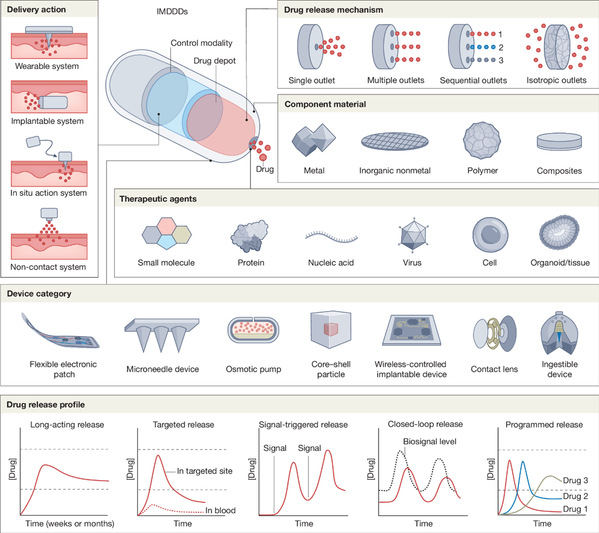
Schematic illustration of the components and categories of IMDDDs.
Flexible electronic patches, transdermal microneedles, osmotic pumps, wireless implantable devices, smart contact lenses, and ingestible electronic capsules are among the many forms these devices can take. By combining intelligent materials with advanced algorithms, they enable precise control over sustained, targeted, responsive, closed-loop, and programmable drug release.
Artificial intelligence plays a pivotal role in this transformation. As the article notes, AI not only assists in device design and manufacturing, but also optimizes drug release models, predicts personalized dosing regimens, and even enables real-time feedback and regulation of therapeutic outcomes through machine learning. From design optimization to active decision-making, AI is redefining the boundaries of what IMDDDs can do.
AI provides the algorithms and decision-support capabilities that allow devices to “think.” Material intelligence gives materials the ability to respond, enabling devices to deliver treatment more precisely. Biological intelligence can turn cells and tissues into drug factories, making living cells both couriers for targeted delivery and executors of therapy. It is the interplay of these three forms of intelligence that is transforming drug delivery from one-way injection into a patient-centered two-way dialogue, and from passive release into intelligent regulation.
Imagine a future in which a wristband or an ingestible capsule can be instructed by voice command to release medication precisely where and when it is needed.
Inspired by the hair cells of the cochlea, the Zhejiang University team employed three-dimensional modeling and high-precision 3D printing to fabricate an array of biomimetic artificial cilia with different lengths and diameters. When the frequency of an external sound wave matches the natural frequency of the cilia, resonance occurs and the cilia begin to vibrate.
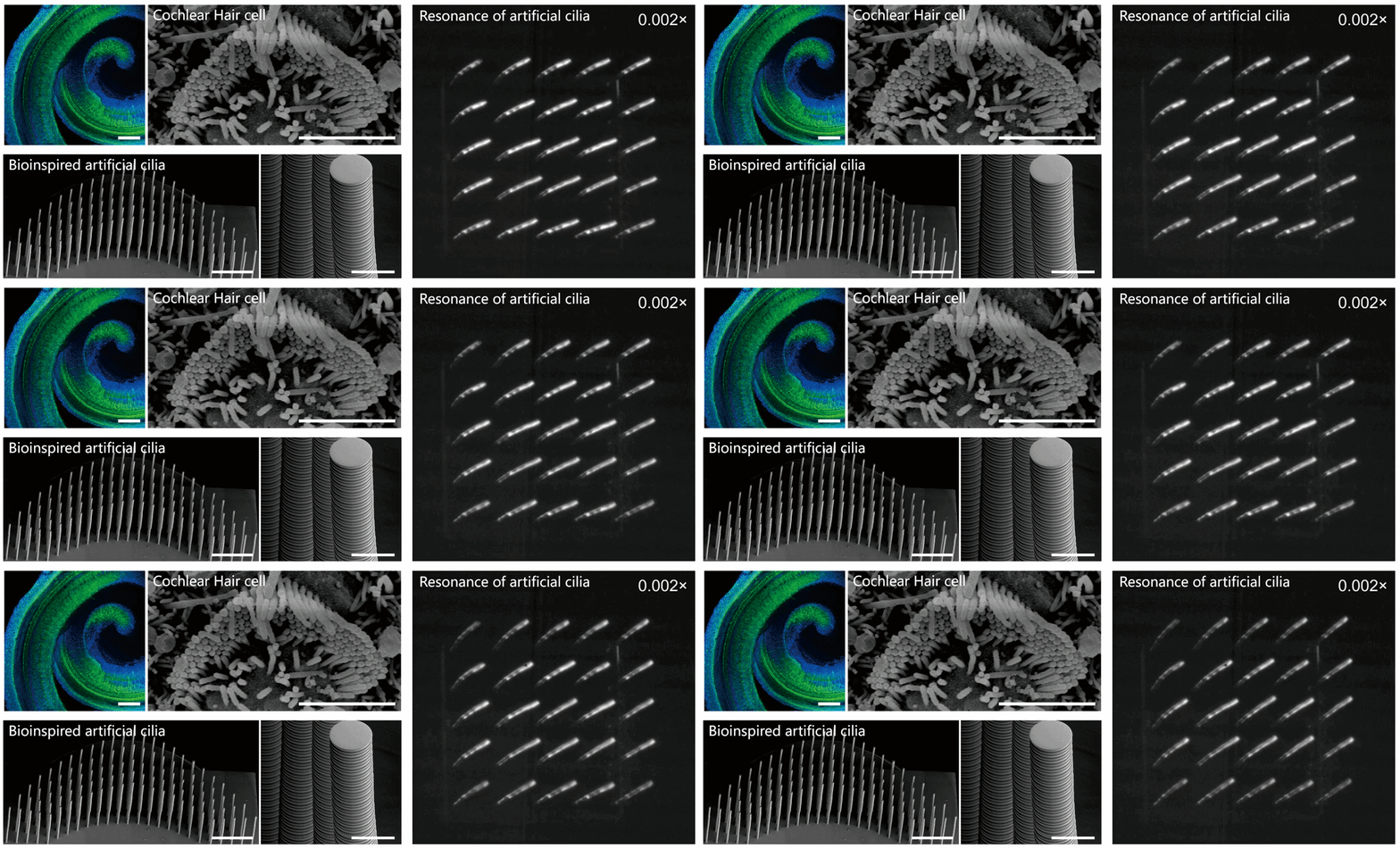
Cochlear hair cell-inspired biomimetic artificial cilia array.
The researchers then loaded different drugs onto different cilia, thereby constructing a “sound-controlled capsule”. A sound wave at one frequency triggers the release of Drug A; switching to another releases Drug B. This is a vivid demonstration of material intelligence in action.
If the sound-controlled capsule acts on command, then smart insulin has begun to respond to the body’s own signals.
By modifying insulin with glucose-responsive molecules, the Zhejiang University team recently developed a smart insulin that can bind to specific proteins in blood vessels and in the bloodstream. When blood glucose levels rise, glucose prompts the smart insulin to detach from the protein and take effect; when blood glucose levels fall too low, it can return to the bloodstream. In a diabetic pig model, this design not only achieved stable blood glucose control for up to one week after subcutaneous injection, but also showed the potential to work with an AI-assisted insulin pump to achieve “dual closed-loop” intelligent insulin delivery. Its glucose-control performance was superior to that of currently available single closed-loop insulin pumps. This is an ingenious fusion of “material intelligence” and “artificial intelligence.”
The familiar IV drip may one day become a thing of the past. The Zhejiang University team has developed an adhesive infusion patch that uses osmotic pressure differences to drive continuous drug release through hollow microneedles, enabling painless and stable delivery of large-dose medications. This coin-sized patch can sustain drug release for up to 24 hours.
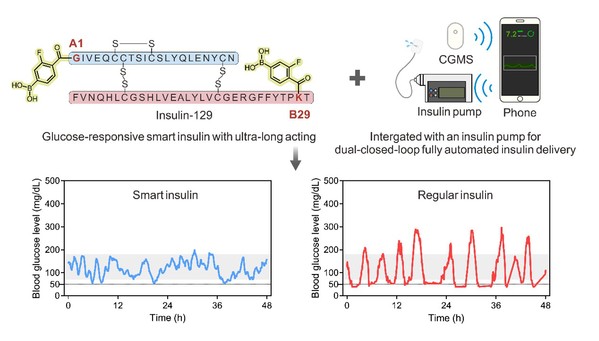
Schematic diagram of a novel smart insulin and dual closed-loop fully automated glucose control system.
This “miniature saline bottle” could make it possible to bring hospital-based infusion therapy into the home. In the future, patients may be able to work, travel, or even, in the case of astronauts, receive treatment in space using this gravity-independent drug delivery method.
Traffic jams and geographic barriers often delay emergency care. To address this, a team from the School of Pharmacy at Zhejiang University, in collaboration with the College of Control Science and Engineering, has developed a drone-based targeted drug delivery emergency system. After receiving an emergency signal, the drone uses AI to autonomously avoid obstacles, identify the patient, and release a microneedle projectile device from an appropriate height, delivering emergency medication through the skin.
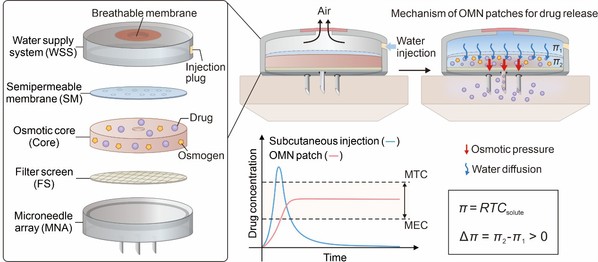
Schematic illustration of the structure and working principle of a wearable adhesive infusion patch.
The team has also developed a “drug-printing machine” that uses medicine as ink. Based on smartphone imaging results and AI-powered image analysis, the printer precisely deposits drug solution onto a polymer film, enabling personalized treatment tailored to the shape and dosage requirements of lesions in diseases such as hyperpigmentation and vitiligo.
In another line of research, the team has harnessed the role of mast cells in allergic reactions by loading drugs into mast cells so that, when allergens trigger a response, the cells automatically release the medication. The researchers have also developed drug delivery systems based on organoids and tissues such as lymph nodes, and combined these “living drugs” with devices to achieve precise therapy.
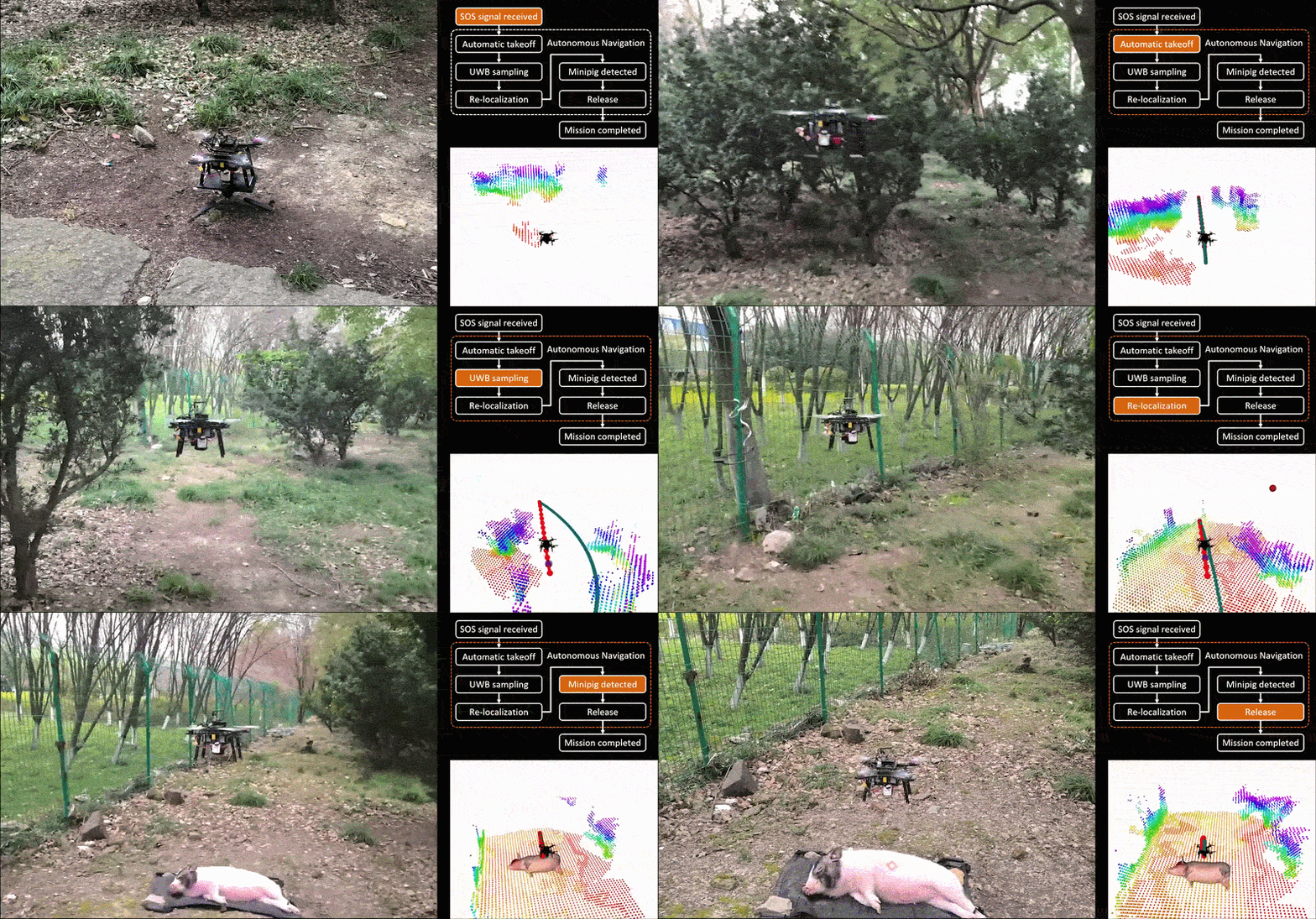
Autonomous targeted drug delivery system using unmanned aerial vehicles for emergency medical rescue.
Smart medicines sound promising, but will they be affordable?
By developing practical platform technologies such as drug crystal coating technology and high-pressure formulation technology, the Zhejiang University team is exploring low-cost pathways for smart medicines. Rather than relying on expensive materials, they aim to achieve intelligent functionality through simple engineering design and conventional pharmaceutical excipients.
Making cutting-edge technologies accessible to every ordinary patient is a goal the scientists have never lost sight of.
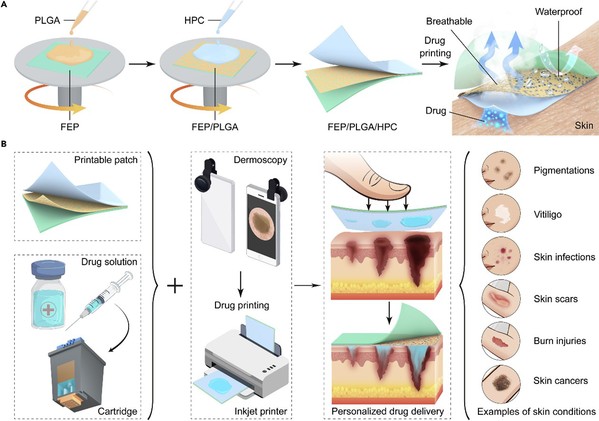
Schematic of the fabrication and application of a personalized drug delivery patch.
“These studies did not emerge out of thin air; they all grew out of clinical needs and interdisciplinary exchange,” said GU Zhen. At the State Key Laboratory of Advanced Drug Delivery and Release Systems, interdisciplinarity is the norm. Faculty members and students in pharmacy, chemistry, medicine, biology, materials science, control science, and biomedical engineering sit around the same table, sparking innovation through the collision of perspectives.
Turning smart medicines from concept into clinical reality also requires the wisdom of the world. The laboratory is home to undergraduates, graduate students, and postdoctoral researchers from countries including the United States, the United Kingdom, Italy, and Singapore, all working alongside with Zhejiang University faculty and students to tackle frontier problems.
From sound-responsive material intelligence, to pancreas-mimicking biological intelligence, to AI-driven drone-assisted emergency delivery, smart medicines are evolving from “passive action” to “active sensing, decision-making, and execution,” and from a “one-drug-fits-all” model to personalized customization.
From catching up, to standing alongside, to taking the lead, Zhejiang University is taking advantage of its distinctive strength in intelligent medicines and devices to serve national priorities, advance public health, and write a new chapter for the future of China’s pharmaceutical technology.
Translator: FANG Fumin
Editor: HAN Xiao