Director of the Future of Learning and Innovation Division at UNESCO headquarters visits ZJU's College of Education


On May 12, Dr. Sobhi Tawil, director of UNESCO's Future of Learning and Innovation Division (FLI) and Acting Director of the International Bureau of Education (IBE), visited the College of Education (CoE) at Zhejiang University (ZJU) to engage in comprehensive discussions on the future of education, artificial intelligence integration, international educational cooperation, and the development of the UNESCO Chair network. The meeting brought together Prof. KAN Yue (Dean, ZJU's CoE; Director, ZJU's UNESCO Research Center), Prof. MEI Weihui (Deputy Dean, ZJU's CoE; Deputy Director, ZJU's UNESCO Research Center), Prof. XU Xiaozhou (Holder, UNESCO Chair in Entrepreneurial Education), and other key ZJU participants. Both parties reached several agreements on advancing long-term collaboration.
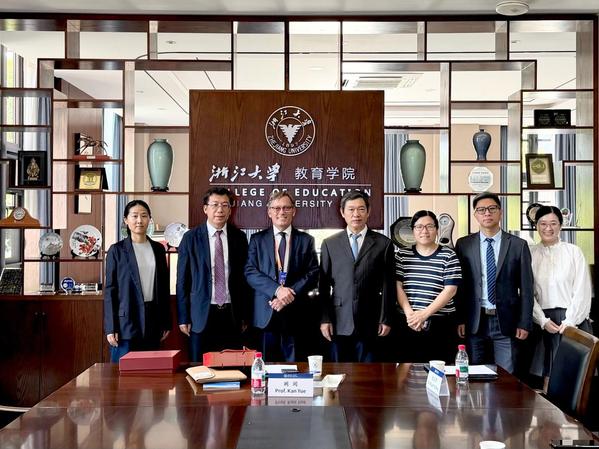
Prof. MEI Weihui began by presenting the development trajectories of ZJU and CoE. Prof. KAN Yue highlighted ZJU's 80-year partnership with UNESCO and its contributions to major international instruments. Prof. XU Xiaozhou elaborated on the Chair and UNESCO Entrepreneurship Education (EE-Net) National Chapter in China, as well as the ongoing efforts to establish a "Global Entrepreneurship Education Alliance."
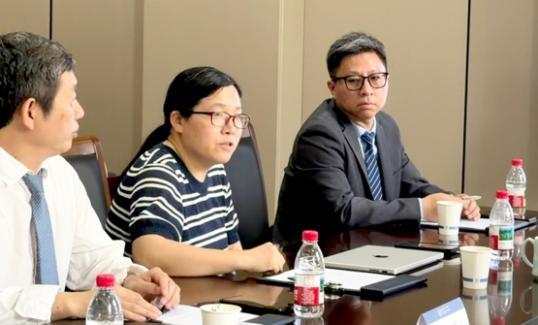

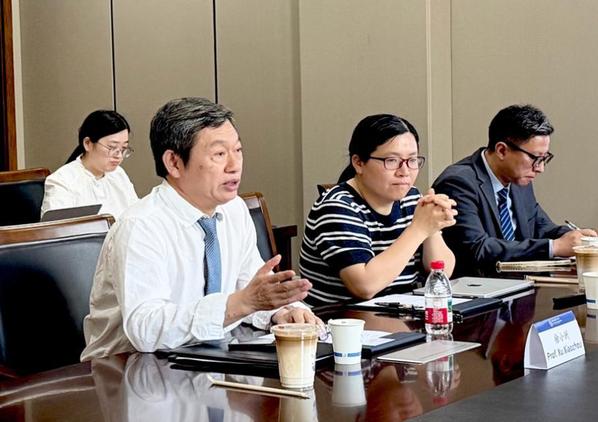
Dr. Tawil outlined the core work of UNESCO's FLI and IBE. The Division focuses on global education foresight research, especially in the post-pandemic context and the rise of AI; the application of technology and AI in education, highlighting algorithms as a critical but under-explored factor; and management of the global UNESCO Chair network, fostering interdisciplinary and transnational collaboration to support post-2030 Sustainable Development Goals. The IBE supports curriculum reforms in Africa, the Caribbean, and the Gulf regions and advances global research networks, including comparative studies on curricula, learning, and assessment, translating research findings into practical guides for educators.
The discussion also explored further cooperation in AI and digital education. Experts identified shared interests in higher education development, learning sciences, and educational technology governance. Potential joint projects were considered, including textbook research, resource sharing, and the establishment of AI education research centers. Both sides emphasized public-interest-driven digital education, highlighting China's leadership in national digital learning platforms. Comparative research under the "Public Digital Learning Portal Initiative," involving around 30 countries, was proposed to analyze content, learning domains, teacher support, and equity in digital education.
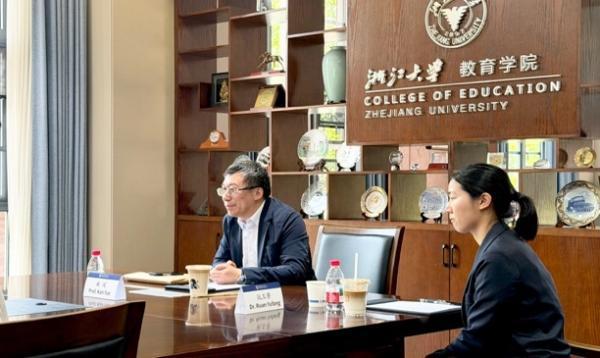

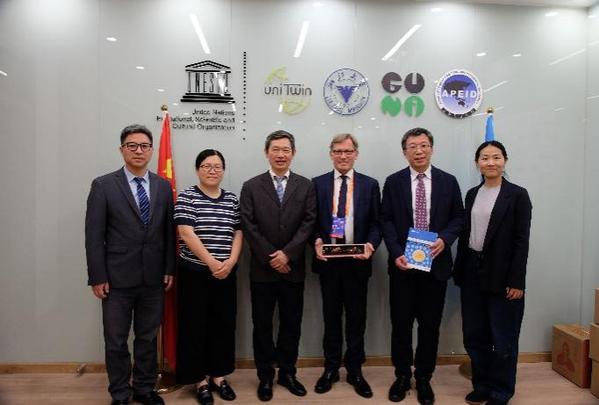
After the meeting, Dr. Tawil also paid a visit to platforms collaborating with UNESCO.
This meaningful dialogue deepened long-term cooperation between ZJU's CoE and UNESCO, laying a solid foundation for joint innovation in AI education and global future learning.
Content source from ZJU CoE
Translated by ZJU CoE
Editor: DING Chenwei