HUANG He and HU Yongxian’s team systematically review CAR-X engineering strategies and applications as a new paradigm in cell therapy


Although cellular immunotherapy represented by CAR-T cells has achieved revolutionary success in the treatment of hematological malignancies, its therapeutic efficacy remains constrained by intrinsic functional limitations of T cells, including poor infiltration into solid tumors, antigen escape, and T-cell exhaustion. To overcome these limitations, extending CAR engineering to other effector cells with distinct immunobiological functions has emerged as an important direction for next-generation cell therapy.
On April 28, 2026, Professor HUANG He’s and Professor HU Yongxian’s team from the First Affiliated Hospital, Zhejiang University School of Medicine and Liangzhu Laboratory published a Review article entitled “CAR-X cell engineering” online in Nature Reviews Bioengineering. The article collectively defines CAR-engineered immune cells beyond conventional T cells as “CAR-X,” in which “X” represents diverse immune cell platforms such as natural killer (NK) cells, macrophages (Macs), and regulatory T cells (Tregs). The Review systematically discusses how CAR-X strategies can exploit the innate advantages of different immune cell lineages and incorporate lineage-specific CAR designs and manufacturing processes, thereby expanding the therapeutic potential of CAR technology in both oncological and non-oncological diseases.
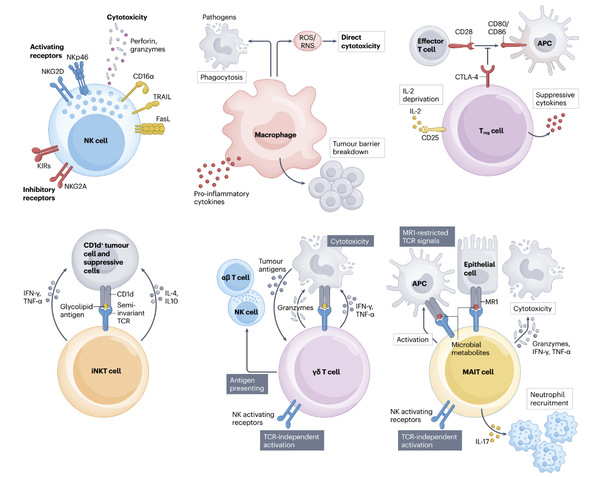
Figure 1 Generic functional properties of distinct CAR-X cells
The core concept of CAR-X strategies is to harness the lineage-specific immune functions of distinct immune cell types to compensate for the limitations of conventional T cells, thereby achieving a precise match between cellular function and disease-specific therapeutic needs (Figure 1). CAR-NK cells possess MHC-independent cytotoxicity, are well suited for the development of universal, off-the-shelf products, and are associated with a lower risk of cytokine storm. CAR-Mac cells combine potent tissue infiltration, antigen presentation, and phagocytic clearance capacities, showing substantial potential for reshaping the immunosuppressive microenvironment of solid tumors. As the “brake” of the immune system, CAR-Tregs can mediate targeted immunosuppression at specific inflammatory sites, providing new therapeutic strategies for autoimmune diseases, graft-versus-host disease, and related disorders. CAR-engineered unconventional T cells, such as iNKT, γδ T, and MAIT cells, integrate innate and adaptive immune features, enabling rapid responses, polyfunctional cytokine production, and a lower risk of alloreactivity.
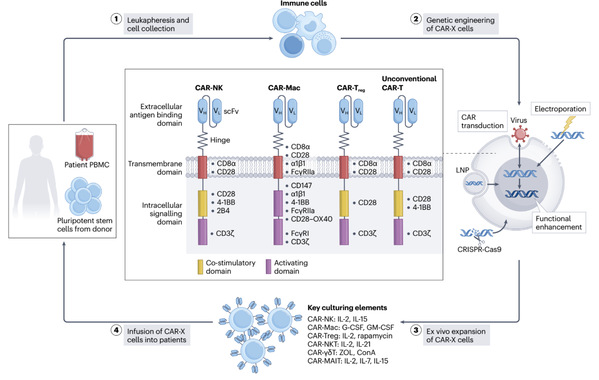
Figure 2 Manufacturing and CAR constructs of CAR-X cells
The successful translation of CAR-X therapies depends on lineage-specific engineering strategies, encompassing cell sourcing, CAR design, gene editing, and expansion protocols (Figure 2). Cell sources may include autologous cells from patients, peripheral blood cells from healthy donors, or induced pluripotent stem cells (iPSCs), providing a foundation for scalable manufacturing. For genetic engineering, CARs are commonly introduced using tools such as viral transduction, mRNA electroporation, or CRISPR-based approaches. A key consideration is the optimization of costimulatory signaling domains and CAR molecular designs according to the specific cell type, such as CD28, 4-1BB, or 2B4 for NK cells, and FcγR-based signaling modules for macrophages. Manufacturing processes must further establish stable and regulatory-compliant in vitro expansion and differentiation systems to ensure the potency, purity, and reproducibility of the final cell products.
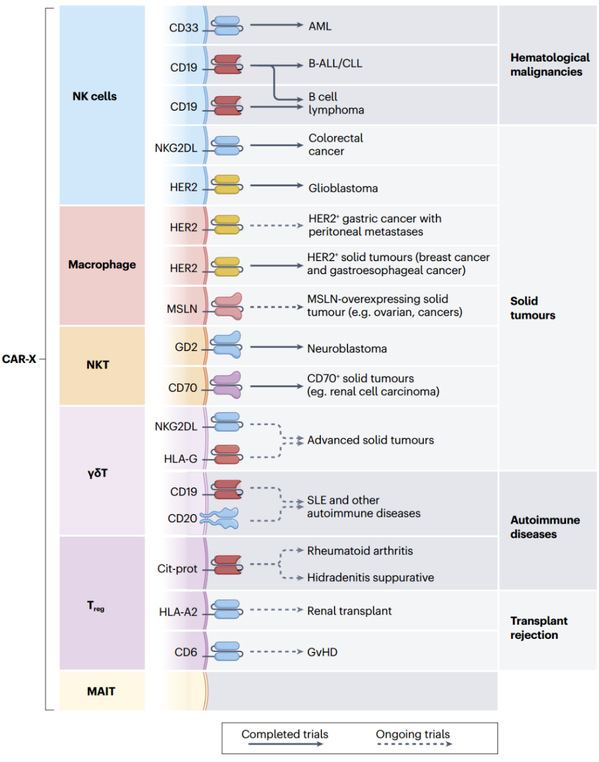
Figure 3 Therapeutic applications of different CAR-X cells
CAR-X platforms are driving the expansion of cell therapy from hematological malignancies toward broader therapeutic fields (Figure 3). In cancer therapy, CAR-NK cells have demonstrated favorable clinical feasibility in hematological malignancies, whereas CAR-macrophages and CAR-γδ T cells have shown potential in solid tumors, such as gliomas and liver cancer, by penetrating physical barriers and overcoming tumor heterogeneity. For non-oncological diseases, CAR-Tregs have achieved important advances in preclinical studies of autoimmune diseases, including type 1 diabetes and systemic lupus erythematosus, as well as organ transplant rejection, enabling targeted and localized immunosuppression. In terms of safety and controllability, certain CAR-X cell types, such as CAR-NK cells and CAR-Tregs, possess intrinsically favorable safety profiles, and the incorporation of regulatable safety switches may further support their clinical application.
Overall, CAR-X cell therapies show considerable potential to move beyond conventional CAR-T technologies, particularly in improving therapeutic safety, enhancing infiltration into solid tumors, and broadening the range of clinical indications. Future progress will depend on a deeper understanding of the biological properties of diverse immune cell types, especially rare unconventional T-cell subsets, as well as the establishment of stable and scalable manufacturing processes. The development of cell type-specific CAR designs is expected to further optimize therapeutic efficacy. Despite the lineage-specific challenges associated with different immune cell platforms, CAR-X technologies offer substantial advantages and may be further integrated with advanced strategies such as in vivo CAR engineering to simplify manufacturing, facilitate the implementation of off-the-shelf therapies, and ultimately expand the application of CAR-based technologies from hematological malignancies to solid tumors, autoimmune diseases, and other broader disease areas.
More information: LI Xia, LIN Haikun, LIANG Jiehan, and JIN Xin are the co-first authors of this article. Prof. HUANG He and Prof. HU Yongxian are the co-corresponding authors of this article.
Source: The First Affiliated Hospital, Zhejiang University School of Medicine
Photo credit: the research team led by Prof. HUANG He
Editor: DING Chenwei