Chinese-developed spinal interface helps 12-year-old Russian girl walk again


A 12-year-old Russian girl named Vera has become the first international patient to regain the ability to walk with assistive devices following surgery using a domestically developed closed-loop spinal cord neural interface system. The procedure was performed at the Second Affiliated Hospital of Zhejiang University (SAHZU), where over 20 spinal cord injury patients have now received the implant with varying degrees of functional recovery.
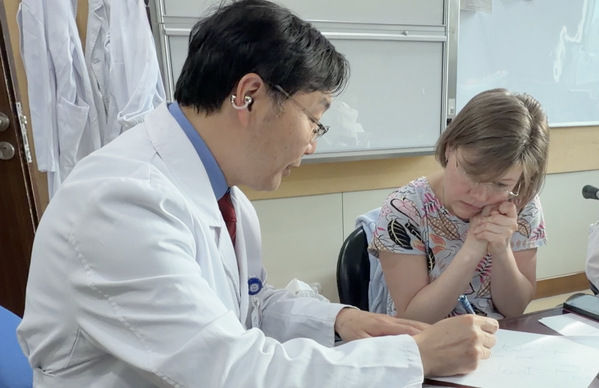
Vera sustained a severe spinal cord injury in a car accident, leaving her lower limbs paralyzed and forcing her to rely on a wheelchair. After multiple failed treatment attempts at hospitals in Russia, her family contacted SAHZU's International Medical Service through coordination with the Russian Embassy in China. A multidisciplinary team conducted a remote consultation, assessed the feasibility of long-distance travel, and recommended she travel to Hangzhou for treatment.
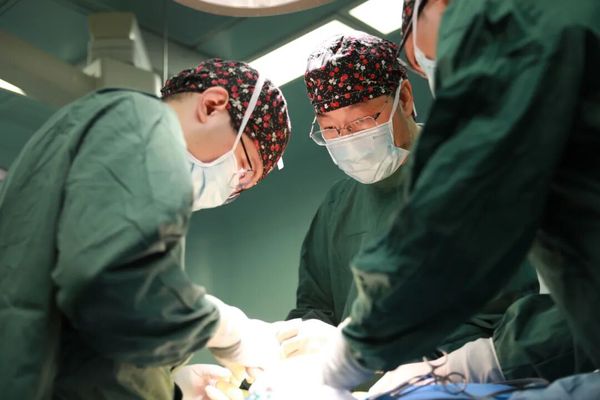
Vera was admitted to SAHZU in April 2026. Comprehensive neurological assessments confirmed she had an incomplete spinal cord injury, meaning residual neural pathways were still intact. Professor ZHU Junming, Vice Director of Neurosurgery, led the surgical team in implanting stimulation electrodes along the dorsal surface of the spinal cord alongside a pulse generator. Rather than bypassing the brain's commands, the system amplifies faint residual signals so they can cross the injury site and reactivate the leg muscles. Professor XU Kedi of the School of Biomedical Engineering and Instrument Science described the underlying principle: The spinal cord is like a highway that has narrowed after injury. Our technology amplifies the remaining signals through electrical stimulation, making the muscles more responsive to the brain's commands — that is what genuine voluntary walking looks like.
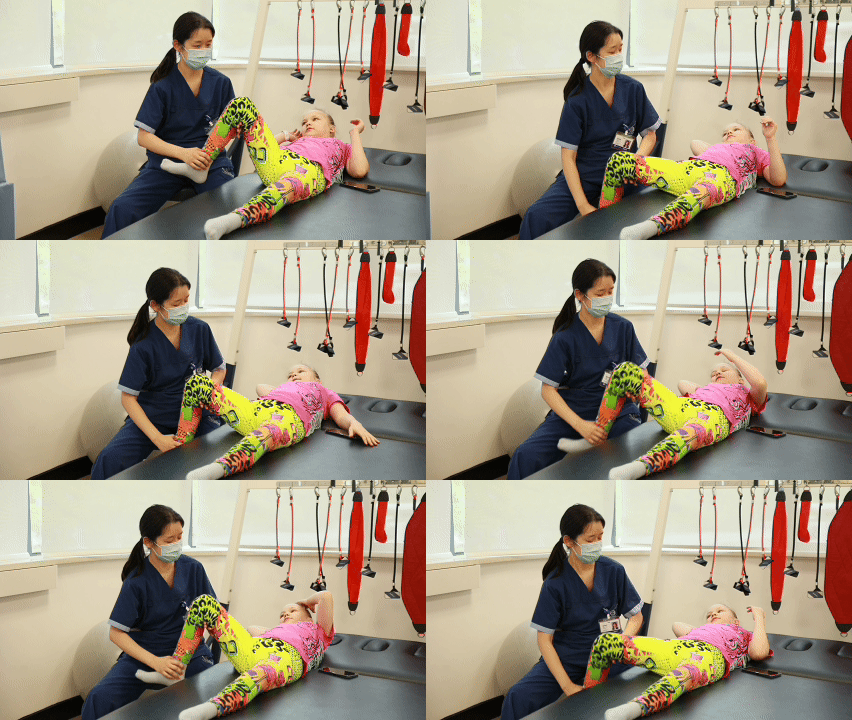
The surgical plan was tailored to Vera's growing body, with electrode placement designed to accommodate future growth. Compared with earlier procedures, this operation achieved independent bilateral leg control and incorporated an AI-assisted algorithm for real-time parameter optimization. Following surgery, a joint team of neurosurgeons, biomedical engineers, rehabilitation specialists, and electrophysiologists worked together on Vera's recovery. Engineers dynamically tuned stimulation parameters after each session, while rehabilitation therapists progressively guided her through leg raises, weight shifts, and stepping exercises.
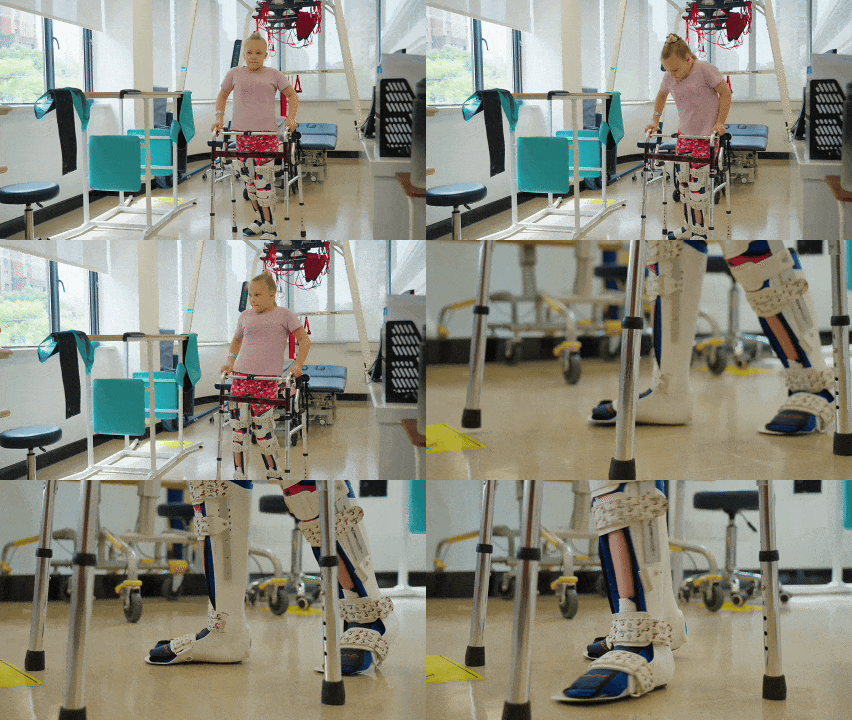
One month after surgery, Vera could stand stably with assistive support and began to recover sensation in her feet. Three months post-operation, she was able to step forward with a walker under her own volition. She is expected to return to Russia next month to continue local rehabilitation. Every small step forward adds to the hope we carry as a family, her mother said.
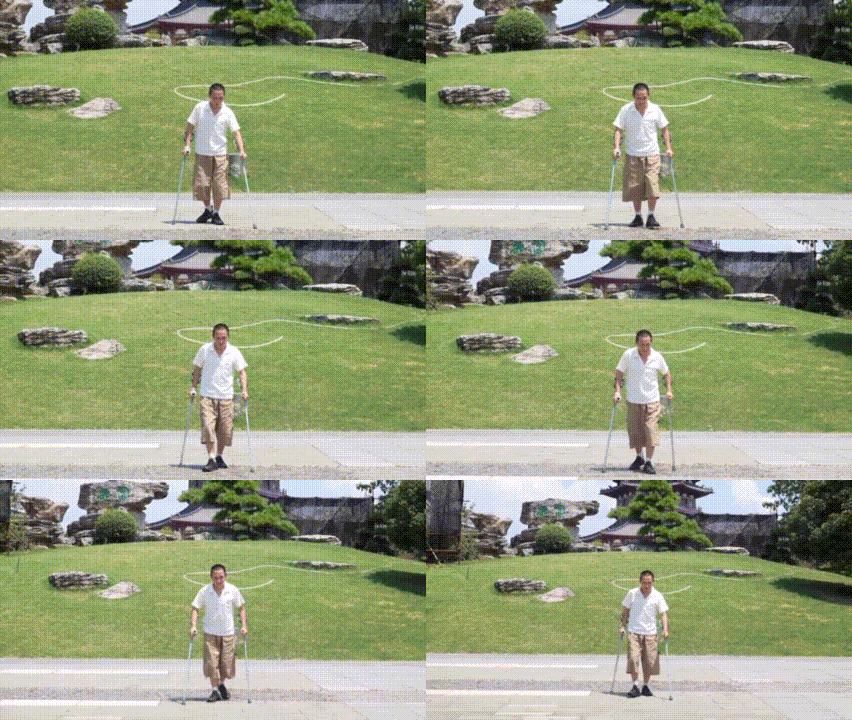
The closed-loop spinal cord neural interface system was developed entirely in China with full independent intellectual property rights. SAHZU performed the country's first such procedure in March 2025; the initial patient, a 61-year-old man, achieved independent standing and walking by his fifteenth day post-surgery. A 52-year-old teacher later regained the ability to walk independently and returned to the classroom. In April 2026, Zhejiang Province's first integrated clinical research ward combining EES surgery and post-operative rehabilitation opened at SAHZU. Professor CHEN Gao, Director of Neurosurgery, noted that the technology has now established a replicable, standardized treatment pathway: This is China's original contribution to global neurorehabilitation — one that can benefit millions of patients in wheelchairs.
Source: SAHZU
Translator: DING Chenwei