LMU Munich delegation visits ZJU to strengthen academic ties


A delegation from Ludwig-Maximilians-Universität München (LMU Munich), Germany, visited Zhejiang University (ZJU) on September 18. The delegation comprised representatives from LMU Munich’s International Office and scholars from a range of disciplines, including philosophy, communication, management, and medicine, pharmacy.
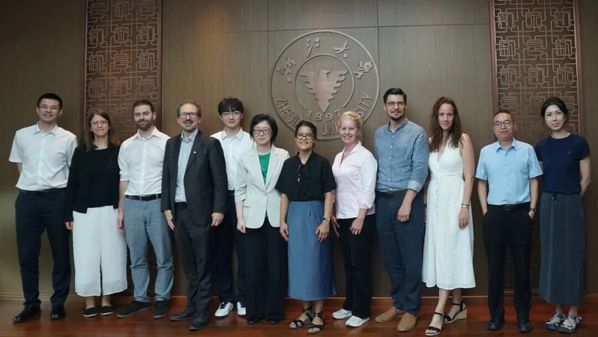
During the plenary meeting, Tian Minjie, deputy director of ZJU’s Office of Global Engagement, welcomed the delegation and shared updates on the university’s recent developments, academic strengths and global partnerships. She highlighted the longstanding collaboration between ZJU and LMU Munich, noting that the two institutions had built a strong foundation for cooperation in student exchanges, joint education programs and research innovation. She expressed hope that the visit would further deepen their strategic partnership, foster closer ties across a broader range of disciplines, and pave the way for sustained, meaningful collaboration.
Anna Lohse, Head of International Networks at LMU Munich’s International Office, thanked ZJU for its warm hospitality and thoughtful arrangements. She outlined recent developments in LMU Munich’s global engagement strategy and reaffirmed the university’s commitment to its longstanding partnership with ZJU. She expressed hope that the face-to-face discussions would foster a deeper understanding of the two institutions’ academic strengths and cooperation priorities, expand interdisciplinary research collaboration, strengthen exchanges among early-career researchers and doctoral students, and deliver tangible outcomes.
During the meeting, Wu Bin, Vice Director of the Office of Graduate Academic Affairs at ZJU’s Graduate School, introduced the university’s doctoral education programs and international exchanges. Fu Qiang, Deputy Director of ZJU’s Institute of Technology Transfer, outlined the university’s framework for technology transfer and the commercialization of research outcomes. Representatives from both institutions held in-depth discussions on doctoral student exchanges and joint training programs, researcher mobility, seed funding initiatives, technology transfer, and the renewal of the university-level cooperation agreement. They also explored ways to strengthen collaboration in priority areas and improve support mechanisms for joint projects.
Following the plenary meeting, scholars from the two universities held parallel discussions covering philosophy and religious studies, management and public administration, dentistry, basic medical sciences and pharmacy, media and communication, and institutional cooperation mechanisms. The discussions focused on opportunities for joint research, talent development, faculty and student exchanges, and academic activities, with both sides identifying promising areas for future collaboration.
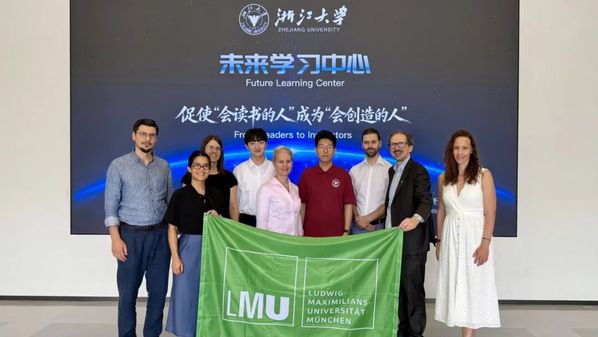
During their visit, the delegation also toured ZJU’s Future Learning Center and Museum of Art and Archaeology, gaining insights into the university’s efforts to advance educational innovation and preserve cultural heritage.
Adapted and translated from the article written by Zheng Qi
Translator: Fang Fumin
Editor: Ding Chenwei