Research Team Led by Prof. Wang Di Reveals Inflammation and Metabolic Disorder Control by Bile Acids


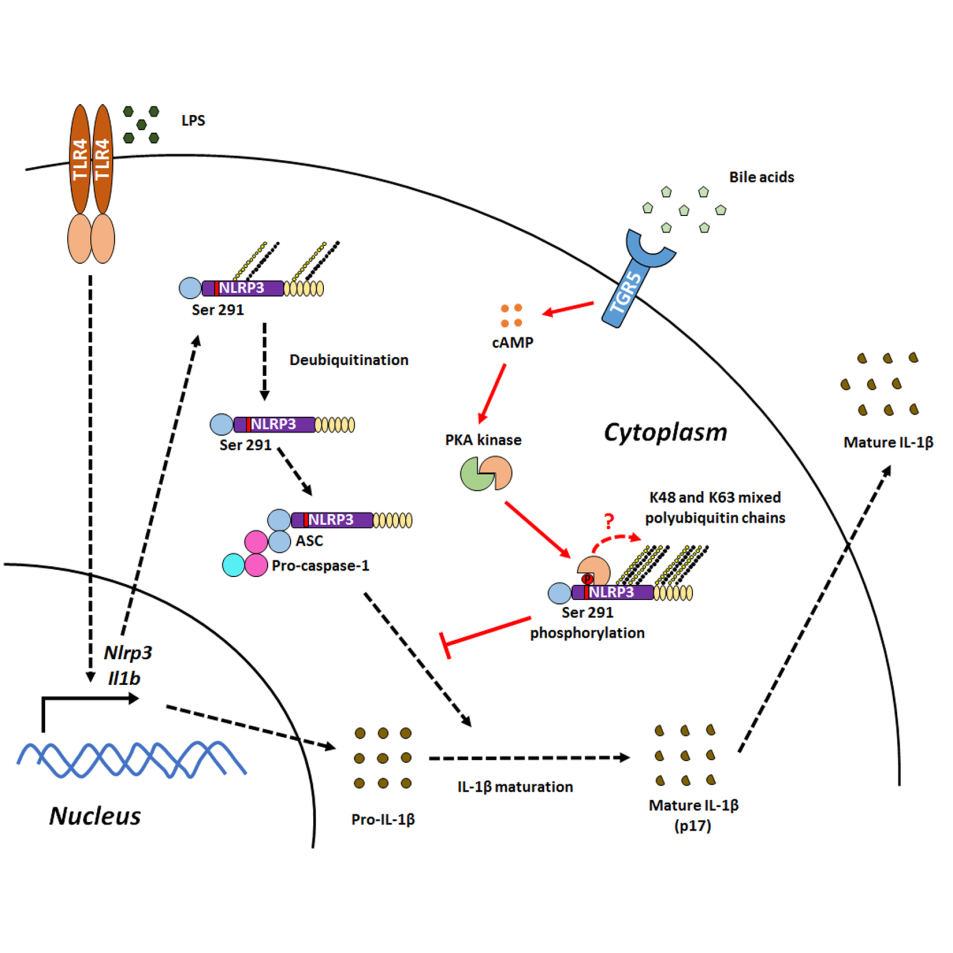
The research team, led by Prof. Wang Di of the Institute of Immunology, the School of Medicine, discovers the function of bile acids in controlling inflammation and metabolic disorder by inhibiting NLRP3 inflammasome and reveals the PKA-induced phosphorylation and ubiquitination of NLRP3. Their findings were published online in Immunity on September 27, 2016.
Reciprocal interactions between the metabolic system and immune cells play pivotal roles in diverse inflammatory diseases, but the underlying mechanisms remain elusive. The activation of bile acid-mediated signaling has been linked to improvement in metabolic syndromes and enhanced control of inflammation. Researchers demonstrated that bile acids inhibited NLRP3 inflammasome activation via the TGR5-cAMP-PKA axis. TGR5 bile acid receptor-induced PKA kinase activation led to the ubiquitination of NLRP3, which was associated with the PKA-induced phosphorylation of NLRP3 on a single residue, Ser 291. Furthermore, this PKA-induced phosphorylation of NLRP3 served as a critical brake on NLRP3 inflammasome activation. In addition, in vivo results indicated that bile acids and TGR5 activation blocked NLRP3 inflammasome-dependent inflammation, including lipopolysaccharide-induced systemic inflammation, alum-induced peritoneal inflammation, and type-2 diabetes-related inflammation. TGR5 were regarded as a potential target for the treatment of NLRP3 inflammasome-related diseases.