Scientists identify ways to preserve genetic diversity in rice-fish system


With the rapid development of modern intensive agriculture and its reliance on high-yielding and genetically uniform varieties, many traditional agricultural systems have been progressively abandoned, resulting in the loss of local genetic resources and indigenous technical knowledge. How to preserve heritage resources in the agricultural system has captured immense attention globally.
A research team led by Professor CHEN Xin and Dr. TANG Jianjun at ZJU’s College of Life Sciences have found that small farmer households interdependently incubating fish fry for their rice−fish farming can shape the genetic pattern and help to maintain the high genetic diversity of this local common carp.
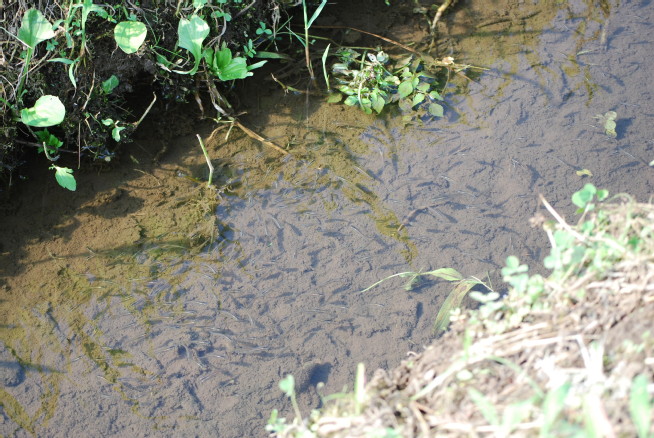
Rice-fish
This traditional rice–fish co-culture system is considered as a sustainable form of agriculture that provides rice grain and fish for local farmers. The Qingtian rice-fish system in southern Zhejiang province is listed as Globally Important Agricultural Heritage Systems (GIAHS) by the UN Food and Agriculture Organization, the UN Development Program, and the Global Environment Facility.
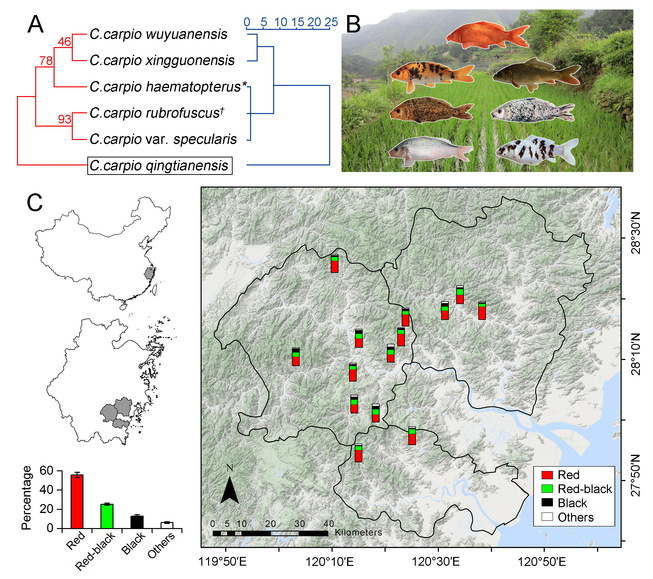
The ZJU team quantified the effects of traditional farmer activities on the genetic diversity of an indigenous common carp in the Qingtian rice-fish system. They also showed how the conventional practice of mixed culturing of diverse color types potentially promotes genetic diversity. It is suggested that the locally adapted ways of traditional farmers obtaining and using local genetic resources for their farming play a critical role in the biodiversity of farmed crops and animals. It can become a “hotspot” for genetic diversity conservation in agriculture.
The relevant findings were published in the January 2 issue of Proceedings of the National Academy of Sciences of the United States of America (PNAS).