Connection/ Issue 2/ Research highlights/ Genetic diversity


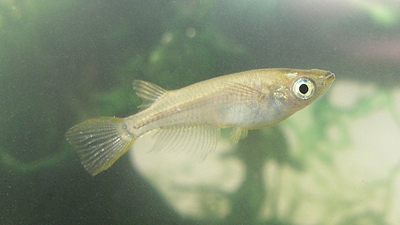
Rice fish. Credit: NOZO
Genetic Diversity
With the rapid development of modern intensive agriculture and its reliance on high-yielding and genetically uniform varieties, many traditional agricultural systems have been progressively abandoned, resulting in the loss of local genetic resources and indigenous farming techniques. How should we preserve heritage resources in the agricultural system?
ZJU findings
Professor CHEN Xin and his colleagues at ZJU’s College of Life Sciences examined how traditional farmers preserve the genetic diversity of a local carp, which is referred to as “paddy field carp” (PF-carp), in a 1,200-year-old rice-fish co-culture system in Zhejiang Province. Their molecular and morphological analysis showed that the PF-carp has changed into a distinct local population with higher genetic diversity and diverse color types.
What we do
This traditional rice–fish co-culture system is considered as a sustainable form of agriculture that provides rice grain and fish for local farmers. The Qingtian rice-fish system in southern Zhejiang Province has been listed as Globally Important Agricultural Heritage Systems (GIAHS) by the UN Food and Agriculture Organization.
ZJU researchers quantified the effects of traditional farmer activities on the genetic diversity of the PF-carp in the Qingtian system. According to their research, thousands of small farmer households interdependently obtained fry and parental carps for their own rice–fish production, resulting in a high gene flow and large numbers of parent carps distributing in a mosaic pattern in the region.
Landscape genetic analysis indicated that farmers’ connectivity was one of the major factors that shaped this genetic pattern. Population viability analysis further revealed that the numbers of these interconnected small farmer households and their connection intensity affect the carps’ inherent genetic diversity.
Implications
Traditional farmers secure the genetic diversity of PF-carp and its viability over generations through interdependently incubating and mixed-culturing practices within the rice−fish system. Thus, the locally adapted ways of traditional farmers can become a “hot spot” for genetic diversity conservation in agriculture.
Read the full article at http://www.pnas.org/content/early/2018/01/01/1709582115.full.pdf