The science behind "Eyes front!"


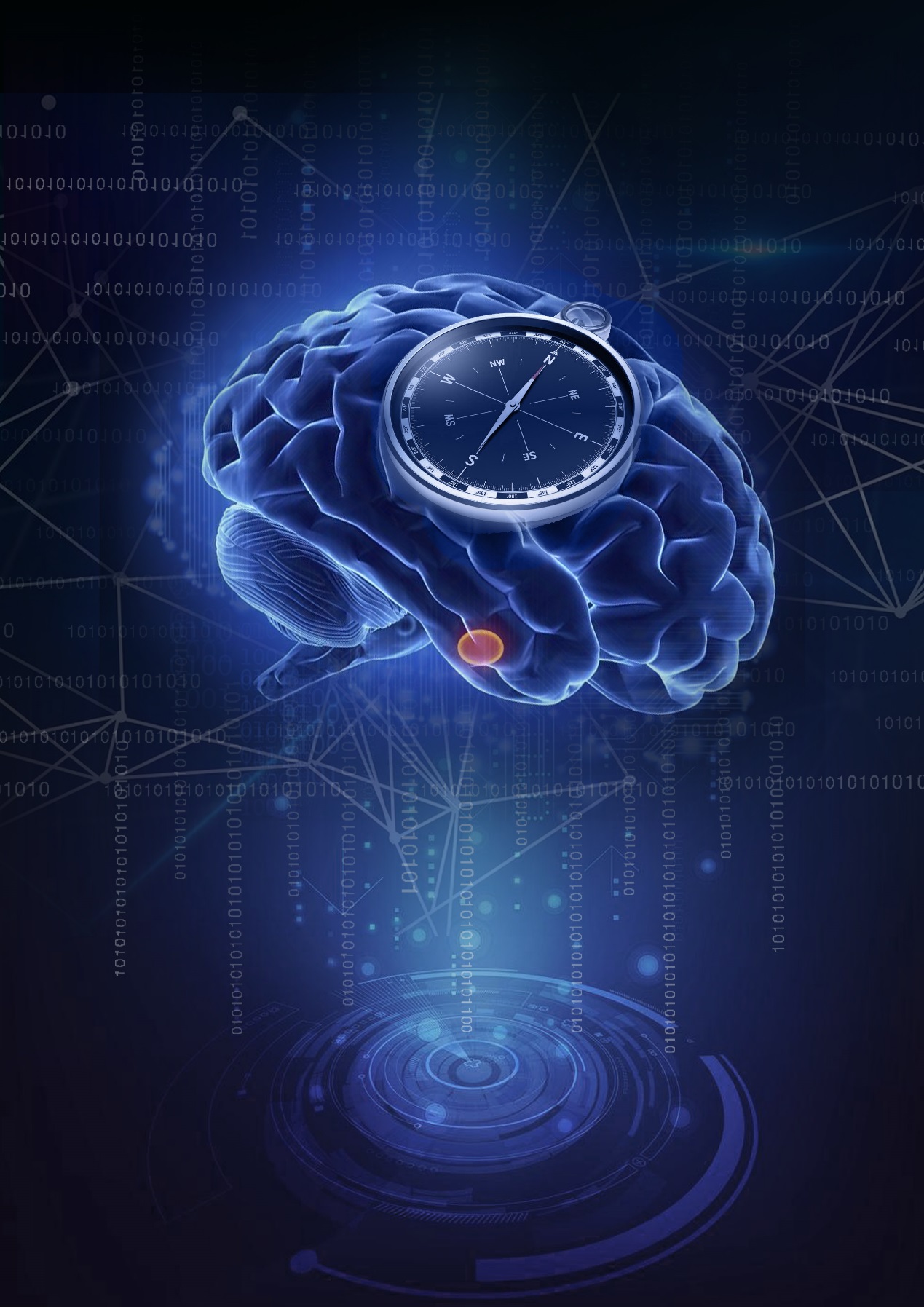
“Attention! Eyes right! Eyes front!”
These military commands are quite familiar to us. But do you really know what “turning your head forward” is? If you are asked to look straight ahead while your body tilts somewhat to the right, will you first adjust your body and then turn your head in the stated direction or will you maintain your rightward posture and shift your gaze right ahead?
This is an instantaneous response and is intimately akin to spatial encoding in the brain. Movements are relative and it is thus of the utmost importance to distinguish between the orientation of the body and the orientation of the head to the world.
Recently, the research team led by Prof. CHEN Xiaodong with the Interdisciplinary Institute of Neuroscience and Technology of Qiushi Academy for Advanced Studies published a paper entitled “Flexible egocentric and allocentric representations of heading signals in parietal cortex” in the journal of PNAS.
Previous studies have revealed that the posterior parietal cortex (PPC) plays a crucial role in planned movements, spatial reasoning, and attention. The ventral intraparietal area (VIP), in particular, can receive input from the visual system, the vestibular system, the auditory system and the somatic sensory system. These signals are integrated in PPC into an abstract self-space.
In collaboration with Gregory C. DeAngelis from University of Rochester and Dora E. Angelaki from Baylor College of Medicine, CHEN Xiaodong et al. focused their research on the encoding mechanism of the vestibular system in the VIP area.
The vestibular system is the sensory system that provides the leading contribution to the sense of balance and spatial orientation for the purpose of coordinating movement with balance. The brain uses information from the vestibular system in the head and from proprioception throughout the body to understand the body’s dynamics and kinematics (including its position and acceleration) from moment to moment.
By systematically manipulating the head position relative to the body and the eye position relative to the head, previous studies have shown that vestibular tuning curves of neurons in the VIP area remain invariant when expressed in body-/world-centered coordinates. However, body orientation relative to the world is not manipulated; thus, an egocentric, body-centered representation cannot be distinguished from an allocentric, world-centered reference frame.
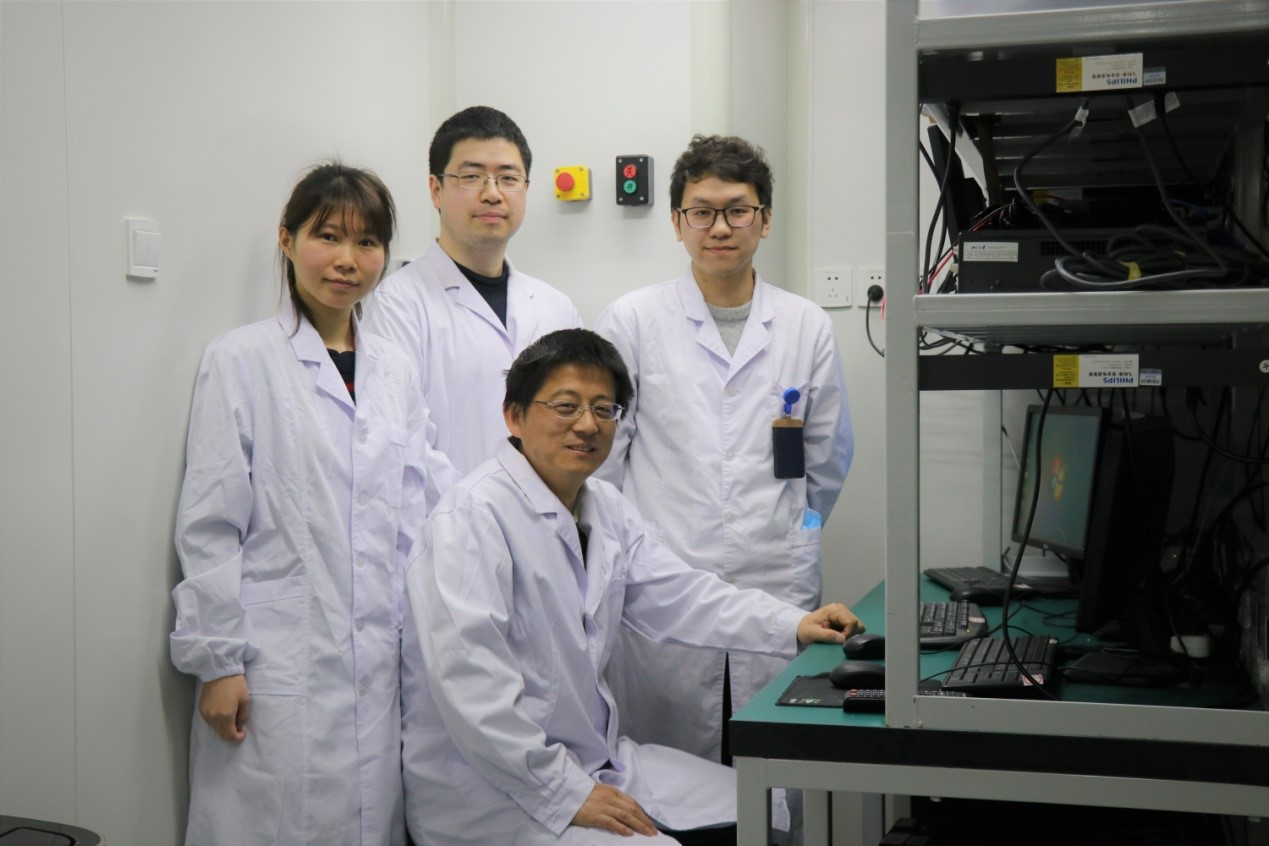
CHEN (sitting in the middle) and his team
In their research, CHEN manipulated the orientation of the body relative to the world such that they could distinguish whether vestibular heading signals in the VIP area are organized in body- or world-centered reference frames.
They discovered a hybrid representation, depending on the gaze direction. When gaze remained fixed relative to the body, the vestibular heading tuning of VIP neurons shifted systematically with the body orientation, indicating an egocentric, body-centered reference frame. In contrast, when gaze remained fixed relative to the world, this representation fell somewhere in between the body- and world-centered reference frames.
This research indicates that the neural representation of heading in posterior parietal cortex is flexible, depending on gaze and possibly attentional demands. This conclusion lays a solid foundation for follow-up research and opens up a new clue to the neural mechanism regarding the interaction between mankind and the environment.
This research is also of theoretical significance in industrial and medical applications. It may be applied to such fields as artificial intelligence, brain-computer interface and diagnosis of relevant neural diseases.