Scientists reveal the effect of long-term nitrogen fertilization on microbes in agro-ecosystems


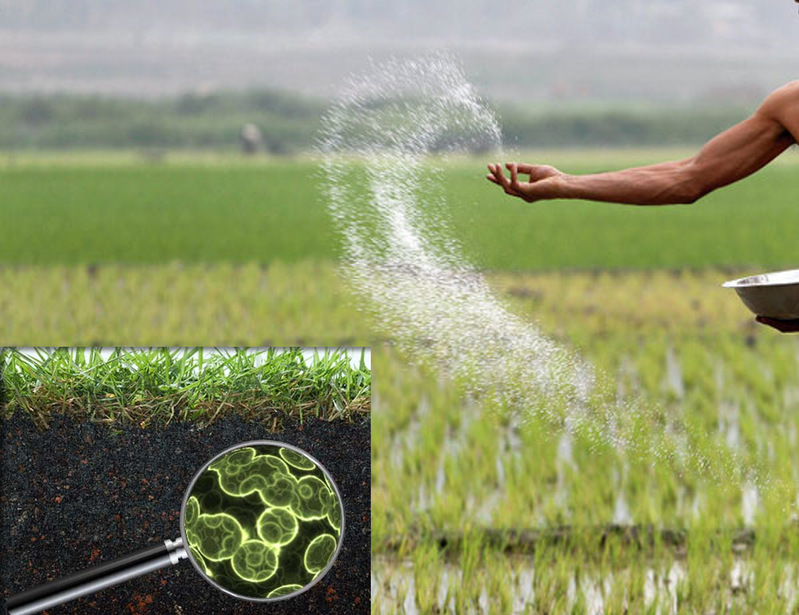
The structure and diversity of the microorganism community plays a crucial role in agro-ecosystems. If the diversity of the microorganism community in soil is destroyed, nourishments in soil will be lost, the structure of soil will degenerate and the ecological function will decline, thereby severely affecting its productivity and health. It is one of the most common agricultural measures to apply nitrogen fertilizers, which will improve crop yield in the short term. However, Long-term elevated nitrogen (N) input from anthropogenic sources may cause soil acidification, reduction in soil nutrition and aggravation of soil pollution.
The research team led by Prof. XU Jianming from the College of Environment & Resource Sciences explored the effect of long-term N and NPK (nitrogen, phosphorous and potassium) fertilization on soil bacterial diversity and community composition using meta-analysis of a global dataset.
They discovered that N fertilization decreased soil pH, and increased soil organic carbon (C) and available N contents. Bacterial taxonomic diversity was decreased by N fertilization alone, but was increased by NPK fertilization. The effect of N fertilization on bacterial diversity varied with soil texture and water management, but was independent of the crop type or the N application rate. Changes in bacterial diversity were positively related to both soil pH and organic C content under N fertilization alone, but only to soil organic C under NPK fertilization. Microbial biomass C decreased with decreasing bacterial diversity under long-term N fertilization.
N fertilization increased the relative abundance of Proteobacteria and Actinobacteria, but reduced the abundance of Acidobacteria, consistent with the general life history strategy theory for bacteria. The positive correlation between N application rate and the relative abundance of Actinobacteria indicates that increased N availability favored the growth of Actinobacteria.
This first global analysis of long-term N and NPK fertilization that affects bacterial diversity and community composition provides a reference for nutrient management strategies for maintaining belowground microbial diversity in agro-ecosystems worldwide. It is advisable that in the agricultural process, N fertilization should be combined with P and K fertilization so as to mitigate the decrease in soil bacterial diversity.
Relevant findings are published in the April 26 issue of the journal of Global Change Biology.