Broken shuttle may hinder learning in patients with intellectual disability


Unable to carry signals based on sights and sounds to the genes that record memories, a broken shuttle protein may hinder learning in patients with intellectual disability, schizophrenia and autism. This is the implication of a study conducted by researchers from ZJU School of Medicine and NYU School of Medicine, which was published in the June 22, 2018 online issue of Nature Communications.
Specifically, the research team found that mice engineered to lack the gene for the γCaMKII shuttle protein took twice as long as normal mice to form a memory needed for a simple task. This is the first study that shows the critical role of γCaMKII in learning and memory for live animals. The research studies further indicated that making the same change in the shuttle’s structure seen in a human child with severe intellectual disability also deprived mice of learning ability. Importantly, the research team then restored the learning ability by re-inserting the human version of the shuttle protein into mice.
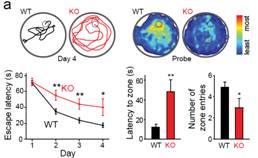
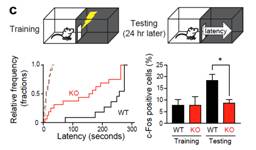
How synapses “talk to” nerve cell nuclei when memories form had remained a “missing link” in this field. According to this study, researchers determined for the first time that this communication occurs when γCaMKII shuttles the calcium/calmodulin complexes that form just inside of nerve cells to their nuclei.Comparing spatial memory in mice without γCaMKII against normal mice, the authors found that γCaMKII “knockout” mice were much less able to locate a platform hidden beneath the surface of murky water in a maze. During this experiment, normal mice quickly identify the platform’s location. An hour after maze training, normal mice displayed a significant increase in expression of three genes – BDNF, c-Fos and Arc – known from past studies to help form long-term, experience-based spatial memories. In contrast, training-induced augmentation in the expression of these genes did not occur in mice engineered to lack γCaMKII.
This work was supported by research grants to Dr. MA Huan (the National Natural Science Foundation of China, the Fundamental Research Funds for the Central Universities of China, 111 project, and the K. C. Wong Education Foundation).
Source: MA Huan's Group; School of Basic Medical Sciences