Bitter food may help initiate immune responses, experts find


It is receptors in taste buds that are responsible for the detection of taste in the mouth. A typical taste bud is comprised of 50-100 cells, each cell being for one taste. Recently, HUANG Liquan’s Laboratory at the College of Life Sciences conducted research into intestinal tuft cells whose structure is similar to that of taste buds. They found out that the bitter-taste receptors (Tas2rs) expressed in tuft cells and their signaling pathway play a crucial role in detecting infections by the parasitic helminth Trichinella spiralis and triggering type 2 immune responses.
The finding appears in the March 19 issue of the journal PNAS.
Tuft cells, which have a “tuft” of microvilli projecting into the lumen of the organ, are chemosensory cells in the epithelial lining of the intestines and respiratory tract. Recently, there are evidences suggesting the connections between tuft cells and viral, parasitic infections and intestinal flora. However, the underlying molecular mechanisms remain to be fully understood.
Researchers in HUANG Liquan’s Laboratory found out that tuft cells will play a domino effect once triggered by Trichinella spiralis, one type of parasite commonly found in pig and wolf, thereby setting in motion immune responses to kill parasites.
In this work,excretory–secretory products and extract of Trichinella spiralis, as well as the bitter compound salicin, activate Tas2r bitter-taste receptors in HEK cells and Tuft cells cultured in vitro. This activation induces the release of interleukin 25 (IL-25), promoting the proliferation and differentiation of stem/progenitor cells preferentially into tuft and goblet cells. The resulting tuft- and goblet-cell hyperplasia consequently leads to weep and sweep responses.Further gene knockout mice experiment and related biochemical inhibitors identify proteins involved in downstream signaling pathways. Current work on the tuft cell–ILC2 circuit offers novel insights into initiation of type 2 immunity upon infection and help devise new ways to combat widespread parasites.
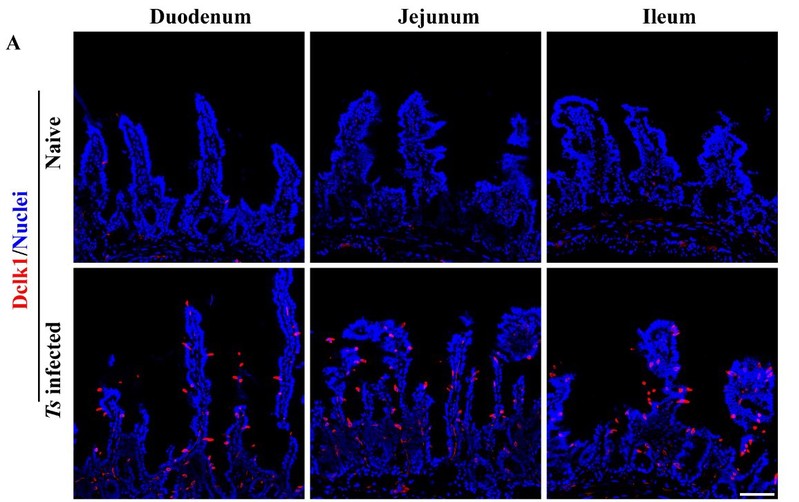
This research not only opens the door to prevention and treatment of infections by the parasitic helminth but also offers an insightful understanding of the functions of Tas2r and tuft cells. “Parasites may be able to ‘deceive’ our mouth, but they will eventually be detected by bitter-taste receptors in intestines,” said HUANG Liquan.
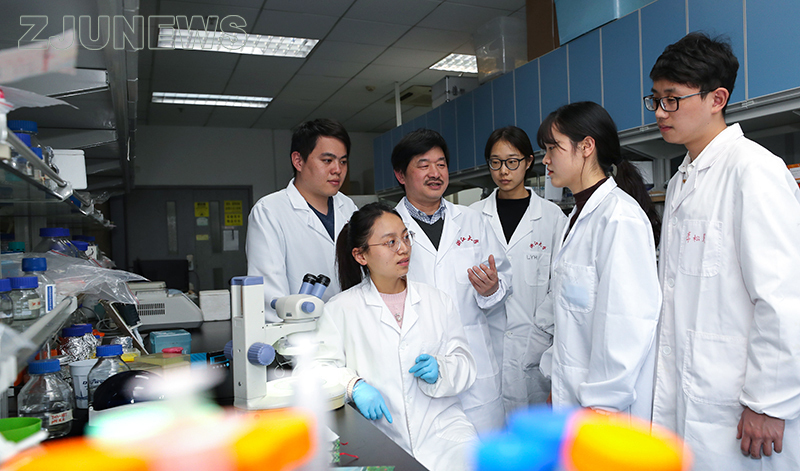
HUANG Liquan also recommended that bitter food be taken in so as to improve immunity and stimulate tuft cells into raising vigilance.