Research sheds light on the allocation of China’s carbon emission allowance


Global warming caused by greenhouse gas emissions has become a topic of global concern. The Paris Agreement has opened up a crucial avenue for the concerted efforts to reduce emissions. China has announced its Intended Nationally Determined Contributions (INDCs) aimed at reducing its carbon dioxide (CO2) emissions by 60–65% from the 2005 level by 2030. Against this backdrop, it is of supreme importance to formulate an appropriate scheme for the allocation of CEA at provincial levels.
The research team led by Dr. FANG Kai from the School of Public Affairs cooperated with researchers at the University of Tokyo to engage in research into a prospective scheme for the allotment of China’s carbon emission allowance (CEA) at subnational levels. Their findings are published in an article entitled “How can China Achieve its Intended Nationally Determined Contributions by 2030? A Multi-criteria Allocation of China’s Carbon Emission Allowance” in the journal of Applied Energy.
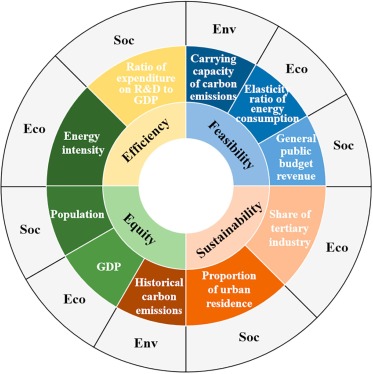
FANG Kai et al. measure the overall CEA of China by 2030 and propose a scientific scheme for CEA allocation by developing an improved zero sum gains-data envelopment analysis (ZSG-DEA) model. It demonstrates that the final CEA of some northern provinces can be cut down as compared to their initial shares and, conversely, most southern provinces experience an increase in their CEA. By making a comparison between the final share of CEA by province and current carbon emissions, they observe that provinces with abundant energy reserves, such as Shanxi, Inner Mongolia and Shaanxi, tend to be operating in a state of overshoot in terms of space for carbon emissions (SCE). In contrast, there remains SCE when it comes to Guangdong, Hunan, Fujian, etc. Other provinces, such as Heilongjiang, Hebei and Ningxia, are close to the break-even point. In view of the differing SCE of individual provinces, common but differentiated policies for CO2 emission control may well be the key to achieving China’s INDCs.
These research findings lay a scientific basis for the Chinese government to fulfill its INDCs by means of inter-provincial collaboration on emission reduction. Moreover, they serve as a reference for the formulation of a long-term collaborative scheme for emission reduction.