Four horizontal transferred genes in fungi related to insect killing capability


Because of the lethal infection of chytrid, many frogs around the world are on the verge of extinction. Candida auris, as a“super fungus” that presents a serious global health threat, has recently appeared on the “emergency threat” list of the US Centers for Disease Control and Prevention. This pathogenic fungus carries an astonishingly high mortality rate, approaching 60%, but no drug has yet been developed.
The incessant emergence of new pathogenic fungi has profoundly impacted biota, grain safety, and the well-being of mankind. To achieve effective prevention and control, scientists have attempted to address these questions: Where does the detrimental force of pathogenic fungi come from? How do they survive and evolve?
Metarhizium spp. are ubiquitous insect pathogens that differ significantly in host range. The early-diverging Metarhizium album and Metarhizium acridum have narrow host ranges, whereas the main clade of more recently evolved genera list species have a broad host range. The research team led by Prof. FANG Weiguo from the College of Life Science has long been committed to research into Metarhiziumspp. They discover that the broad host-range entomopathogen M. robertsii has 18 genes that are derived via horizontal gene transfer(HGT)—the movement of genetic material between distant organisms which is prevalent in prokaryotes, serving as a crucial mechanism for the emergence of new bacterial pathogens.
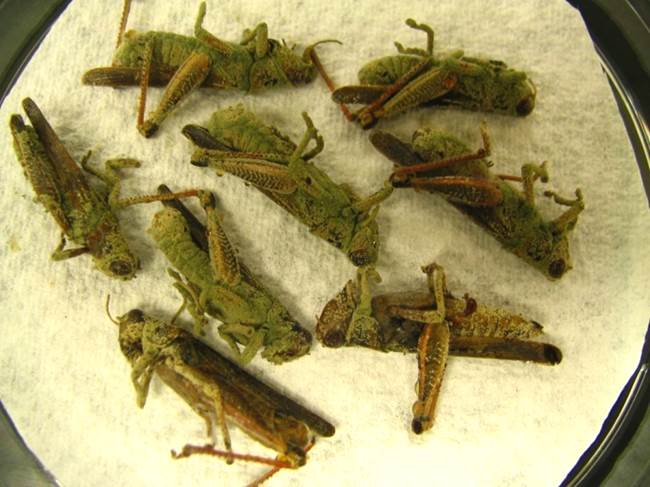
However, the extent to which HGT contributes to the evolution of eukaryotic pathogens remains largely elusive, in large measure for lack of systematic functional characterization of HGTs. Prof. FANG Weiguo et al. report that HGT of 18 genes, many involved in cuticle penetration, is a key mechanism in the emergence of entomopathogenicity in Metarhizium, and that acquisition and/or retention of several horizontally acquired genes expands the host range in some late-evolving Metarhizium species.
The necessity of degrading insect cuticle acts as a major selective pressure to retain these genes, as 12 are up-regulated during penetration; 6 are confirmed to play a role in penetration, and their collective actions are indispensable for infection. Two lipid-carrier genes are involved in utilizing epicuticular lipids, and a third (MrNPC2a) facilitates hemocoelcolonization. Three proteases degrade the procuticular protein matrix, which facilitates the up-regulation of other cuticle-degrading enzymes. The three lipid carriers and one of the proteases are present in all analyzed Metarhizium species and are essential for entomopathogenicity. Acquisition of another protease (MAA_01413) in an ancestor of broad host range lineages contributes to their host-range expansion, as heterologous expression in the locust specialist Metarhizium acridum enables it to kill caterpillars.
This study provides significant insights into the evolution and development of pathogenesis in Metarhizium spp., and also represents a genome wide functional characterization of the contributions of HGT to niche adaption in a eukaryote.
Understanding the story behind the evolving toxicity of fungi can be instrumental to ecological preservation and disease control & prevention. “Many enigmas regarding the toxicity of fungi have yet to be resolved, so we will conduct follow-up research into this field,” FANG Weiguo said.