Scientists reconstruct the architecture of the HNS


Why are some mammals born monogamous? Why do mothers hold an intense affection for their kids? How do spouses maintain a stable relationship as lovers?
This is intimately bound up with oxytocin which is released into the bloodstream as a hormone in response to love and in labor. Recent studies reveal that it not only helps with birth and milk production but also plays a critical role in social bonding, such as monogamy, deep maternal love, a strong sense of intimacy between parents and children. Thus, oxytocin earns itself the nickname “love hormone”. But how does it play its role?
Scholars shed light on this magical “cradle of love”—the hypothalamo-neurohypophysial system (HNS) and provided new evidence for the interpretation of the neurological mechanism regarding the central actions or illnesses related to oxytocin in the brain.
Using viral tracing and whole-brain imaging, the research team led by Prof. DUAN Shumin and Prof. GAO Zhihua from the School of Brain Science and Brain Medicine reconstructed the three-dimensional architecture of the HNS and observed collaterals of hypothalamic magnocellular neuroendocrine cells (MNCs) within the brain.
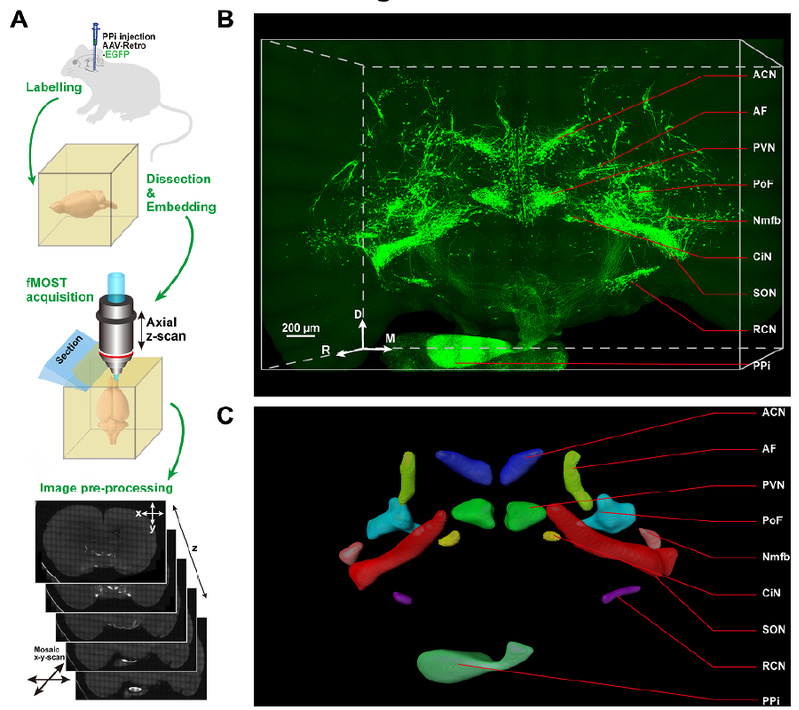
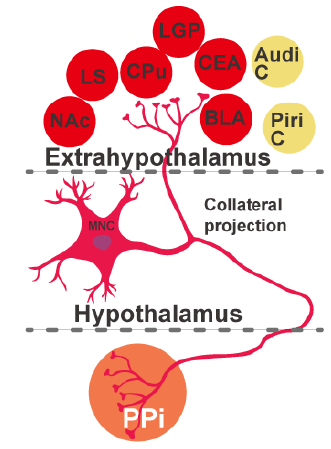
By dual viral tracing, the team further discovered that subsets of MNCs collaterally project to multiple extrahypothalamic regions. Selective activation of magnocellular oxytocin neurons promotes peripheral oxytocin release and facilitates central oxytocin-mediated social interactions, whereas inhibition of these neurons elicits opposing effects. These research findings were published online in the journal of Neuron on November 18, 2020.
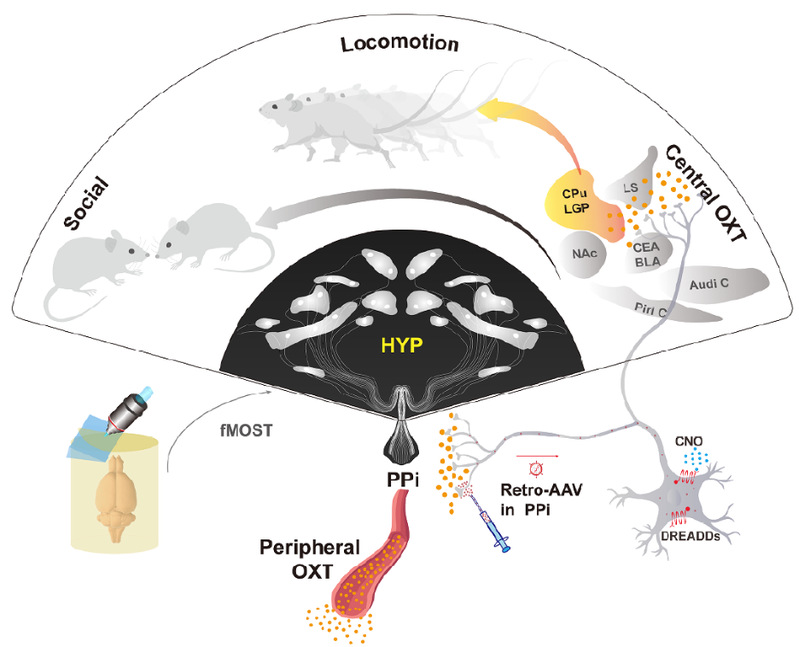
“Our work reveals the previously unrecognized complexity of the HNS and provides structural and functional evidence for MNCs in coordinating both peripheral and central oxytocin-mediated actions, which will shed light on the mechanistic understanding of oxytocin-related psychiatric diseases,” DUAN Shuming said.