New targets of anti-tuberculosis medicine


Tuberculosis (TB) is a pulmonary infectious disease caused by Mycobacterium (Mtb). According to the latest WHO report, there were more than 10 million new cases and 1.2 million deaths worldwide in 2019. China is a country with a high burden of TB. Effective prevention and control of TB in early stage is of great importance. However, current TB diagnosis methods and efficiency of medicine effects are far from satisfactory
The research team led by LI Jicheng from the Zhejiang University School of Medicine published a research article entitled Novel therapeutic evaluation biomarkers of lipid metabolism targets in uncomplicated pulmonary tuberculosis patients in Signal Transduction and Targeted Therapy. The study identified ideal biomarkers for efficacy evaluation of TB and revealed novel medical target for the treatment of TB.
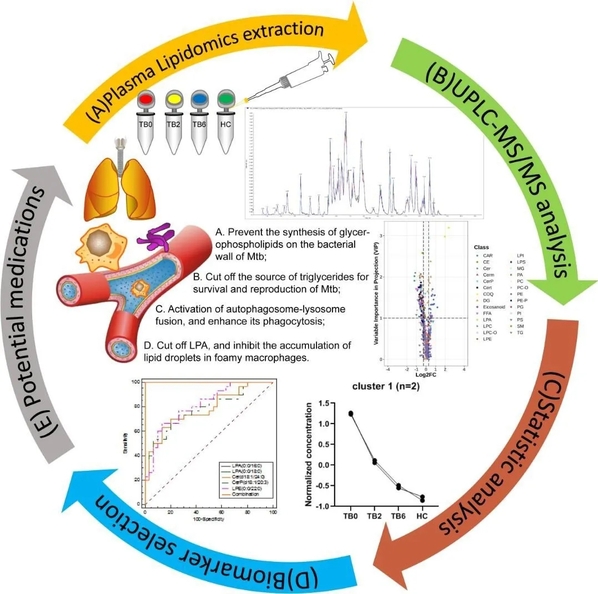
Using UPLC-MS/MS to analyze the plasma lipidome of the patients with TB, the researchers found that the metabolism of glycerophospholipids and sphingolipids, and autophagy metabolic pathways were abnormal, and this abnormality would gradually return to the normal level with the progress of anti-TB treatment. This finding indicates that the host plasma lipids are an important energy source for the metabolism of Mtb, and inhibiting the key lipid metabolic pathway is a new target of anti-TB treatment.
Furthermore, to confirm the biomarkers for TB, the researchers found that LPA (0:0/16:0) and LPA (0:0/18:0) had great potential in the early diagnosis (with 100% sensitivity and specificity) and efficacy evaluation (with 100% sensitivity and specificity). “We discovered for the first time the characteristics of host lipid metabolism changes during anti-TB treatment and identified new medication targets for TB,” said LI Jicheng.
By studying the lipid biomarker of TB efficacy evaluation, the researchers also found a new pathway of lipid metabolism of Mtb, and proposed a new therapeutic strategy for the treatment of TB, that is, cutting off the energy metabolism pathway to starve bacteria in the treatment of TB, which provided an experimental basis for the development of novel anti-TB drugs.
Source: School of Medicine