PET imaging for children with epilepsy, leading in the world


The Nuclear Medicine/PET-CT Center of the Second Affiliated Hospital, Zhejiang University School of Medicine (SAHZU), is specialized at focus localization with PET imaging technology for children with epilepsy. For its remarkable achievements, Prof. ZHANG Hong, director of the Center and dean of the Zhejiang University College of Biomedical Engineering and Instrument Science, was invited to deliver a plenary lecture titled PET Imaging in Pediatric Epilepsy: Current Status and Future Perspectives on the 13th Congress of the World Federation of Nuclear Medicine and Biology, as the representative of Asia along with Prof. Tanaka Koichi, winner of the Nobel Prize for Chemistry in 2002, and another 5 lecturers from the United States, Germany, Spain and Belgium.
The Nuclear Medicine/PET-CT Center of SAHZU has been growing robustly in recent decades. It developed the PET-based molecular imaging technology for focus localization in children with nearly 80% accuracy, close to the leading level in the world. It further discovered the monoamine receptor-based bioimaging markers for cognitive function evaluation in pediatric epilepsy and promoted the application of PET/MRI technique in precise surgical treatment of epileptic foci. The department also works on the creation of deep learning-based AI-assisted diagnosis system for enhanced and more accurate diagnosis.
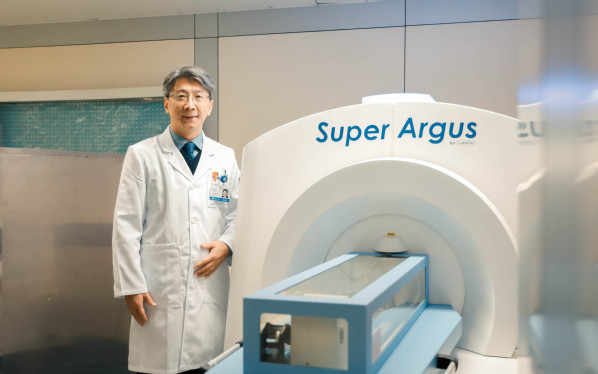
Based on years of clinical practice, Prof. ZHANG Hong's team and experts from the United States, Italy, Spain, Japan, Korea and international academic organizations completed the first international consensus and practice guideline for PET molecular imaging technology in pediatric epilepsy patients in 2021, which provides the basis and standard for the clinical application of PET molecular imaging diagnosis for pediatric epilepsy.
The 13th Congress of the World Federation of Nuclear Medicine and Biology was held from September 7 to 12 in Kyoto, Japan. The World Federation of Nuclear Medicine and Biology is an international academic organization consisting of nuclear medicine and biomedicine scientists, technologists, and physicians from all over the world with a goal to contribute to the development of nuclear medicine and biomedicine.
Source: The Second Affiliated Hospital, Zhejiang University School of Medicine