Zhejiang University teachers shine at Fourth National Teaching Innovation Competition


The finals of the Fourth National Teaching Innovation Competition for College Teachers, led by the Department of Higher Education under the Ministry of Education and hosted by the China Association of Higher Education, recently concluded at the University of Electronic Science and Technology. Zhejiang University stood out in the competition, with five of its teachers delivered exceptional performances. The team secured two first prizes, one second prize, and two third prizes, marking a record-breaking achievement for the university. This not only showcases the university’s pioneering efforts in teaching reform and innovation but also reflects its significant strides in developing first-class undergraduate programs, fostering professional growth among faculty, and enhancing the overall quality of education.
Industrial Economics by GONG Binlei, School of Public Affairs
First Prize, New Liberal Arts Category for Professors
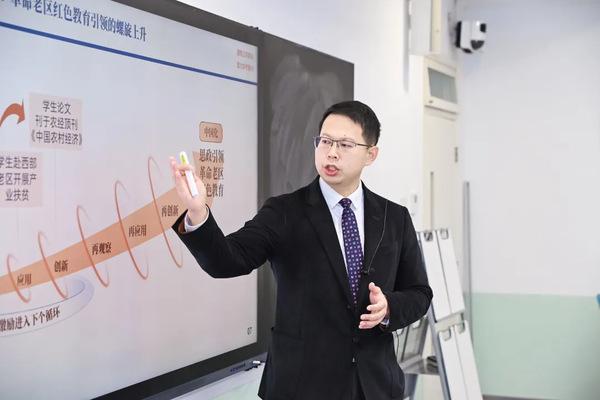
In the context of rural revitalization and the integration of primary, secondary, and tertiary industries, Zhejiang University has taken the lead in China by making Industrial Economics a compulsory course for undergraduate students majoring in agricultural economics and management. Recognizing the gap between the goal of cultivating talents who “understand and love agriculture” and the reality where students “neither understand nor love agriculture,” the course team has implemented targeted teaching reforms. On the strength of the Structure-Conduct-Performance (SCP) paradigm, they developed a dual-layered SCP teaching system that combines theory and practice. This course, initially rooted in a Western industrial perspective, has been innovatively adapted to reflect Chinese, focusing on agriculture, rural areas, and farmers. Through innovation in content, methodology, assessment, and the “Society + Computing + Reading” platform, the course serves as a model for agricultural education with a distinct Chinese identity.
Tea Culture and Tea Health by ZHOU Jihong, College of Agriculture and Biotechnology
First Prize, New Agricultural Sciences Category for Associate Professors
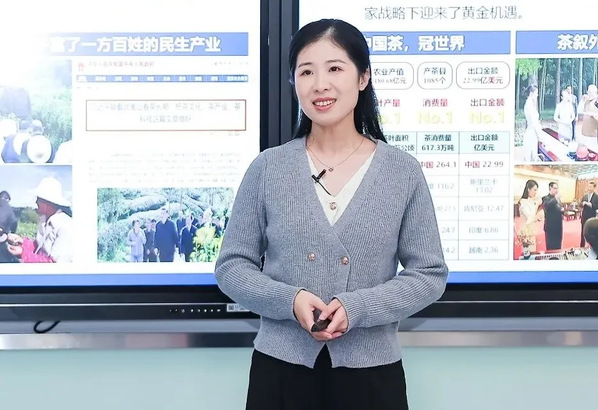
Tea is a key component of Chinese agricultural civilization. XI Jinping, General Secretary of the CPC Central Committee, has stressed the need for coordinated efforts to promote tea culture, the development of the tea industry and the use of technology in the sector. Reflecting this vision, Zhejiang University offers Tea Culture and Tea Health as a core general education course available to all undergraduate students. The course, guided by the principles of Outcome-based Education (OBE) and the theory of constructivism, introduces an innovative approach that integrates agriculture and the humanities, links theory and practice, empowers teaching with digital intelligence, and cultivates and enlightens talents”. By organically combining the new agricultural sciences with disciplines such as humanities, sciences, engineering, and medicine, the course aims to develop well-rounded, innovative talents who understand, appreciate, and promote tea. These students are equipped to tell the story of Chinese tea in the modern era, preserving its heritage while driving its future.
Internal Medicine A (II) by LIANG Weiwei, School of Medicine
Second Prize, New Medical Sciences Category for Associate Professors
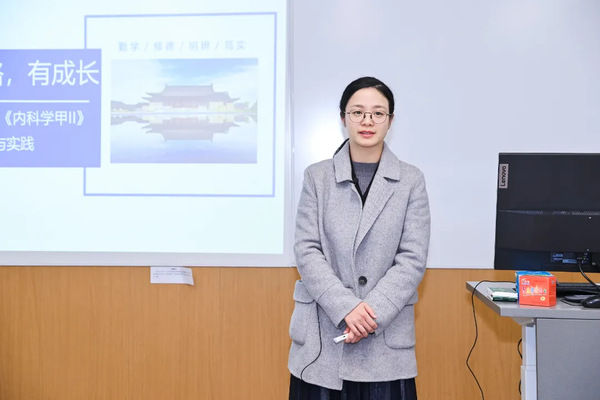
The course team focuses on Innovation and Practice of the ‘Internal Medicine’ Internship Course Guided by Entrustable Professional Activities (EPAs).” In line with the “student-centered development” philosophy, the course seamlessly integrates professional education with moral and ethical education. Guided by the principles of Outcome-based Education (OBE) and employing Bloom’s taxonomy, the team has developed a three-level cyclic clinical internship model, using the EPA framework as a benchmark. This innovative approach has notably enhanced interns’ clinical thinking and practical skills.
Million Cubic by XU Xiangguo, College of Energy Engineering
Third Prize, New Engineering Sciences Category for Professors
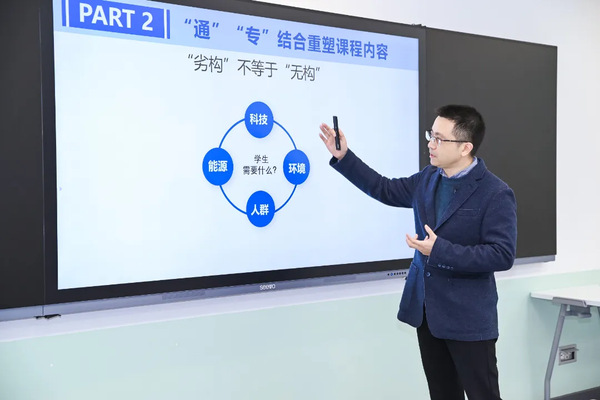
To cultivate interdisciplinary talent, the course team has adopted an innovative approach known as “Project as Course, Course as Project” concept in the course. This unique concept challenges students to draw upon their interdisciplinary knowledge in energy engineering, urban and rural planning, and anthropology and apply their skills in coordination, analysis and creativity. The goal is to design and construct a self-sustaining, sustainable small world within a limited space of one million cubic meters. Through this hands-on project, students are expected not only to integrate interdisciplinary knowledge but also to elevate it into practical, comprehensive skills that bridge multiple disciplines. This course also emphasizes the development of teamwork and the implementation of the sustainable development principles, equipping students with the required skills to tackle real-world challenges with a holistic and collaborative approach.
Pathology B by WEI Xiaoli, School of Medicine
Third Prize, Ideological and Political Education Category for Associate Professors
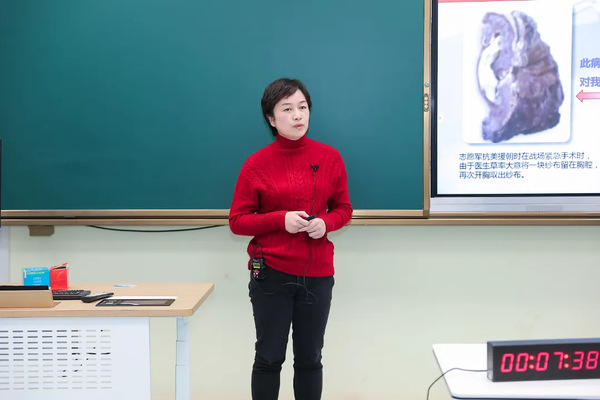
The course’s innovative approach to ideological and political education places student development at its core, guided by cultivating compassionate and innovative medical professionals. The course team has introduced four innovative measures: integrating medical ethics via case studies, designing tailored ideological and political cases, strengthening the fusion of dialectical and scientific thinking, and improving a multi-dimensional feedback and evaluation system. These efforts have enhanced the course’s role in ideological and political education, cultivating four essential qualities in medical students: love in their hearts, light in their eyes, skill in their hands, and responsibility on their shoulders.