Bringing history to life: ZJUMAA's cultural experience at primary school


From 24th to 25th September 2024, Zhejiang University Museum of Art and Archaeology (ZJUMAA) charity team visited Tianjabing Experimental Primary School in Yancheng city, East China's Jiangsu province, bringing a series of physical teaching and experiential courses to more than eighty students and teachers. This activity combined the basic display exhibitions of ZJUMAA, aiming to give students an in-depth understanding of the long history and cultural connotations of writing and ornamentation.
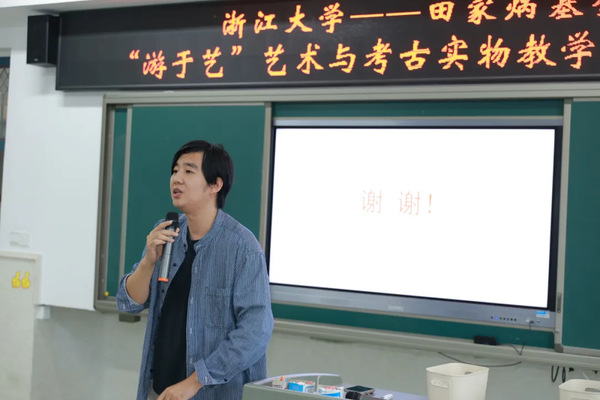
At the beginning of the activity, DING Zhe, the education director of ZJUMAA, introduced the method and significance of physical teaching. He pointed out that object teaching is a new form of humanities education, which can improve students' visual ability, aesthetic literacy and critical thinking, helping them to read objects better, and sound their humanities knowledge structure.
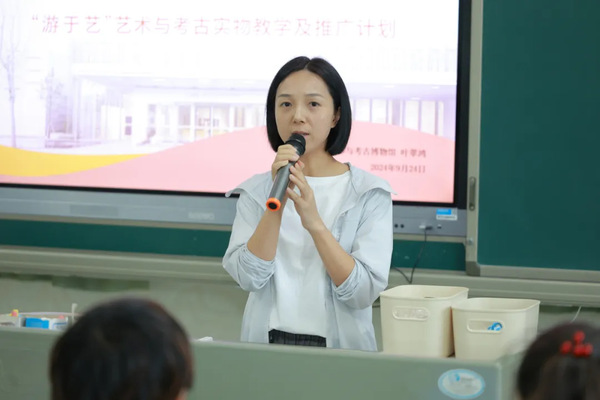
Subsequently, Ms.YE Cuihong from ZJUMAA introduced the origin and development of the ZJUMAA to students through an interactive form of the public welfare projects and museum teaching of ZJUMAA, which further aroused the students' interest in the ZJUMAA.
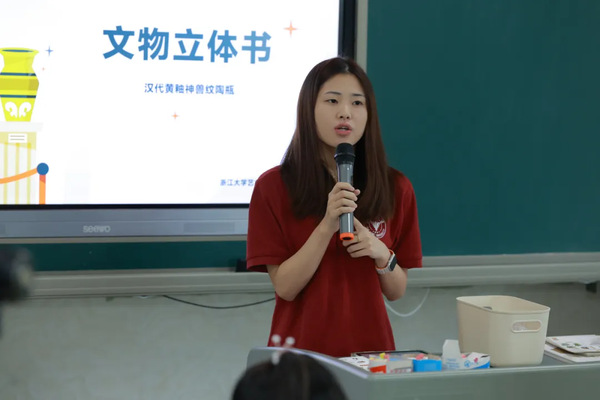
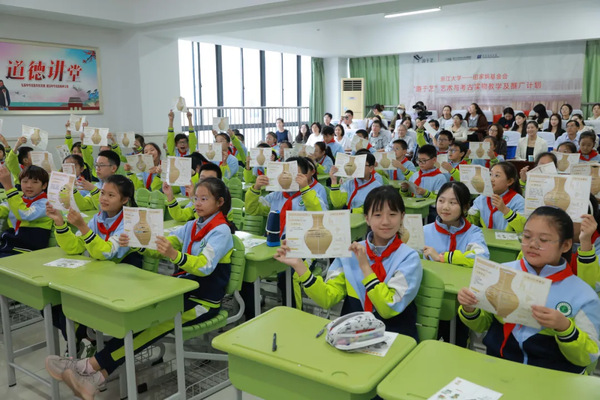
Next, ZHAO Yimeng, a postgraduate student of ZJUMAA, brought students a course related to yellow-glazed pottery vase with mythical beast pattern. Through anthropomorphism, she vividly explained the characteristics of the Han dynasty yellow glaze beasts pattern vase, and guided the students to do hands-on production of cultural relics three-dimensional book. The students gave full play to their imagination and creativity in practice, designing creative and unique images of cultural relics, further deepening their understanding of the collection of cultural relics and their cultural connotations.
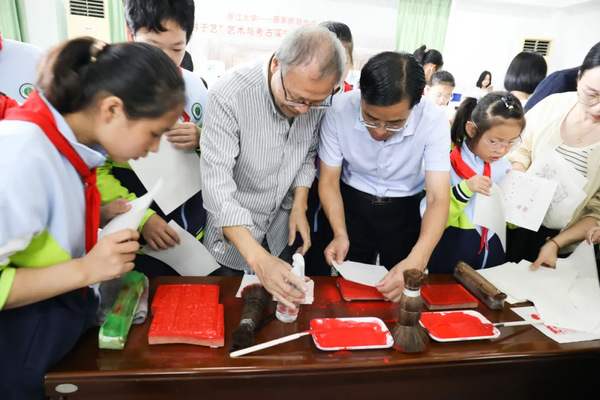
The second day, the course was lectured by HUANG Xiaojian and HUANG Jiecheng, the intangible cultural heritage inheritors. They brought the teachers and students an experiential lesson on the art of engraving and printing, introducing the historical origin and production process of this art. Under the guidance, the students experienced the various steps of engraving printing, from brushing pigment to pressing and moulding, and fully felt the unique charm and inheritance spirit of the intangible cultural heritage skills.
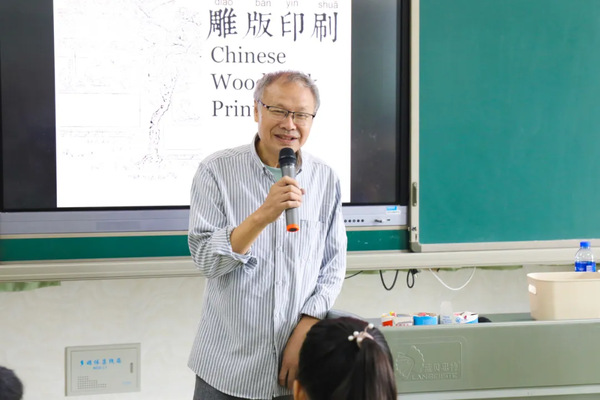
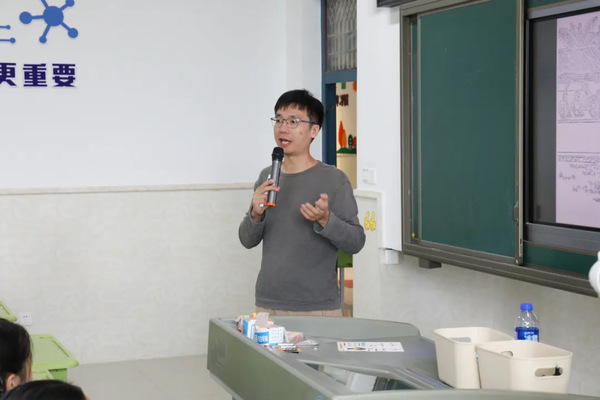
This class intertwined tradition and modernity, connecting skills with heritage, allowing everyone to deeply appreciate the unique charm and value of intangible cultural heritage. Through diverse and multi-faceted teaching methods, the event enabled the teachers and students of Yancheng Tianjabing Experimental Primary School to gain a deeper understanding of museums, ZJUMAA's physical teaching, traditional culture, and intangible cultural heritage, fostering students' aesthetic literacy.
Adapted and translated from the article written by ZHAO Yimeng
Translator: WU Jingying ('27, Communication)
Photo: the interviewees
Editor: HAN Xiao ('25, Education), TIAN Minjie