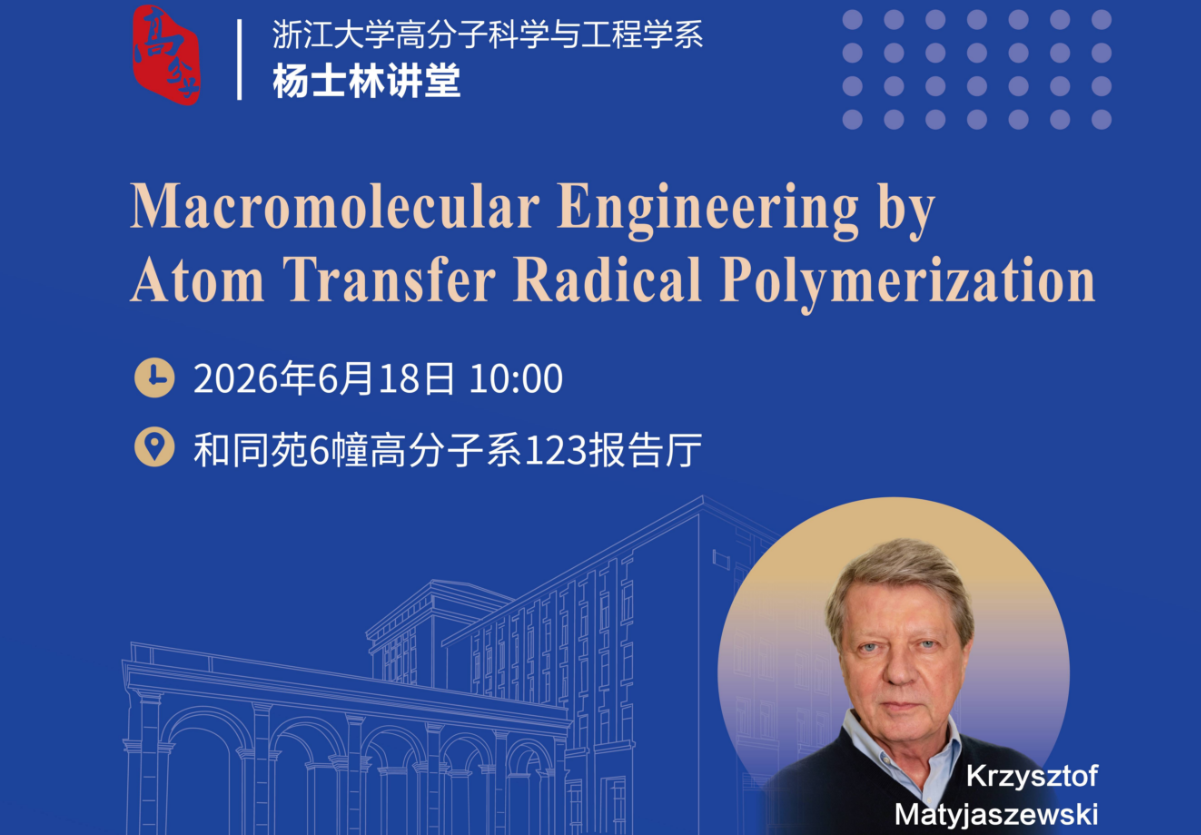
Macromolecular Engineering by Atom Transfer Radical Polymerization


Time: 10:00
Venue: Zijingang Campus
Speaker: MATYJASZEWSKI Krzysztof
Category: Talk & Lecture
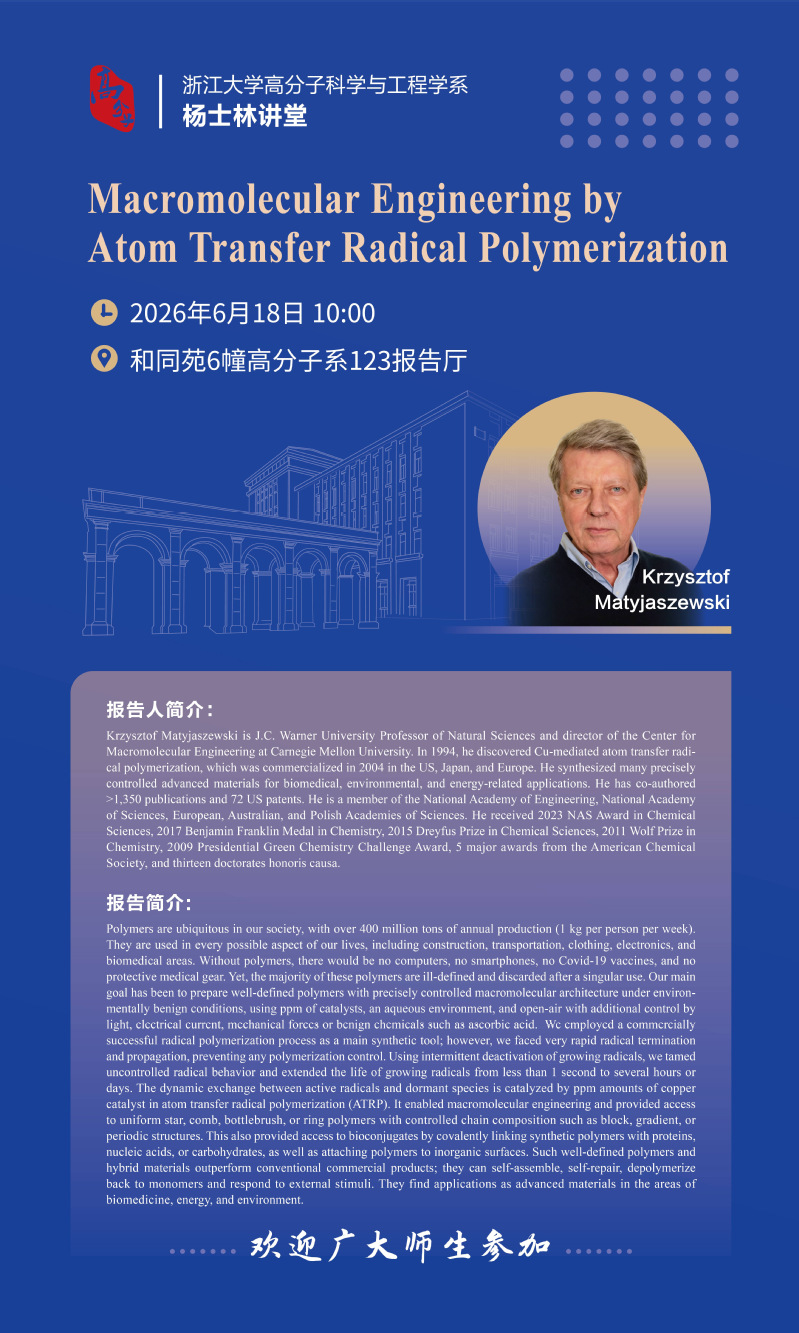
Speaker: Krzysztof Matyjaszewski
Venue: Lecture Hall 123, Hetong Building 6, Zijingang Campus
Abstract: Polymers are ubiquitous in our society, with over 400 million tons of annual production (1 kg per person per week). They are used in every possible aspect of our lives, including construction, transportation, clothing, electronics, and biomedical areas. Without polymers, there would be no computers, no smartphones, no Covid-19 vaccines, and no protective medical gear. Yet, the majority of these polymers are ill-defined and discarded after a singular use. Our main goal has been to prepare well-defined polymers with precisely controlled macromolecular architecture under environmentally benign conditions, using ppm of catalysts, an aqueous environment, and open-air with additional control by light, electrical current, mechanical forces or benign chemicals such as ascorbic acid. We employed a commercially successful radical polymerization process as a main synthetic tool; however, we faced very rapid radical termination and propagation, preventing any polymerization control. Using intermittent deactivation of growing radicals, we tamed uncontrolled radical behavior and extended the life of growing radicals from less than 1 second to several hours or days. The dynamic exchange between active radicals and dormant species is catalyzed by ppm amounts of copper catalyst in atom transfer radical polymerization (ATRP). It enabled macromolecular engineering and provided access to uniform star, comb, bottlebrush, or ring polymers with controlled chain composition such as block, gradient, or periodic structures. This also provided access to biocongugates by covalently linking synthetic polymers with proteins, nucleic acids, or carbohydrates, as well as attaching polymers to inorganic surfaces. Such well-defined polymers and hybrid materials outperform conventional commercial products; they can self-assemble, self-repair, depolymerize back to monomers and respond to external stimuli. They find applications as advanced materials in the areas of biomedicine, energy, and environment.