From Africa to Jiashan: A food researcher's green journey


From Nigeria to the United Kingdom, from the United States to China, and finally to Jiashan, Balarabe B Ismail’s research footprint spans four continents.
Today, he is a Distinguished Researcher at the Future Food Laboratory of the Innovation Center of Yangtze River Delta, Zhejiang University (ICYRD-ZJU). His daily work centers on a deceptively simple question: how can agricultural and forestry resources commonly treated as waste be transformed into something useful?
A global academic journey
In 2009, Balarabe graduated with the highest honors in his department from Kano University of Science and Technology, Nigeria. He then pursued a master’s degree at the University of Greenwich in the United Kingdom, where his thesis won the Best Master’s Research Project Award. After graduation, he joined Bayero University Kano and later undertook a visiting scholar fellowship at The Ohio State University’s Department of Food Science and Technology and Center for African Studies. During the fellowship, he received a U.S. Congressional commendation and completed the Mandela Washington Fellowship, building practical experience in both industrial quality control and fundamental research.
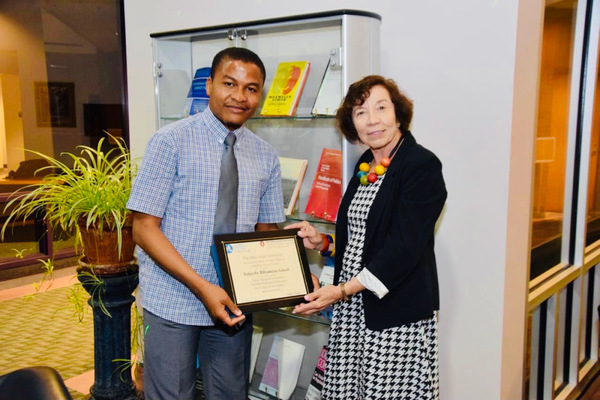
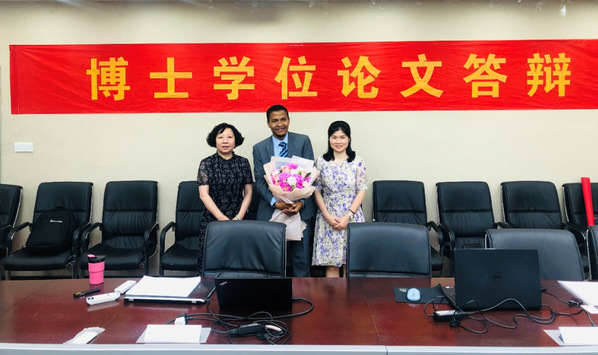
In 2017, Balarabe was awarded the Chinese Government Scholarship and began pursuing a PhD at Zhejiang University. To him, the university offered well-established research platforms, continuously upgraded facilities, and an open and inclusive academic environment. During his studies, he visited the University of Oxford, the University of Kent, West Virginia University, and other overseas institutions. These exchanges gave him an even deeper appreciation of Zhejiang University’s comprehensive strengths in disciplinary development, cutting-edge research, and talent cultivation. He regards the opportunity to witness the university’s growing international influence and contribute directly to frontier research as a rare academic privilege.
Exploring Africa’s distinctive resources
During his PhD, Balarabe turned his attention to the fruit of the baobab, Africa’s “tree of life.” Rich in polyphenols, flavonoids, vitamin C, and other bioactive compounds, baobab fruit has been shown to have four to five times the antioxidant capacity of cranberries and blueberries, with potential applications in anti-inflammatory, antioxidant, and blood-glucose-regulating products. Yet these compounds have long been difficult to extract efficiently. Conventional methods rely heavily on organic solvents and often deliver low efficiency, while the fruit’s high pectin content further complicates extraction and separation.
Over four years, Balarabe built a complete technical system covering extraction, separation, analysis, and functional evaluation, and produced the first comprehensive phytochemical profile of baobab fruit. The results were published in journals including Food Chemistry and Ultrasonics Sonochemistry, and he authored six SCI-indexed papers as first author during his PhD. After graduation, he remained at Zhejiang University for postdoctoral research. Using headspace solid-phase microextraction coupled with gas chromatography-mass spectrometry and metabolomics, he systematically compared the flavor and bioactive profiles of “baobab coffee” and conventional coffee, exploring baobab seeds as a raw material for caffeine-free coffee alternatives and opening a new path for the high-value utilization of distinctive African foods.
Why ICYRD-ZJU?
Balarabe joined ICYRD-ZJU in 2024. Before coming to the center, he had both front-line quality-control experience in food companies and years of fundamental research experience at universities. What drew him to ICYRD-ZJU was its combination of Zhejiang University’s strong academic foundations with a clear emphasis on research-industry integration: laboratory results can be tested directly on the smart kitchen pilot line and the intelligent food manufacturing platform, shortening the distance from “paper” to “product.” Equally important, the position allowed him to continue working with his PhD supervisor, Professor LIU Donghong.
At ICYRD-ZJU, his research has become more focused on the high-value utilization of agricultural and forestry processing by-products and food waste. Compared with his systematic doctoral research on baobab fruit, his current work is more industry-oriented: developing lower-cost, greener processes that turn “waste” into “raw materials” and bring by-products from agriculture and the food industry back into the value chain.
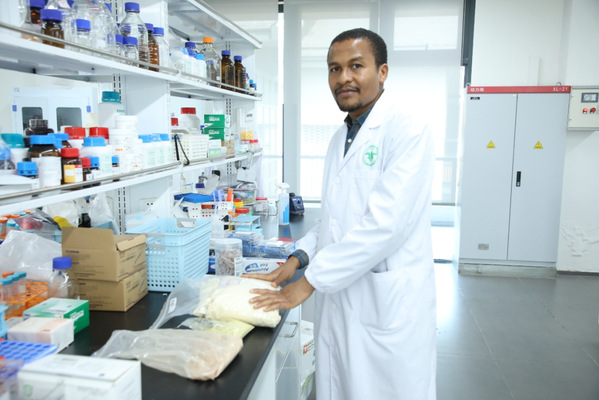
In 2025, he received funding from the National Natural Science Foundation of China under the Research Fund for International Young Scientists. To date, he has published 46 SCI-indexed papers during his time in China, including 17 as first or corresponding author, with more than 2,000 citations. He also serves on the editorial boards of international journals including Chemical Engineering Journal and Scientific Reports.
Putting down roots in Jiashan
Balarabe first came to Jiashan in February 2024. Before then, he had traveled to Beijing, Shanghai, Guangzhou, Chengdu, and other cities for academic conferences and official business. On arriving in Jiashan, its mild climate and clean streets gave him the same sense of calm and comfort he had found in Hangzhou. After living there for two years, he describes Jiashan as the most livable city he has known and the place where he feels the strongest sense of belonging.
What surprised him most was the efficiency of local public services. Procedures for residence permits and work visas were smooth, convenient, and far faster than he had expected. The talent apartment was well equipped, and the surrounding amenities also exceeded his expectations: local healthcare meets his family’s needs, while the education system makes life much easier for researchers with children. His family has now fully adapted to life in Jiashan. It is no longer merely a place of work, but somewhere they can confidently put down roots.
Telling ICYRD-ZJU’s innovation story
Balarabe’s work extends well beyond the laboratory. As an editorial board member of Chemical Engineering Journal (impact factor 13.2), he helped secure ICYRD-ZJU’s first listing on Elsevier’s global academic platform, enabling the center to showcase its latest research to international peers and further promote exchange and collaboration between Chinese and overseas scholars. He is also engaging with overseas food companies interested in entering the Chinese market, exploring opportunities for cooperation between international enterprises and research platforms.
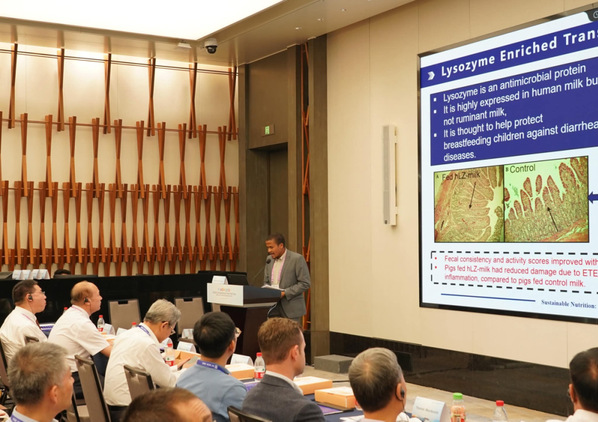
In his view, ICYRD-ZJU’s greatest strength is its ability to connect research resources, talent, and industrial needs. Drawing on Zhejiang University’s disciplinary strengths, the center brings together integrated research platforms, diverse research teams, and intelligent facilities, creating favorable conditions for frontier exploration. Through a collaborative innovation mechanism linking the university, local government, and enterprises, ICYRD-ZJU continues to integrate research outcomes with industrial scenarios, allowing more innovative ideas to be tested and developed in response to real-world needs.
At this pivotal stage in the integrated innovation and development of the Yangtze River Delta, Balarabe looks to the future with confidence. He plans to continue leveraging ICYRD-ZJU’s platform strengths, collaborate with more research teams and industry partners worldwide, and develop green, low-carbon, and efficient food-processing technologies, so that more advances in green food science can contribute to high-quality industrial development.
Source: ICYRD-ZJU
Editor: DING Chenwei