Juhee Ahn: Tracking bacteria's "natural enemies" to safeguard food safety


When antibiotics that were once effective begin to “fail” against certain bacteria, what other tools can be relied on to combat antimicrobial-resistant pathogens? In 2019, about 4.95 million deaths worldwide were associated with bacterial antimicrobial resistance, including roughly 1.27 million directly attributable to it; in 2021, some 866 million people fell ill after eating contaminated food and about 1.52 million died. As scientists search for new antimicrobial approaches, one group of naturally occurring viruses that specifically infect bacteria has drawn growing attention: bacteriophages.
For more than two decades, Prof. Juhee Ahn has focused on food microbiology, antimicrobial resistance, and bacteriophage research, asking how fundamental scientific discoveries can be translated into practical solutions that improve food safety, protect public health, and support sustainable agriculture. He is a Qiushi Distinguished Professor at Zhejiang University and a professor at the Future Food Lab of its Innovation Center of the Yangtze River Delta, and has published more than 200 academic papers.
Confronting the challenge: searching for alternatives beyond conventional antimicrobials
In 2003, Ahn received his PhD in food science from the University of Missouri-Columbia, where he also completed postdoctoral research before joining the Food Safety and Engineering Laboratory at The Ohio State University and later serving as a visiting scholar at the University of Maryland. He then returned to the Republic of Korea to join Kangwon National University.
Through years of research across different institutions, Ahn became convinced that although antibiotics have transformed modern medicine and food production, antimicrobial resistance is too complex to be addressed by any single technology, and that new strategies to control bacterial pathogens have become a shared challenge across food safety, healthcare, and agriculture.
He turned to bacteriophages. Lytic bacteriophages exert antibacterial effects by infecting and lysing their hosts, and unlike broad-spectrum antimicrobials they are highly host-specific, so they can be directed at particular pathogens while potentially leaving beneficial microorganisms unharmed.
Ahn does not treat bacteriophages simply as a substitute for antibiotics. In studies in the Republic of Korea, he and his team found that carefully selected bacteriophages combined with antibiotics could improve antimicrobial activity well beyond either treatment alone, depending on antibiotic choice, treatment timing, and sequence. The team also paired bacteriophage-derived endolysins with antimicrobial peptides, which damaged bacterial membranes, degraded cell walls, and reduced biofilm formation.
For Ahn, the goal is not a single “universal antimicrobial” but a deeper understanding of the interactions among bacteria, bacteriophages, and different antimicrobial strategies — knowledge that makes precise, sustainable combinations possible.
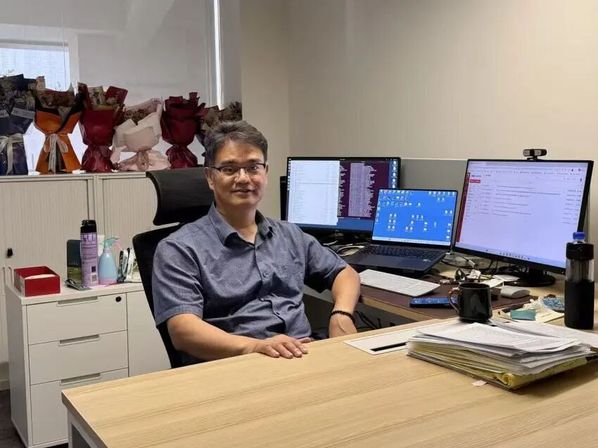
Research-to-application integration: bridging fundamental research and industrial translation
Ahn’s work has developed as a connected research program rather than a series of isolated projects, spanning multidrug-resistance mechanisms, biological control strategies beyond conventional antibiotics, and standardized bacteriophage formulations.
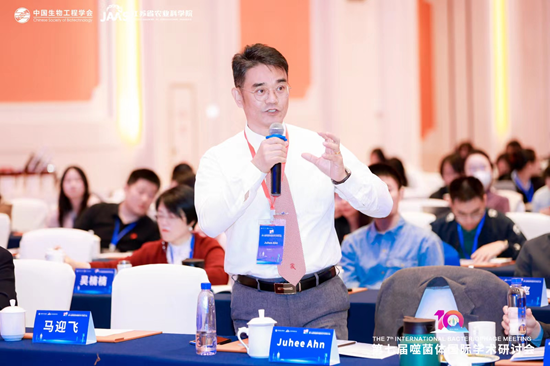
In the Republic of Korea, his research expanded from detecting antimicrobial-resistant pathogens to bacteriophage-based biocontrol. From 2015 to 2019 he led a Korea Health Industry Development Institute project on genotype-phenotype-based detection of multidrug-resistant pathogens; from 2016 to 2023 he led a National Research Foundation of Korea project on bacteriophage-based control of multidrug-resistant bacteria.
After joining Zhejiang University’s Innovation Center of the Yangtze River Delta (ICYRD-ZJU), his work became increasingly application-oriented. To address Salmonella control in poultry production, he leads an ICYRD initiative on Salmonella bacteriophage formulations and their demonstration in poultry farming. He also leads the National Key R&D Program research task “Development of Emergency Technologies for Foodborne Microbial Risks in Major Aquatic Products.”
Putting down roots at ICYRD: advancing bacteriophage technologies through systematic research
Joining ICYRD-ZJU marked another important stage in Ahn’s career. At the Future Food Lab, one of his first priorities was building a comprehensive bacteriophage research platform serving both scientific discovery and industrial application.
A key component is a bacteriophage biobank. The team systematically isolates phages that infect major foodborne pathogens and then carries out genomic characterization, host range evaluation, and safety assessment, while optimizing propagation and developing standardized procedures for purification and long-term preservation. Product development, in turn, depends on knowing which bacteria a bacteriophage can infect, whether it is safe, and how it can be reliably propagated and preserved.
The team has now isolated and characterized a group of highly lytic bacteriophages with broad host ranges. Two polyvalent bacteriophages show strong lytic activity against target pathogens and potential for development as feed additives and antimicrobial products for livestock and aquaculture; four patent applications have been filed.
In developing Salmonella formulations, the team has screened and characterized multiple lytic bacteriophages, optimized their combinations, and produced a candidate cocktail. Key laboratory-scale testing is complete, covering genomic safety, host range, lytic activity, biological stability, and combined antibacterial performance. Candidate samples, a technical dossier, a draft quality standard, and a process flow are largely in place, and ethical approval has been obtained for in vivo broiler chicken trials. Next come animal validation and optimization of scale-up production, stability, storage and transport, and dosing.
Mentoring with purpose: developing young researchers for independent scientific inquiry
Ahn believes the core of a young researcher’s development is mastering scientific methods and building independent judgment. His guidance is tailored to each student’s background and stage of development, with particular emphasis on one-on-one communication; rather than simply assigning experiments, he prefers to discuss scientific questions and career development in depth, and he encourages students to propose new hypotheses rather than chase a superficially “perfect” result.
He passes on techniques accumulated over years of international research, training students in bacteriophage screening, whole-genome annotation, protein structure modeling, and quantitative analysis of resistance evolution. The approach is already yielding results: Aminu Abdullahi Mahmoud, an international PhD student under Ahn’s supervision, has received support from the National Natural Science Foundation of China’s program for outstanding international doctoral students.
Exploring the frontier: new paths for AI-enabled bacteriophage research
Why can one bacteriophage infect a particular bacterium while another cannot? A key factor is the highly specific molecular recognition between bacteriophages and their hosts. Bacteriophages recognize bacteria through receptor-binding proteins that interact with corresponding receptors on the bacterial surface — a “key and lock” interaction that determines which bacteria a bacteriophage can recognize and infect.
Conventional research relies on extensive screening to identify suitable bacteriophages. Ahn’s team plans to combine artificial intelligence, comparative genomics, and structural biology to predict interactions between bacteriophage receptor-binding proteins and bacterial surface receptors across different Salmonella serovars, improving the efficiency and accuracy of selection while reducing the need for large-scale screening. The same specificity also points to new ways of detecting pathogens.
In Ahn’s view, artificial intelligence is not simply an additional tool layered onto conventional microbiology; it has the potential to reshape how bacteriophages are selected and how pathogens are detected.
Looking ahead: building a world-class platform for bacteriophage innovation
Ahn emphasizes ICYRD’s open and collaborative research environment, where scientists from different disciplines work together on shared questions, and its emphasis on practical application.
Jiashan has also left a deep impression on this internationally experienced scientist. To Ahn, the city combines the cultural heritage of a traditional Jiangnan water town with a growing base of scientific innovation, while its quiet, comfortable environment and convenient access to Shanghai, Hangzhou, and Suzhou suit long-term research and academic exchange.
Building on the platforms of Zhejiang University and ICYRD, he hopes to strengthen collaboration with industrial partners, government organizations, and international research institutions, with the long-term goal of helping build ICYRD into an internationally influential platform for bacteriophage research and technological innovation.
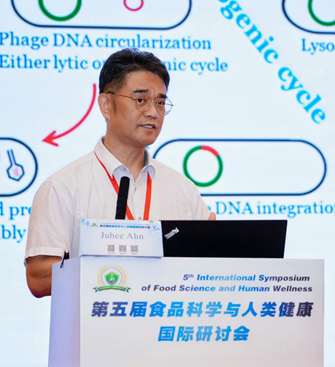
Scientific exploration continues. For Ahn, many important questions in food safety and antimicrobial resistance remain unanswered, and ICYRD is opening broader possibilities for discovery, innovation, and international collaboration.
Source: ICYRD-ZJU
Editor: DING Chenwei