ZJU’s “White Rhino” smashes Guinness World Record for fastest quadrupedal robot


On a test track in Hangzhou, Zhejiang, a silver-white alloy-framed “mechanical beast” bursts forward at the starting line like an arrow loosed from its bow. The machine, known as White Rhino, is a quadrupedal robot jointly developed by Zhejiang University’s Center for X-Mechanics (XMECH), the School of Aeronautics and Astronautics, and the ZJU-Hangzhou Global Scientific and Technological Innovation Center’s Humanoid Robot Innovation Institute.
White Rhino clocked 16.33 seconds over 100 meters, breaking the previous Guinness World Record of 19.87 seconds held by South Korea’s Hound robot. It is now positioned as the world’s fastest quadrupedal robot over the distance.
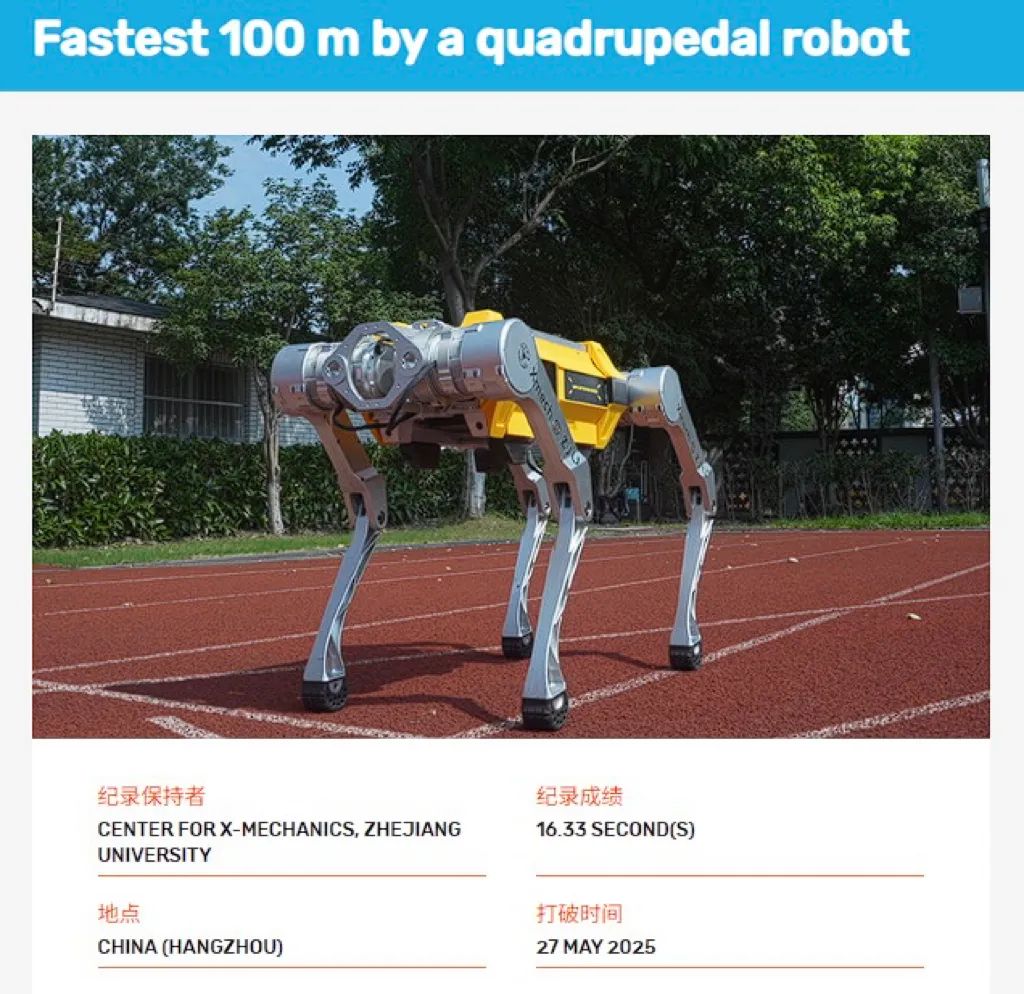
The achievement marks the culmination of three years of dedicated research and a breakthrough in overcoming what many believe is a challenging limit in robotics: combining a high speed with a heavy load capacity.
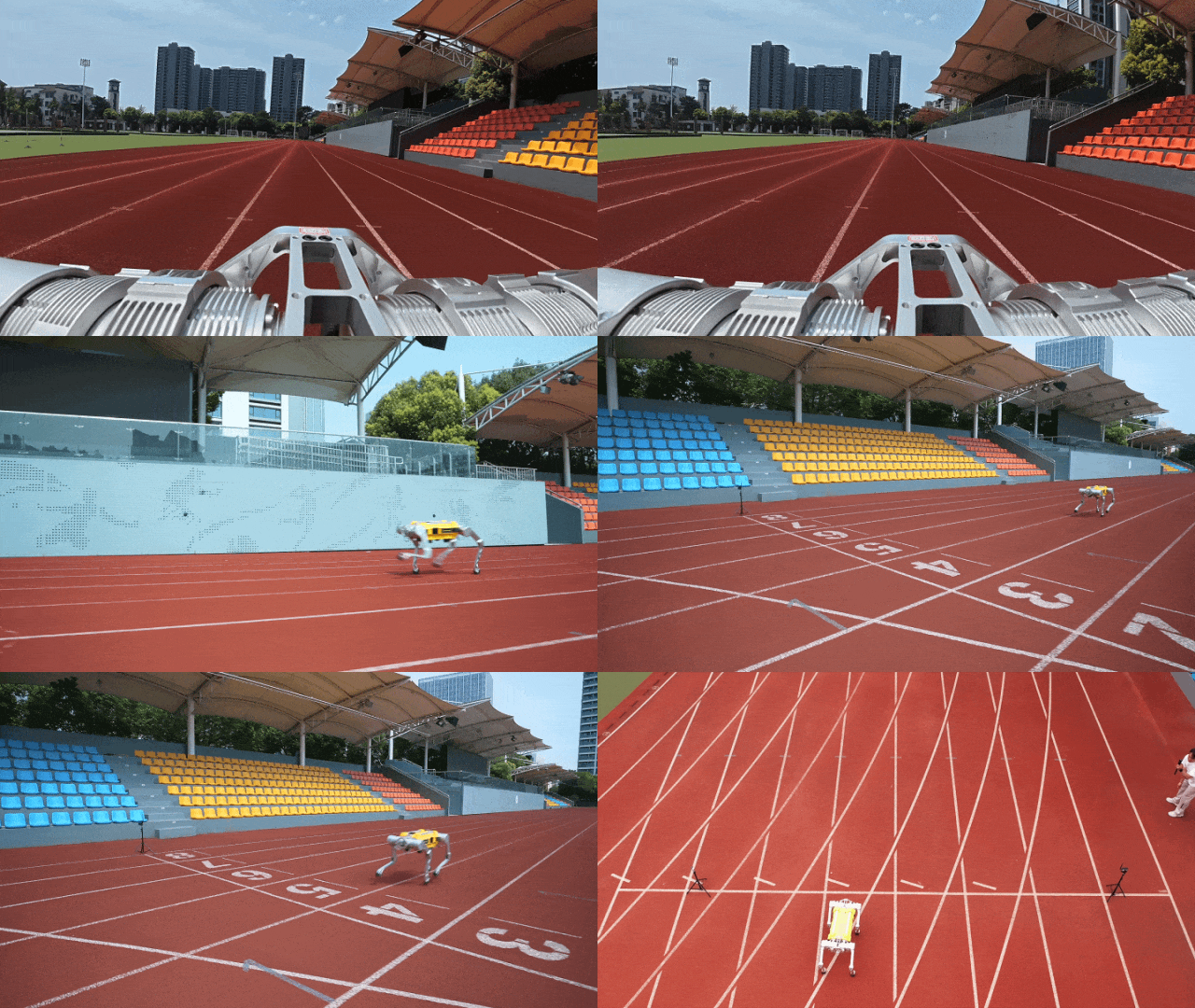
The project grew out of the team’s determination to push the boundaries of robotic athletic performance. Traditionally, robots could be designed for speed or strength — but not both. “If you want power, you lose speed; if you want speed, you can’t carry weight,” explains Professor WANG Hongtao, the team’s lead advisor. “The 100-meter sprint is a literally uncompromising target. It tests a robot’s explosive power, speed, as well as stability and control under rapidly changing conditions. This integrative metric compels us to delve into the dynamics of robots at a theoretical level, breaking free from the constraints of conventional design thinking.”
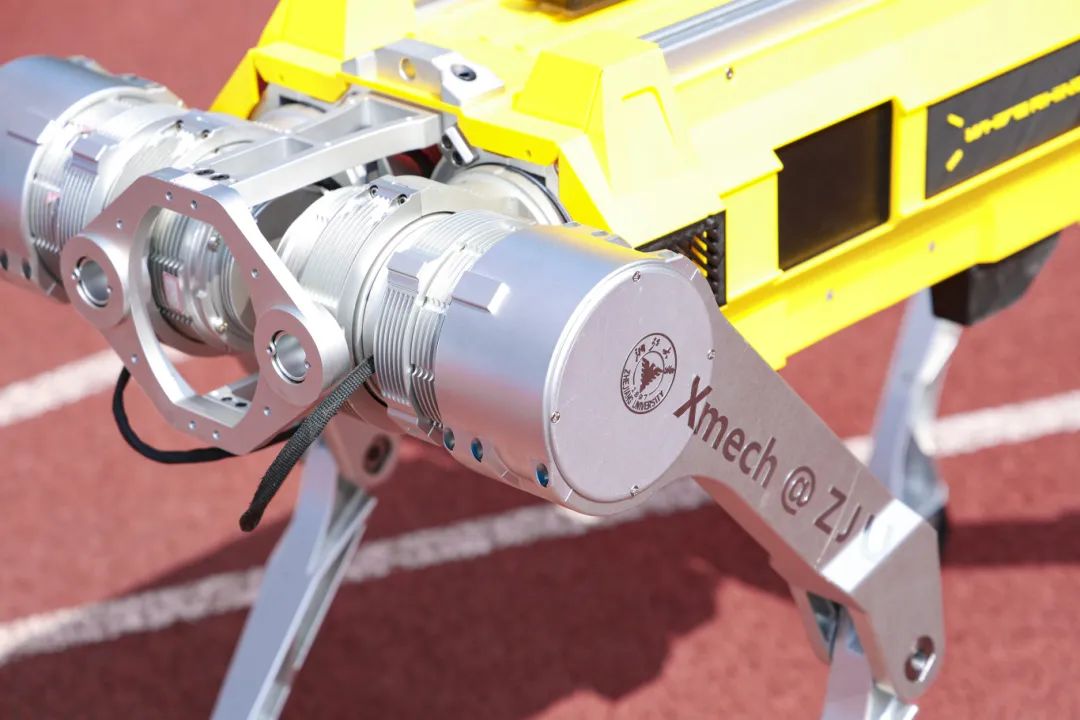
At the heart of the breakthrough is a forward-design tool based on whole-body robotic dynamics. Set a goal—speed, load, or endurance—and the software autonomously fine-tunes geometry, mass, motors, and gear systems for optimal performance. To overcome the long-standing trade-off between load and speed, we developed a novel impact-coupling mechanism, freeing robot design from the traditional reliance on small gear ratios for low inertia.
Beyond theoretical design, another breakthrough of the White Rhino robot lies in the team’s independently developed motor drivers, refined over years of research. The current driver achieves a power density of 4 kW per 100 g, efficiently converting battery energy into the power required for high-speed locomotion.

White Rhino follows XMECH’s earlier Black Panther edition, with the former symbolizing strength and the latter agility. Black Panther can reach 10.9 meters per second, while White Rhino combines speed with a 100-kilogram payload capacity, making it the only quadrupedal robot to achieve both.
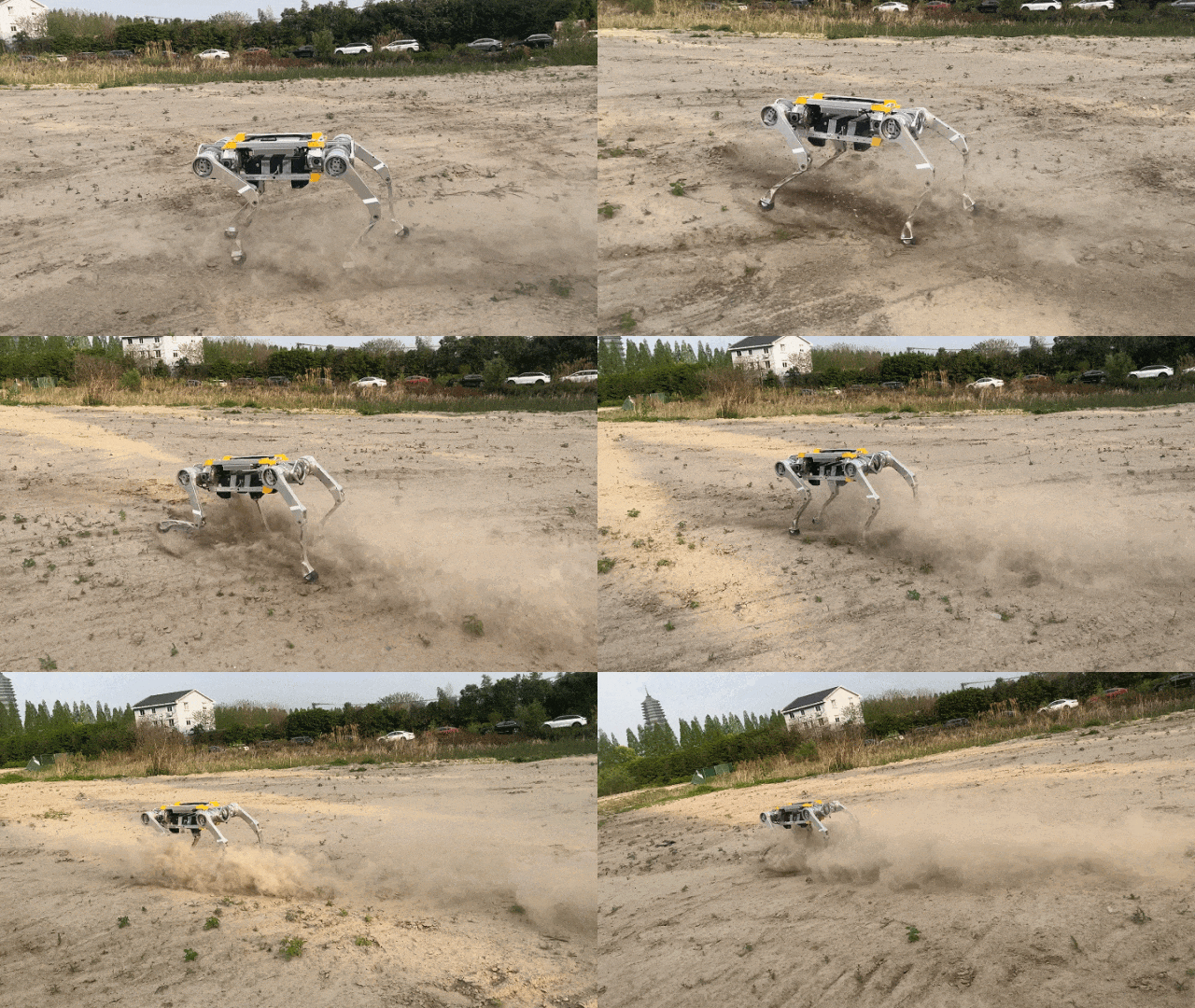
The 100-meter sprint test highlights the robot’s outstanding agility and fast responsiveness—proof that White Rhino can move stably not only on smooth tracks, but also across challenging outdoor terrains. Even on loose, slippery, and rugged sandy terrain, the White Rhino robot is able to sustain fast and stable running.
On the day they attempted the Guinness World Record, the team fine-tuned every last detail: timers calibrated, track measured, and cameras aligned. One engineer stood silently, eyes fixed on the robot’s status lights. This was more than a speed test; it was a public statement after years of persistence, failure, and iteration.
When the stopwatch stopped at 16.33 seconds, cheers erupted. “This is not the destination, but a new beginning,” says researcher JIN Yongbin. For the XMECH team, speed is just one lens. Their ultimate goal is to build robust, reliable intelligent platforms for real-world use.
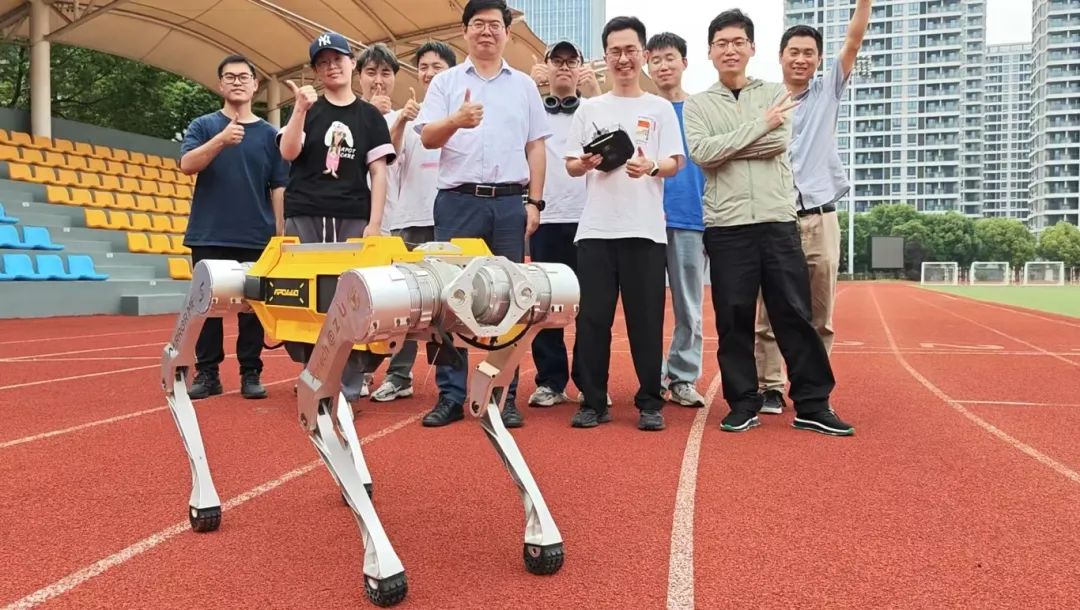
Looking ahead, White Rhino’s applications could include disaster rescue, extreme-terrain transport, and industrial inspection. “Running fast” is just the start; the real value lies in “running with purpose.” One day, White Rhino may be clambering over earthquake debris, scaling polar glaciers, or navigating hazardous industrial sites. And when that day comes, this record-setting sprint will be remembered not just as a world first, but as the start of a new chapter in robotics.
Adapted and translated from the article by XMECH, Guiness World Records
Translator: FANG Fumin
Photos by XMECH, Guiness World Records
Editor: HE Jiawen, ZHU Ziyu