Breaking the monopoly: ZJU graduate installs Chinese signalling system in Hangzhou Metro


From mechanical structural design to railway signalling systems; from laboratory simulations to the operational deployment of Communications-Based Train Control (CBTC) system. Over the past two decades, LIU Dandan, a 2022 PhD graduate from Zhejiang University, has crossed disciplinary boundaries several times. Even amidst demanding project schedules, she chose to return to campus for further studies, showing unwavering focus and passion for her profession.
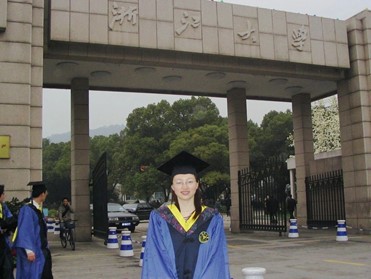
In 1998, LIU entered the School of Mechanical Engineering at Zhejiang University. The new environment left her uncertain about her direction. However, her participation in Zhejiang University’s Fourth Student Research Training Project (SRTP) changed that—it became her gateway to research, marking her first step in the scientific world and strengthening her determination to pursue mechanical engineering.
At that time, LIU and her team decided to take on the difficult task of building a multifunctional key duplicating machine. Instead of changing existing equipment, she created new design blueprints from the ground up. Since the team had little research experience, they faced many setbacks. After each one, they reviewed their blueprints and manuals, asked professors for advice, and worked together to find solutions. When the machine finally worked, she realized she could turn her ideas into something real. This experience changed how she saw mechanical engineering. It was no longer just theory; it became a way to solve real problems and inspired her to pursue engineering.
During her graduate studies, under the guidance of Academician TAN Jianrong, LIU continued her studies in the field of design and automation. She realised that the value of engineering matters when it moves beyond the lab into industry and larger systems. Therefore, instead of proceeding directly to a doctorate, she spent years working in the industry.
In 2010, five years after graduation, LIU entered the rail transit industry. Her first challenge was the trial operation of a domestically developed CBTC system on Hangzhou Metro Line 4. The team had to carefully replace parts of the imported signalling system with self-developed equipment on an operational line—any mistake could affect the safety of the line and derail the market launch. Faced with this issue, LIU and her team checked every interface and detail many times to make sure everything worked seamlessly. While the signalling system operated successfully on the real line, it helped build trust in the domestic CBTC system from its very first deployment.

Following this achievement, there was even bigger challenge. Hangzhou Metro Line 6, serving as the crucial transportation link for the Asian Games Village and ensuring smooth operations during the Asian Games, would adopt only domestic systems. LIU led a cross-departmental team of over thirty people, immediately diving into research materials and consulting experts to address knowledge gaps. Through to her determination and the team’s effort, the new signalling system was installed on time and worked reliably across the whole line, demonstrating that China’s metro control systems had been fully developed.
After years in the industry, LIU witnessed the growth of domestic signalling systems and recognised that certain problems cannot be solved by merely experience; solid theoretical understanding would be required. Thus, despite her role as a project R&D manager with heavy responsibilities, she returned to campus for a full-time engineering doctorate, focusing her research on automated simulation testing for rail transit signalling systems. The automated testing technology she developed during her PhD directly addressed a bottleneck she faced in projects: shortening testing and delivery cycles.
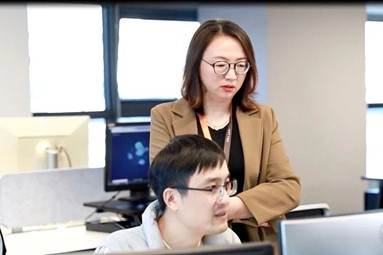
Whether working with the testing team or troubleshooting with communications engineers late at night, LIU uses practice to refine her understanding. For her, learning is a lifelong habit. She pursues: “I hope to combine my years of engineering experience with new technological directions to tackle new problems.” As intelligent transportation and low-altitude economy sectors emerged, she has turned her attention to new fields, continuing to explore the boundaries of engineering.
As she embraces the saying: “If you can improve yourself in one day, do so each day, forever building on the progress.” This is not merely a motto, but a principle that runs throughout her engineering career.
Adapted and translated from the article written by Zhejiang University
Translator: LI Yiyin ('27, MPAcc)
Editor: HAN Xiao