When disciplines converge and AI learns to create beauty


Imagine a world where medicine, engineering, information science, and the humanities truly work together. Imagine that artificial intelligence is challenged not just to calculate, but to understand and even create beauty. Could these ideas become reality?
They already are.
At the inaugural National “Qizhen Wenzhi” Artificial Intelligence Models & Agents Competition for University Students, hosted by Zhejiang University, students and faculty from Zhejiang University formed interdisciplinary teams grounded in real teaching and research needs. They developed AI models that do not stay on paper, but actually run, deliver results, and solve real problems.
From “I don’t get it” to “I can see it”
Have you ever sat in a class feeling completely at sea, unable to follow the logic and unsure where your confusion even begins?
In the high-division course Process Control of Energy Production, this was a common experience. Many students lacked background knowledge in integrated energy systems, artificial intelligence, or computational modeling. Abstract theories, complex equations, and unfamiliar code often left them staring blankly at the screen.
For Mr. LIN Xiaojie at the College of Energy Engineering, those puzzled expressions were impossible to ignore. He kept asking himself one question: how can students truly understand?
Then came an answer straight from the classroom.
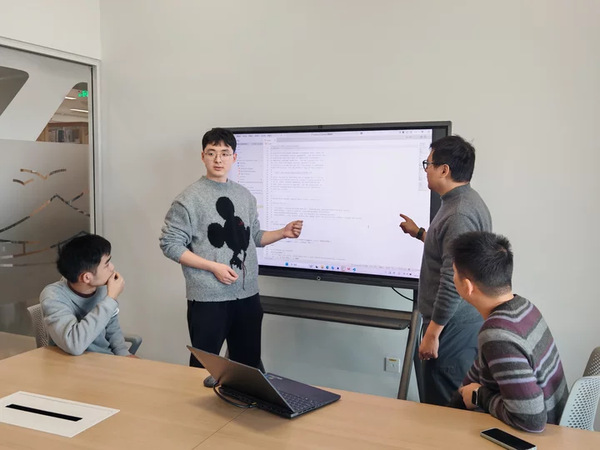
“Mr. LIN, we have an idea.” Three students teamed up to build a dedicated AI “translator” for the course. From mapping the technical roadmap to refining each function, Mr. LIN took on a dual role as both client and mentor. He articulated concrete teaching needs while guiding the team as a theoretical coach and hands-on strategist.
The outcome was transformative. This AI agent can generate executable code, run simulations directly in a web browser, and convert abstract multi-energy scheduling problems into clear, visual charts. What once felt opaque became visible. What once felt overwhelming became graspable.
In the process, disciplinary barriers fell away, and teaching was freed to move across them.
Turning AI into a clinical assistant
While the Process Control of Energy Production course was being reshaped, another interdisciplinary team shifted its attention to a more cutting-edge frontier: the intersection of medicine and engineering.
“What kind of immune microenvironment do tumors live in?” This question is anything but simple. Answering it typically requires years of clinical experience and deep medical expertise. Students from the Ba Denian Medical Experimental Class, the microelectronics program, and the industrial design program worked under the joint guidance of mentors in clinical medicine, bioinformatics, and oncology. Together, they developed TLSight-Agent, a fully automated intelligent analysis system.
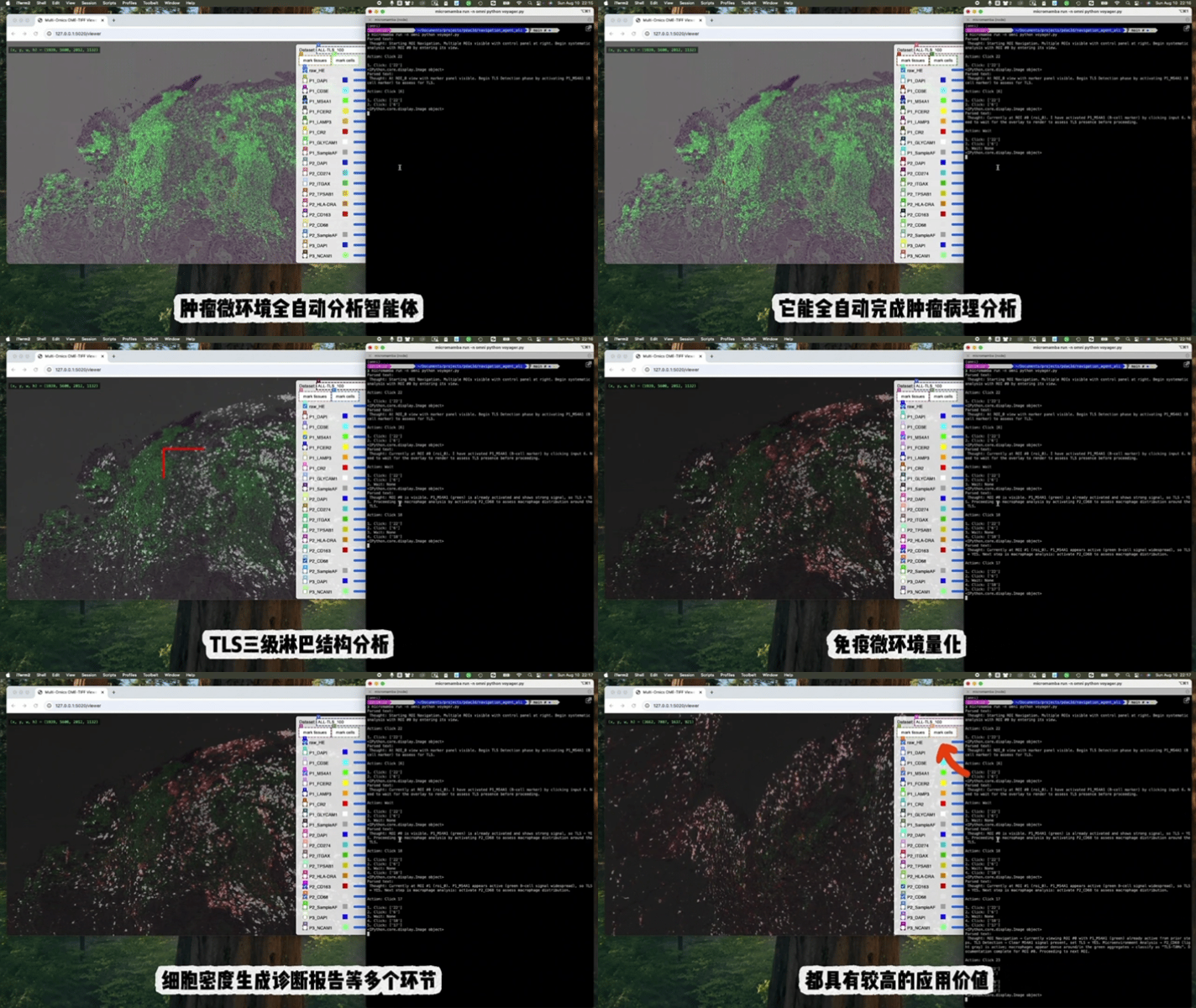
TLSight-Agent enables precise recognition of tertiary lymphoid structures and accurate quantification of immune cells. For clinicians, it offers a traceable and scalable intelligent platform. For teaching, it turns invisible biological processes into intuitive, visual insights.
“AI innovation does not come from imagination alone,” the student team reflected. “It grows out of classroom foundations, real-world problem discovery, and interdisciplinary solutions.” Through the competition, they reached a powerful realization. Interdisciplinary collaboration is not about stacking knowledge, but about deep integration and regeneration.
Mentor ZHANG Qi described the process as immersive mutual learning, as he watched students translate cutting-edge algorithms into tools with real clinical value.
Teaching AI to understand space and beauty
AI can generate architectural images, but they often lack a sense of soul. Faculty and students from the College of Civil Engineering and Architecture recognized the underlying issue. In architectural and spatial design, generative AI often stops at visual imitation. It looks right, but it does not truly understand. Determined to go further, the Inspiration Manifold team set out to teach AI what architects actually think about: spatial logic and typological rules.
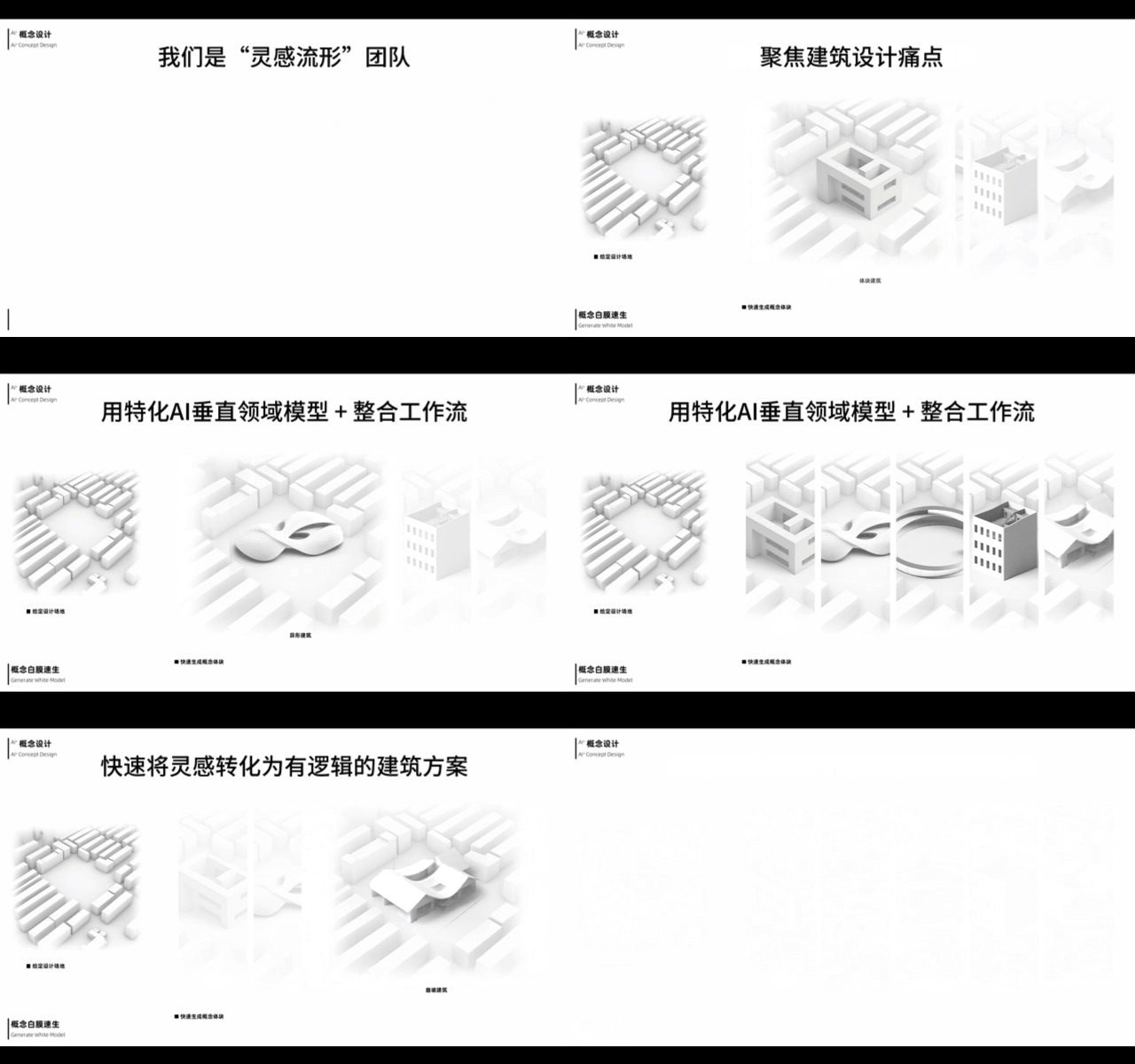
By building five stylized generative modules, they enabled AI to internalize these principles. What once required hours of white-model exploration could now be completed in seconds. Design efficiency rose sharply, and creative possibilities expanded.
The team envisions the system as a future “spatial enlightenment tool” for architecture classrooms. “The greatest gain was not a trophy,” they said. “It was a shift in how we think.” Moving from users to creators forced them to approach architecture and AI integration from a system-level product development perspective. Along the way, they strengthened both disciplinary understanding and real-world design thinking.
Language learning reimagined with AI
In foreign language education, where listening, speaking, and constant practice are essential, the team from the School of International Studies built a new AI-driven model for German learning. Their “1+1+N” teaching, learning, and research system includes one multi-agent teaching platform powered by a knowledge graph, one intelligent feedback and error-correction system based on large language models and learner corpora, and multiple empirical research projects.
Development unfolded as a cross-time-zone relay. Professor LI Yuan, working late nights in Germany, annotated tasks and later woke up to newly revised student versions waiting for review. The results were striking. Students showed marked improvement in German proficiency, language thinking, and learning motivation. At the same time, teachers gained new tools to refine instruction and enhance classroom effectiveness.
Toward a new educational ecosystem
Across disciplines and classrooms, these projects share a common logic. They start from real teaching problems, move through faculty and student co-creation, and return to the classroom to as practical tools. The result is a closed loop of mutual reinforcement.
These collaborations represent the most dynamic early growth of a new teacher, student, and machine educational ecosystem. Together, they embody the core spirit of Zhejiang University’s AI STEP initiative. The focus shifts from knowledge acquisition to ability cultivation, and from innovation to advanced creation.
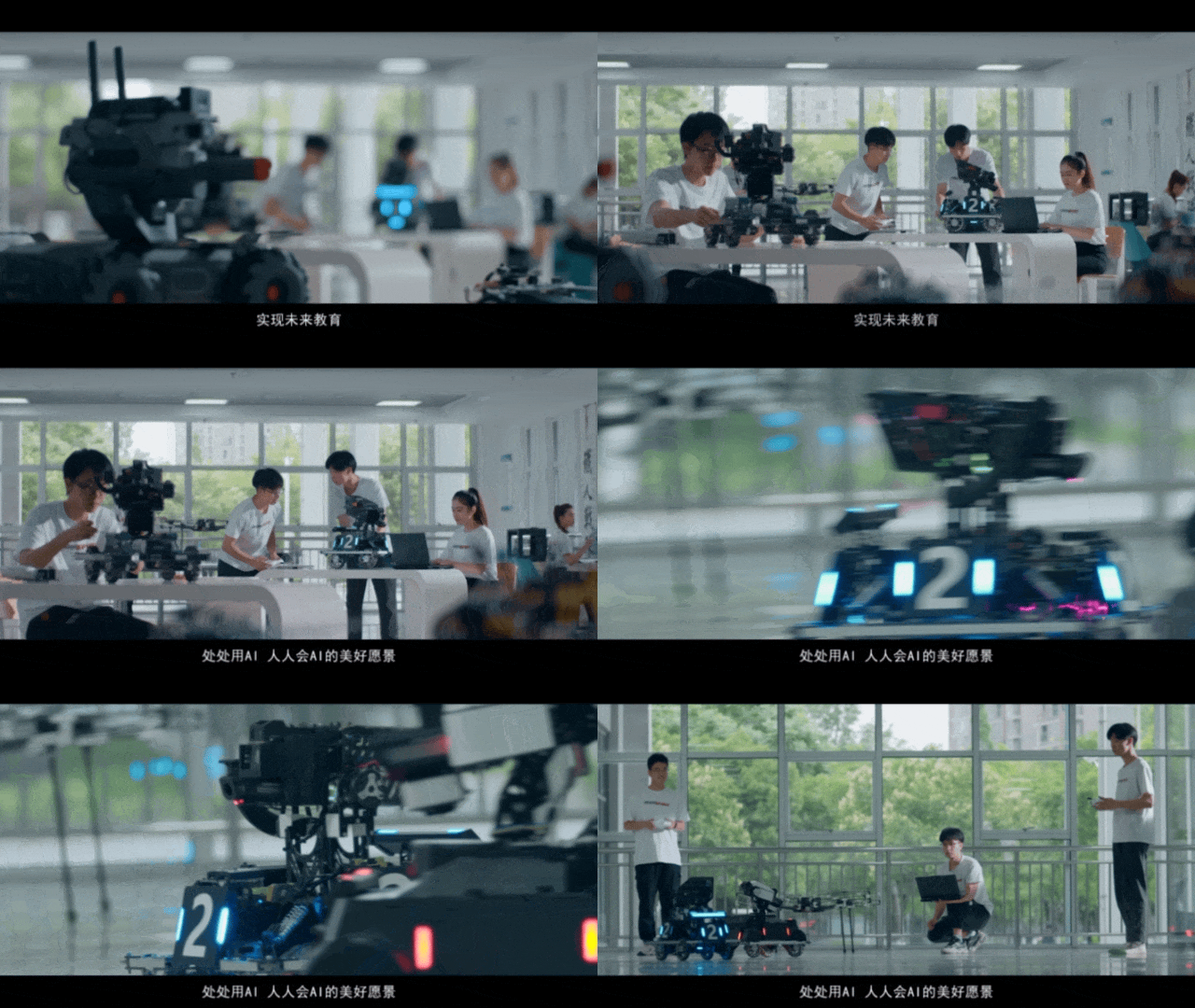
In this transformation, students are no longer learning only how to study. They are learning how to create.
Source: Undergraduate School, Zhejiang University
Translator: FANG Fumin
Editor: HAN Xiao