China-Africa Stories | A Zhejiang University filmmaker's decade in Africa


【Editor's note: 2026 marks the China-Africa Year of People-to-People Exchanges. This is the first in a series of China-Africa stories from Zhejiang University, featuring the students, researchers and alumni working to bring the two sides closer. We begin with a documentary filmmaker.】
Early this year, a five-episode documentary directed by Zhang Yong, a doctoral supervisor at the College of Media and International Culture, Zhejiang University, aired on CGTN and other Chinese platforms. Yiwu's Africa Dream follows entrepreneurs from Yiwu, the eastern Chinese city known as the world's capital of small commodities, as they build factories, shops and schools across Africa. It is listed among the National Radio and Television Administration's key international communication projects.
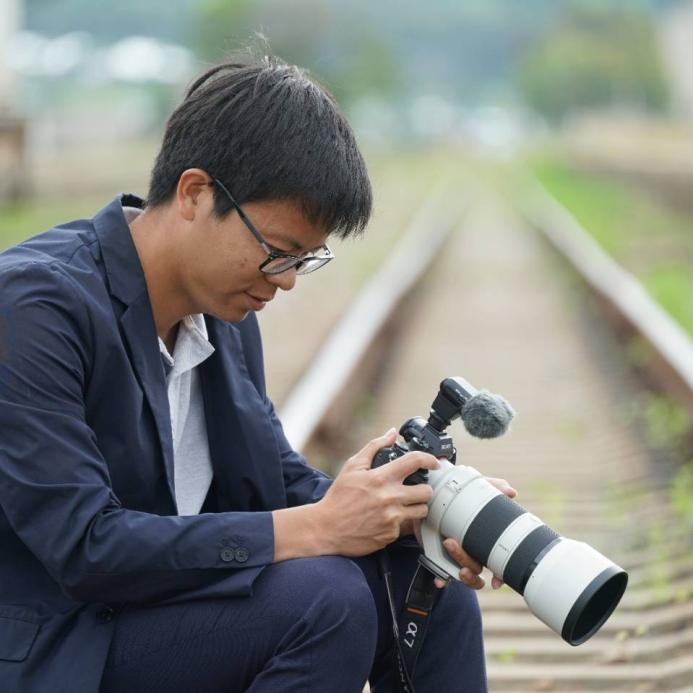
It is the latest installment in a body of work spanning more than a decade of filming in Africa. His documentaries — among them TAZARA: A Journey Without an End, Africans in Yiwu, Chinese Meet Africa, Bobby's Factory (also known asChina-Africa Factory) and Generation Z's China-Africa Stories — have been dubbed into English, French, Arabic, Swahili and Hausa, and broadcast on CGTN and on national broadcasters in Tanzania, Nigeria, Kenya, Burundi and Senegal.
His interest began during his doctoral studies at the Beijing Film Academy, when he noticed that Chinese film studies looked mainly tomajor powers such as Russia, France and the United States, leaving African cinema almost untouched. A visiting stint at Seattle University introduced him to African films, and he later worked as an assistant director on a documentary shot in South Africa.
I was afraid of Africa before I went, fell in love with it after I arrived, and miss it whenever I leave, he says. The first trip was uncomfortable, but it also showed him how narrow the outside world's picture of the continent can be. Most people who have never been there assume that all African countries work the same way, he says. The reality is far more varied. Academic writing, he concluded, could only go so far; film could carry the message much further.
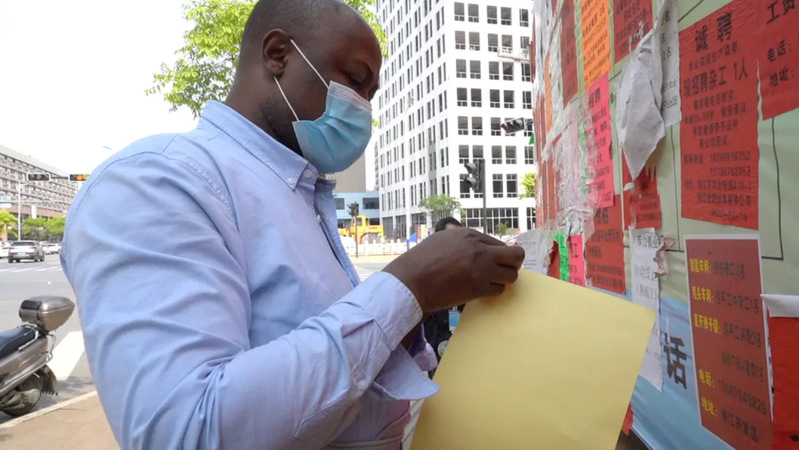
Bobby's Factory, directed by Zhang, follows a Nigerian businessman and his Chinese employees at a cosmetics workshop in Yiwu through the pandemic. The film won first prize at the second Ethnic Film and Visual Anthropology Works Competition, and has been collected by the National Library of China, the Yale Universityand SOAS University of London.
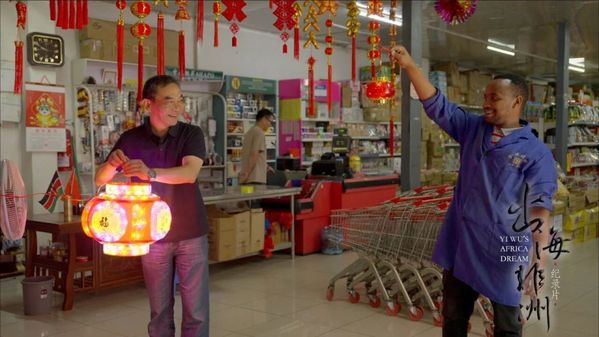
In Yiwu's Africa Dream, shot in Cameroon, Guinea, Kenya, Morocco and Nigeria, Zhang turns to a newer wave of migrants. One episode visits a Chinese-run supermarket in Nairobi; another a paper mill in Cameroon. History runs alongside: porcelain shards left behind by the fleet of Ming Dynasty navigator Zheng He in Kenya's Lamu Archipelago, and the grave of a Chinese aid worker who died in Guinea in the 1970s.
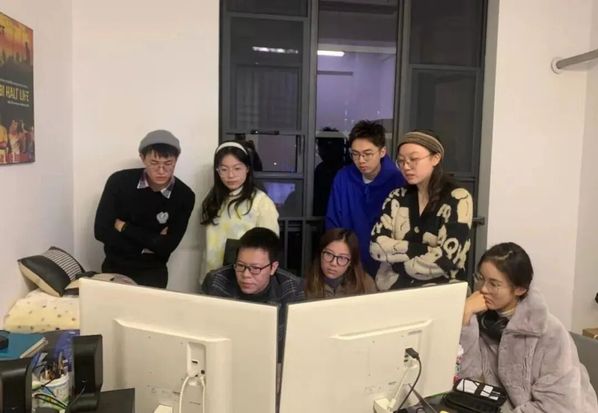
Teaching is part of the work. Zhang brings students onto his crews and builds courses around real projects; the credits of Chinese Meet Africa and Generation Z's China-Africa Stories include students from his college. A program of China-Africa films he runs for the National Radio and Television Administration has toured ten Chinese and ten African universities, including the University of Lagos and Makerere University. In 2023 he led a student team to the United Arab Emirates, where they made a three-episode documentary now set for broadcast.
A documentary cannot stay on the surface. You have to get to the heart of the people you film, Zhang says. In China-Africa films I insist on a two-way perspective — so that more Chinese understand Africa, and more Africans understand China.