ZJU team cultivates “diamond” spirulina in desert


In the Ordos Otog Banner of Inner Mongolia, located along the 39 degrees North Latitude “golden belt,” a natural alkaline lake ecosystem thrives. The area’s long daylight hours and large temperature fluctuations between day and night create ideal conditions for spirulina. Now, Prof. ZHOU Min’s team from the ZJU-UoE Joint Institute is tapping into the vast medicinal potential of spirulina. Their research is not only shedding light on the high-value resource but also positioning it as a key driver for the transformation and upgrading of traditional industries in the western regions of China. With technological innovation at its core, the team aims to open a new chapter in the modernization of Otog Banner, an area that stands to benefit from what ZHOU Min calls “Zhejiang University wisdom.”
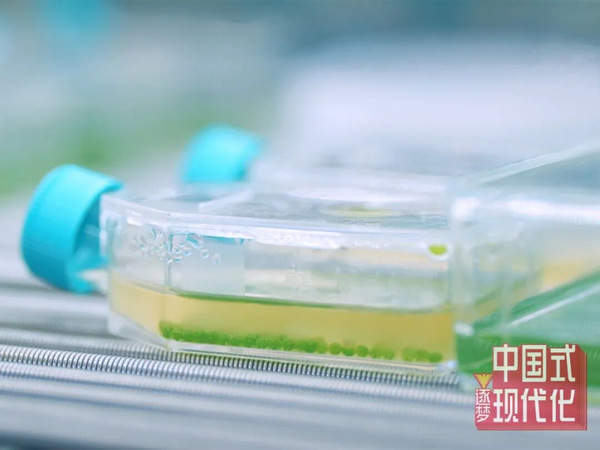
A small alga, a gateway to great possibilities
“If it weren’t for Zhejiang University, I might never have paid attention to spirulina,” said ZHOU Min. When he first joined Zhejiang University in 2016, his focus was on cancer and inflammation research. At that time, he worked on Huajiachi Campus, where discussions with agricultural experts sparked his curiosity about spirulina, an alga that many might overlook.
Spirulina is a photosynthesizing microorganism, rich in plant pigments like phycocyanin and chlorophyll. These compounds give it incredible nutritional value, and its bioactive substances also offer powerful anti-inflammatory and antioxidant properties. What makes spirulina particularly appealing is its ability to deliver “strong effects” in “small doses.”
ZHOU Min notices the promise spirulina held quickly, not just in nutrition but also in medicine. “After conducting extensive research, I realized spirulina offers significant therapeutic value and has a vast market. It’s a unique point where biomedicine and natural resources meet,” he explained.
The team’s initial work began with chlorella, another microalga. However, it wasn’t until they explored spirulina that they uncovered something truly remarkable. The algae’s ability to generate oxygen made it a perfect complement to tackling the issue of hypoxia in treatments for cancer and inflammation. Its unique size and bioactivity also make it an ideal candidate as a drug carrier, opening doors for further medical development.
But how would the human body respond to algae?
That was the question driving ZHOU Min and his Ph.D. students when they first tested spirulina for medical use. To their surprise, three independent research teams all confirmed the same result: no significant immune response. “This showed us that spirulina could be a gentle, reliable carrier, more effective than many traditional drugs,” ZHOU said. The finding cemented his determination to push deeper into microalgae research.
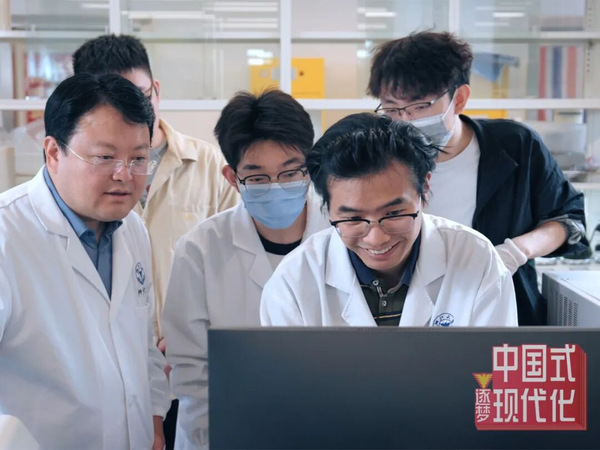
But translating spirulina from health food to medicine was anything but simple. One of the biggest hurdles was sterilization. “Pharmaceutical regulations are much stricter than those for food or supplements, and none of the spirulina strains on the market could be made completely sterile,” ZHOU Min explained. The reason has a lot to do with spirulina’s biology: it grows in close symbiosis with bacteria, making it virtually impossible to meet pharmaceutical-grade standards.
For two to three years, ZHOU Min’s team experimented with physical, chemical, and biological sterilization methods. Eventually, they developed a proprietary sterilization technology that allowed for lab-grade sterile spirulina. The breakthrough provided a crucial technological foundation for developing high-value, spirulina-based medicines.
From high yields to high quality
ZHOU Min’s pursuit of algae eventually took him far beyond the lab. He visited spirulina farms across China, before arriving at the world’s “algae capital”—Otog Banner of Ordos City in Inner Mongolia.
“Otog Banner produces 5,200 tons of high-quality spirulina powder each year, about 40 percent of the world’s total,” ZHOU Min said. “But it’s mostly sold as raw material, which means the economic return is very low.”
When ZHOU Min first toured the local industry park in 2020, he was struck by the crude processing methods. The domestic spirulina industry was stuck in a “price war,” with companies slashing costs at the expense of innovation. High-end product development had stalled, and the sector lacked the momentum to upgrade.
“In our research, we’ve always stressed the importance of transforming technology into application,” ZHOU Min said. He saw that Otog Banner had natural advantages, such as ample sunlight, favorable climate, and strong local government support, but it needed technological breakthroughs to drive transformation.
His team began by conducting on-the-ground research to understand local challenges. In 2023, they helped launch the Zhejiang University–Otog Banner Biopharmaceutical Joint Research Center. One of its first achievements was pioneering “microalgae drug delivery” technology, repurposing spirulina as a targeted system to deliver drugs directly to disease sites.
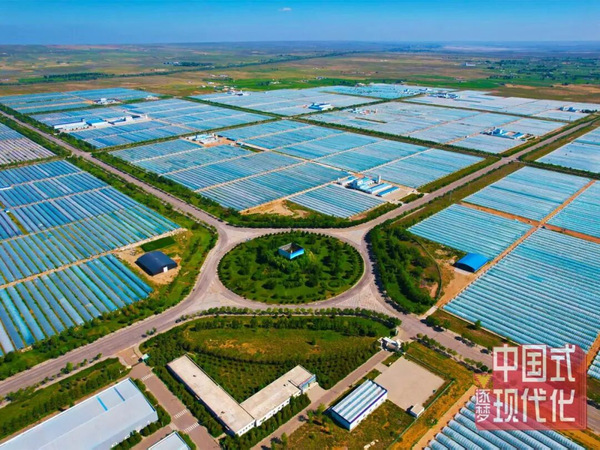
With joint support from researchers and local authorities, Otog Banner’s spirulina park is now moving toward an integrated model of cultivation, processing, research, and sales. The partnership has created a collaborative pipeline: “Hangzhou for R&D” and “Otog Banner for industrial transformation.”
“We bring raw spirulina from Otog Banner into the lab for experiments. Once we refine the process, engineers adapt it for small-scale testing,” ZHOU Min explained. The research center is now working with local government on a pilot plant. If the products pass validation, they will move directly into mass production.
Looking ahead, ZHOU’s team is focused on three goals: clinical value, industrial transformation, and international impact. By turning scientific discoveries into real-world products, they hope not only to modernize western China’s traditional industries but also to give spirulina a new life as a cutting-edge biopharmaceutical platform.
Turning spirulina into “diamond algae”
At the Joint Research Center, spirulina is being reimagined not just as a superfood, but as a platform for cutting-edge medicine as well.
“In our latest work, we’ve successfully isolated spirulina exosomes with natural biocompatibility,” explained ZHOU Min. “The extraction cost is dozens of times lower than stem cell exosomes, yet their effects on oral and skin treatments are comparable, if not better.”
The team has already transformed this discovery into a practical application: a multifunctional spirulina exosome gel. Designed to break the cycle of inflammation, it works through a threefold approach via inflammation suppression, microbiome regulation, and antioxidant action. The result? Long-lasting pain relief and accelerated healing of oral mucosal wounds.
This June, ZHOU Min’s team, in collaboration with West China Hospital of Sichuan University, launched the world’s first clinical study on spirulina exosomes, an achievement hailed as a milestone in turning microalgae into biomedical innovations.
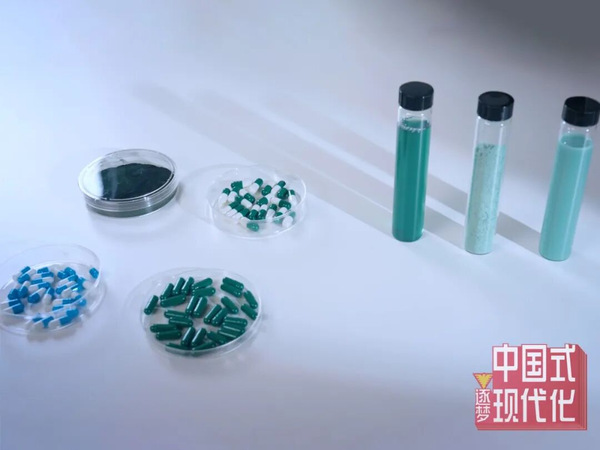
The breakthroughs don’t stop there. ZHOU Min’s team has also developed a pipeline of related products, including spirulina probiotics and nano-spirulina, signaling the algae’s potential far beyond nutritional supplements.
ZHOU Min credits much of this progress to the university’s generous support. “Exclusive laboratories, cutting-edge instruments, and access to cross-disciplinary expertise—these are the resources Zhejiang University provides,” he said. The university’s strengths across agriculture, medicine, engineering, and information science have given the team the ability to move swiftly from concept to application.
Today, ZHOU Min leads a diverse group of 50 researchers: more than 20 Ph.D. students working on fundamental science, nearly 10 senior R&D specialists driving product development, and 8 postdoctoral researchers bridging research with real-world application. ZHOU Min describes his role as that of a “helmsman,” steering the group toward new industries and technological frontiers.
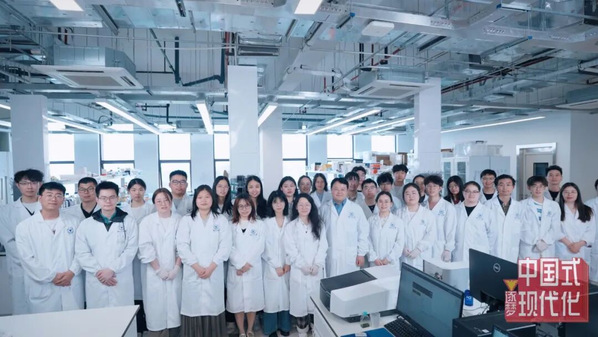
For ZHOU Min, however, the goal goes beyond scientific accolades. His team is determined to bring technology and talent to Ordos, using spirulina to fuel rural revitalization and industrial transformation.
“By connecting university research with local industries, we want to create new opportunities for high-quality economic and social development,” ZHOU Min explained. “As researchers, our hope is that one day, when people think of spirulina, they’ll think of Ordos,” ZHOU Min said with a smile.
Translator: FANG Fumin
Editor: HAN Xiao